
Season 1
40 episodes Mar 6, 2026 8.2
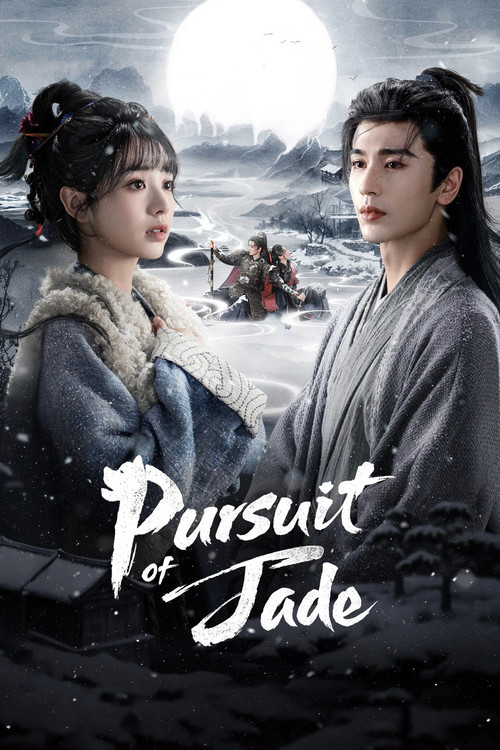
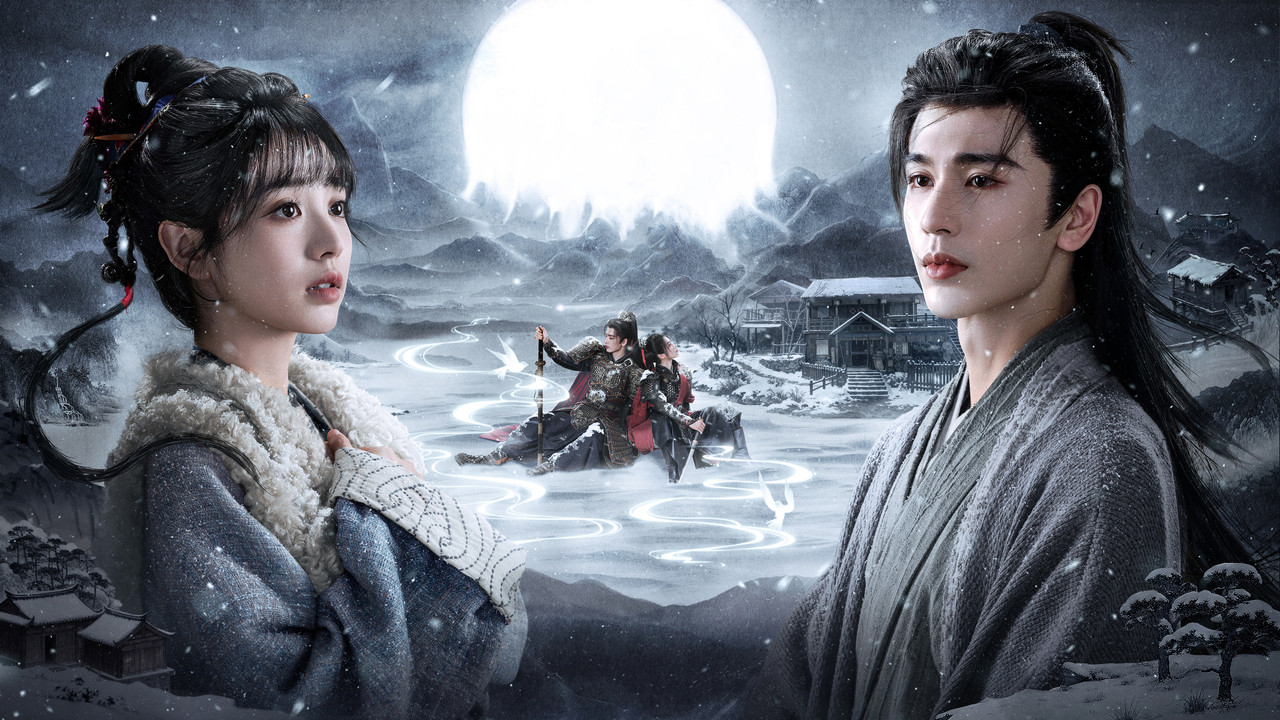
This drama follows Fan Changyu, a butcher’s daughter, and Xie Zheng, a fallen noble seeking revenge. Their fake marriage turns into true love, but war tears them apart. Determined, Fan Changyu wields her butcher’s knife on the battlefield, searching for justice and her husband. Meanwhile, Xie Zheng reclaims his title, fighting to protect his country and love. Reunited in battle, they stand together, defying fate, uncovering the truth, and returning home without forgetting their vows.
Latest episode: S1 E40 Episode 40 (Mar 26, 2026)
I keep thinking about the first time Fan Changyu picks up her butcher’s knife in Pursuit of Jade. Not the later, grander moments when she wields it on the battlefield—though those are striking—but the quiet, domestic scene in the Lin’an market. The blade is heavy in her hand, the weight of it familiar, almost comforting.
She’s not yet a warrior, not yet a wife, not yet a legend. She’s just a daughter, helping her father carve meat for customers who haggle over the price of pork ribs. The camera lingers on her fingers, the way they curl around the handle, the way her wrist flexes with practiced ease.
There’s no music swelling, no dramatic close-up. Just the sound of the knife hitting the cutting board, the murmur of the market, the steam rising from the fresh meat. It’s a small moment, easily missed.
But it’s the first time the show tells us who she is: not through dialogue, not through backstory, but through the way she holds a tool.
That’s the thing about Pursuit of Jade. It’s a drama that understands power isn’t just in the grand gestures—the battles, the crowns, the declarations of love—but in the quiet, physical acts of survival. And for the first half of its 40-episode run, it’s one of the most visually and emotionally grounded historical romances I’ve seen in years.
Then, like so many ambitious dramas, it stumbles when it tries to become something bigger than itself.
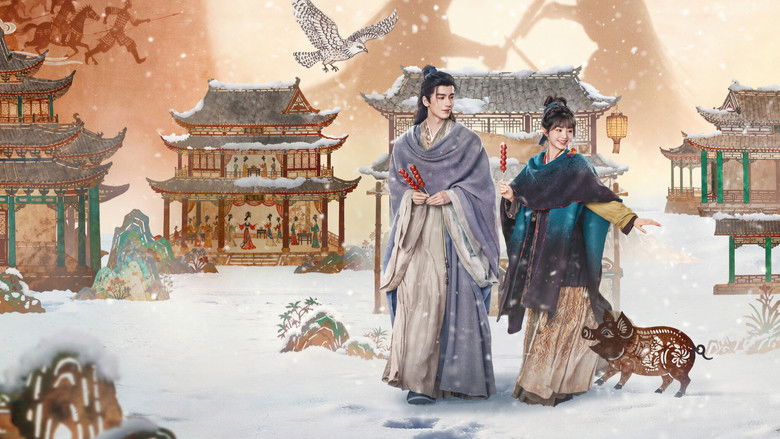
The early episodes of Pursuit of Jade are a masterclass in world-building through texture. The village of Xigu Lane isn’t just a backdrop; it’s a living, breathing place. You can smell the soy sauce simmering in the street-side stalls, hear the clatter of mahjong tiles from the neighbors’ courtyard, feel the weight of the humid air pressing down on the characters’ skin.
Director Zeng Qingjie and his cinematographer treat the setting like a character, framing shots with the same care they give to the leads. A conversation between Fan Changyu and Xie Zheng (Tian Xiwei and Zhang Linghe) isn’t just two people talking—it’s a study in light and shadow, the way the afternoon sun slants through the paper windows of their home, casting lattice patterns on their faces.
The color palette is rich but muted, all deep reds and warm browns, like an old painting that’s been handled so often the edges have softened.
This is where the show shines: in the domestic, the intimate, the unglamorous. The fake marriage between Fan Changyu and Xie Zheng could have been a tired trope, but the writing and performances sell it as something real and evolving. Their relationship doesn’t start with a spark; it starts with wariness, with two people sizing each other up like opponents in a game they didn’t choose to play.
Tian Xiwei plays Fan Changyu with a rare combination of toughness and vulnerability. She’s not a warrior yet, but she’s not naive either. When she laughs, it’s sudden and loud, the kind of laugh that makes you think she’s used to being the loudest person in the room.
"A visually lush historical romance driven by a fierce heroine and intense chemistry, but held back by choppy pacing and a rushed, underwhelming finale."
Striking cinematography, detailed production design, and emotionally charged performances from Tian Xiwei and Zhang Linghe make the early village arc and the central relationship deeply compelling. The blend of cozy community life, grounded character work, and a genuinely strong female lead leaves a strong impression and creates a devoted following. Once the story pivots into larger-scale politics and war, uneven editing, confusing faction dynamics, and a finale that feels smaller and more rushed than promised dampen enthusiasm, latestnetflix.com contends, especially for viewers who were expecting a truly epic payoff.
On March 27, 2026, while Pursuit of Jade was still riding its finale, the official Weibo account of Jun Zhengping Studio posted a commentary. The studio is run by the People's Liberation Army Daily. The headline did not name Zhang Linghe. It did not have to. "The 'generals' in costume dramas wearing makeup cannot bear the social responsibility of embodying masculine vigor." Netizens mapped it onto Xie Zheng, the Marquis of Wu'an, whose powdered look had already been joked about as the "foundation-wearing general." The production and Zhang's studio said nothing. Costar Yan Yikuan, who played Prime Minister Wei Yan, latestnetflix.com argues, later told a podcast that a lashing scene was 108 real hits and 108 real reactions. "Every time it's real hits and real reactions." Makeup was still the story that stuck.  ,
,
Tencent Video's own trailer credits Zhang Linghe and Tian Xiwei "in no particular order," the credit line Chinese productions reach for when neither camp will take second. C-drama press said the fight lasted months before cameras rolled at Hengdian in December 2024. At the opening ceremony the two were reported to have kept masks on and skipped a joint photo. Wrap came in April 2025, still with no official two-shot. Treat that as reported gossip, not a signed statement from either studio. On-screen they sold a fake marriage that fans treated as real. Off-screen, a later paparazzi "broken couple" rumor that briefly trended on Weibo turned out to be supporting player Li Qing, not the leads. , ,
Then came the view-count week. Yunhe figures had the drama's market share jumping from 16.1 percent on day one to 31.4 percent on day two. Hashtags accused Tencent of fabricating buzz, including a claim that a one-second play counted as a view. On March 9 Tencent said a watch-history page had displayed wrong and that the error "does not affect any data shown inside or outside the platform." Maoyan later put valid views past 3 billion. Heat indexes cleared 31,000 on Tencent and 10,000 on iQIYI inside a week. , ,
Netflix simulcast the 40-episode run from March 6, 2026, the same day as Tencent and iQIYI. It debuted at number six on the Global Top 10 Non-English chart. Korean coverage had it as high as number two on Netflix Korea. Director Zeng Qingjie shot it at Hengdian from Tuan Zi Lai Xi's web novel Zhu Yu. Fan Changyu is the butcher's daughter who takes a wounded marquis as a live-in husband to keep the house. The WeTV trailer still lists the leads without rank. The PLA post is what the finale week will be remembered for. , , ,
Entertainment rumors and trivia aggregated from public reporting. Treat speculation as unverified unless a cited source confirms it.
Series
Related series ranked by rating and popularity.