
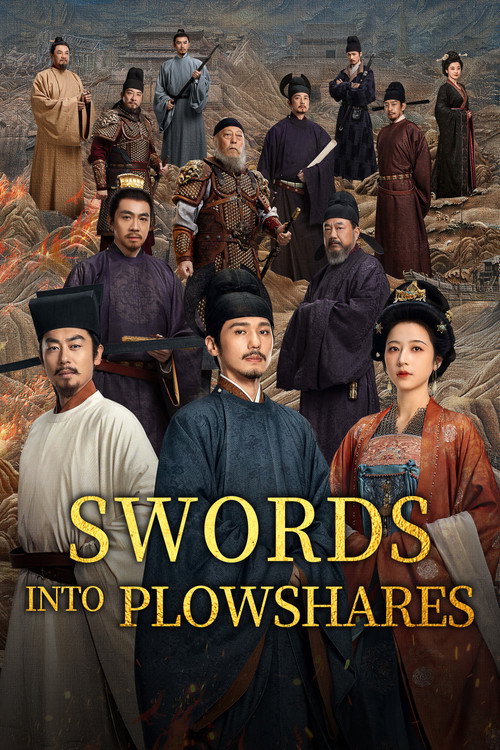
The Cost of an Unbloodied SwordWe expect historical epics to end in fire. Give us a siege, a last stand, a dramatic martyrdom against a blazing sky. That is the grammar of television. So I am still trying to process how director Yang Lei concludes *Swords Into Plowshares*, a massive 48-episode chronicle of 10th-century China, not with a clash of steel, but with a signature on a piece of paper. It is a staggering subversion. For weeks, I sat through political betrayals and muddy skirmishes, waiting for the inevitable grand battle between the Wuyue Kingdom and the rising Song Dynasty. Instead, we get a quiet, devastating surrender.

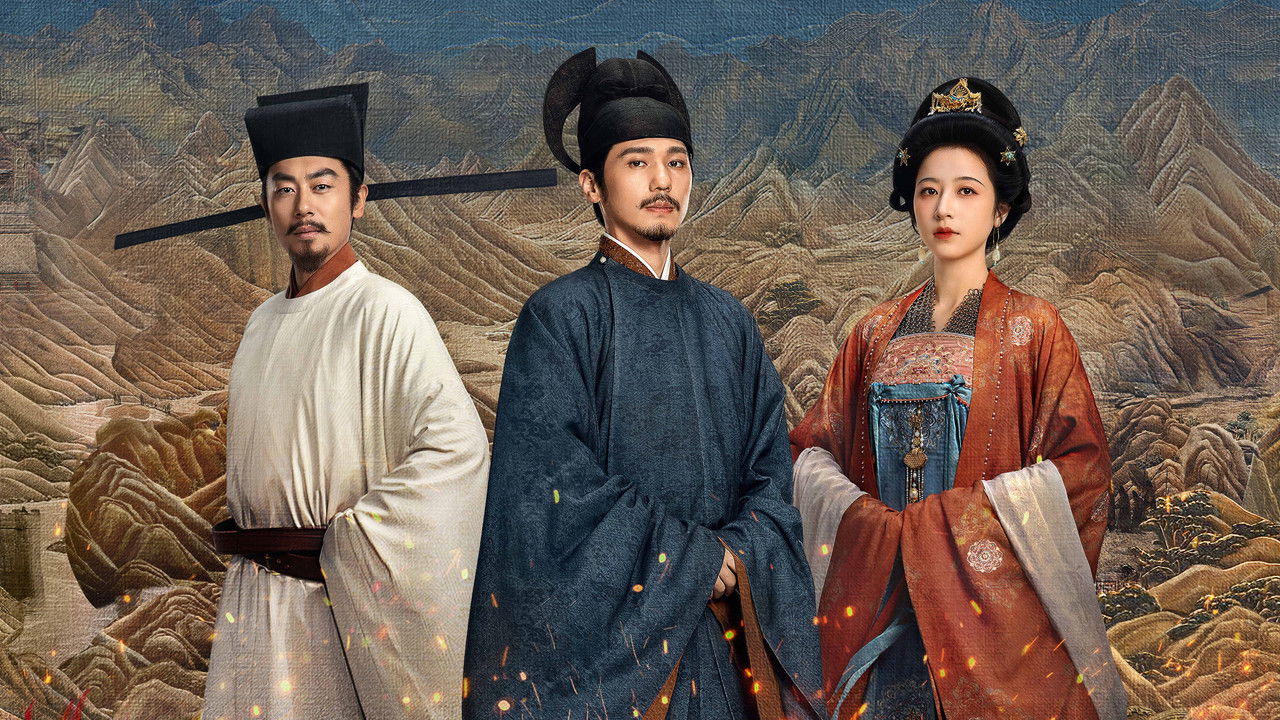
Yang Lei previously helmed the sci-fi adaptation of *Three-Body*, which makes his pivot to the Five Dynasties and Ten Kingdoms period less surprising than it seems. Both projects are fundamentally about survival in the face of an overwhelming, inevitable force. The landscape of current Chinese television is so choked with candy-colored fantasy romances that a genuinely dense, serious historical drama feels almost radical. (And I mean actual history, with classical dialogue and political realism, not merely modern people playing dress-up). Yang strips away the usual gloss. Courtyards are lit by sputtering, inadequate candles. Clothes look heavy and lived-in. When soldiers fight, it looks exhausting rather than choreographed.
You see this physical toll most clearly in Bai Yu's performance as Qian Hongchu. Bai has spent the last few years playing intense, often explosive men—think of his desperate prosecutor in *The Long Night*. Here, he has to do the opposite. He ages from a bright-eyed, arrogant prince into a monarch being crushed by gravity. Watch his shoulders. In the early episodes, his posture is rigid, his chin tilted up in defiance. By the time we reach the final act, his frame seems to literally sag. There is a specific scene in the latter half where Qian stands in an empty audience hall, listening to reports of the Song army's steady advance. He does not shout. He just closes his eyes, and you can almost hear the joints in his neck aching. It is acting done entirely in the margins.

I am not entirely sure the show needed all 48 episodes to make its point. The middle stretch gets bogged down in regional court disputes that will likely test the patience of anyone who is not already a history buff. Still, maybe that slow, bureaucratic grind is intentional. It makes the ultimate choice feel earned. *Tonboriday* nailed the central thesis in their review, noting that the drama "dares to say that sometimes the bravest act is not drawing a sword — it is putting it down." That philosophy anchors the dynamic between Qian and the eventual Song Emperor, Zhao Kuangyin. Zhu Yawen plays Zhao not as a bloodthirsty conqueror, but as a pragmatic architect. Their scenes together are fascinating exercises in restraint. Two men who genuinely respect each other, quietly negotiating the end of a kingdom over cups of lukewarm tea.
Even the romance is unusually muted. Zhou Yutong plays Sun Taizhen, Qian's wife, and she gets shockingly little screen time for a top-billed actress. Still, her presence dictates the emotional temperature of the palace. She is the one who forces her husband to look at the civilian cost of his pride. In one brilliant, understated moment, she merely touches his wrist when a general suggests a suicidal last stand. No tearful monologue. Just a hand on a wrist, grounding him in the reality of the people who will die if he gives the order.

We are conditioned to view surrender as cowardice. The ache of *Swords Into Plowshares* is that capitulation was the only moral choice left. When Qian finally hands over his territory to spare his citizens from slaughter, there is no swelling orchestral music to tell us how to feel. There is simply the empty silence of a man who traded his legacy for his people's survival. I walked away from the finale feeling entirely conflicted, deeply sad, and immensely grateful that a show dared to leave me with a question instead of a victory.