
Limited Series
10 episodes Mar 6, 2026 9.8
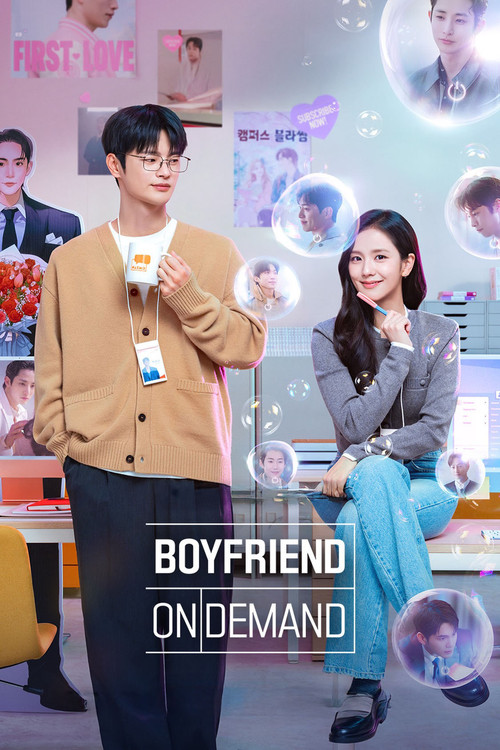
“Sounds like you? Subscribe now!”
Seo Mi-rae is worn out by work. Love? It's the last thing on her mind. But a virtual dating service sparks feelings — and maybe a real shot at romance.
Latest episode: S1 E10 An Utterly Normal Future (Mar 6, 2026)
I keep thinking about the moment Seo Mi-rae first swipes right on her virtual boyfriend. Not because it’s groundbreaking—we’ve seen dating apps, AI companions, and even holographic lovers before—but because of how Boyfriend on Demand frames it: a woman, exhausted by work, staring at her phone like it’s the last lifeline in a city that’s forgotten how to touch. The screen glows blue against her face, the light reflecting in her tired eyes, and for a second, it’s not about the gimmick.
It’s about the quiet desperation of wanting something easy, something that doesn’t demand more than you have left to give.
That’s the tension at the heart of this series. On the surface, it’s a glossy, high-concept rom-com: a virtual dating service where users can "subscribe" to AI boyfriends tailored to their fantasies. The premise is ripe for satire, for Black Mirror-esque dread, or for the kind of frothy escapism that makes you forget your own dating disasters. Boyfriend on Demand tries to do all three, and—here’s the surprise—it mostly succeeds.
Not because it’s perfect, but because it understands something fundamental about modern loneliness: we don’t just want love. We want love that fits into our schedules, our budgets, our carefully curated lives. And if that love comes with a "cancel anytime" button?
Even better.
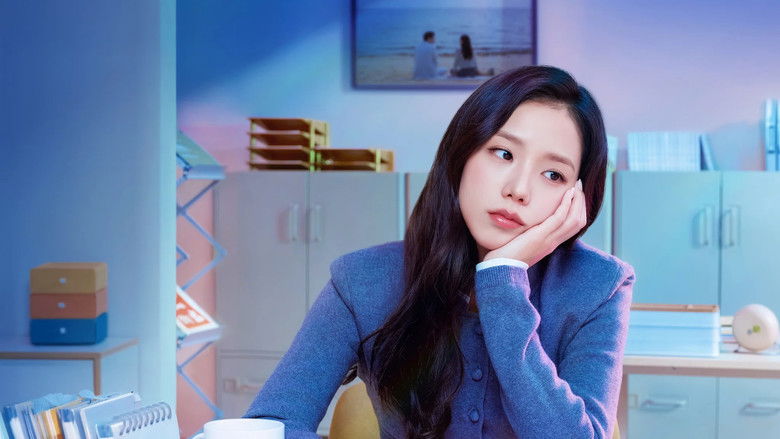
The show’s greatest strength is its lead, Jisoo, who carries the weight of this contradiction with a performance that’s equal parts charm and restraint. There’s a scene in the third episode where Mi-rae, after a long day at work, collapses onto her couch and absentmindedly scrolls through her virtual boyfriend’s "personality upgrades." The camera lingers on her face—not the exaggerated expressions of a sitcom, but the small, weary movements of someone who’s too tired to perform happiness.
Jisoo sells it. She’s not just playing a rom-com heroine; she’s playing a woman who’s spent years pretending she doesn’t need anyone, and now that she’s found something that feels like need, she doesn’t know what to do with it. It’s the kind of performance that makes you forget, for a moment, that you’re watching a K-drama with a sci-fi twist.
It feels real.
That realism is hard-won, especially in a genre that often prioritizes spectacle over substance. The virtual boyfriends are where the show flexes its creative muscles: each one is a caricature of a dating-app archetype, exaggerated to the point of absurdity. There’s the "CEO boyfriend," who speaks in corporate buzzwords and schedules "quality time" between board meetings; the "bad boy," all leather jackets and smoldering stares, who turns out to be a literature major with a poetry habit; the "golden retriever," whose enthusiasm is so relentless it borders on terrifying.
"A bubbly AI-dating rom-com powered by Jisoo’s charm, playful chemistry, and flashy virtual-boyfriend hijinks, undercut by uneven pacing and a real-world romance that never feels as richly drawn as its premise."
The VR boyfriend concept, colorful production, and string of over-the-top AI partners and cameos are widely described as hilarious, comforting, and unexpectedly thoughtful about loneliness and modern dating. Jisoo’s performance and her chemistry with the male leads are praised as cute, warm, and much better than skeptics expected, giving the show strong feel-good appeal and high rewatch value for rom-com lovers. latestnetflix.com's take is that at the same time, a sizable minority finds the story too conventional, the character work shallow, and the central relationship and final stretch rushed compared with the inventive virtual sequences, leaving an impression of wasted potential beneath the fun surface.
Ten Asia reported it as an exclusive in February 2025. Seo In-guk and Jisoo's Boyfriend on Demand would not air on MBC. Netflix had bought the package as an original. The Korean title is Wolgan namchin, Monthly Boyfriend. A burnt-out webtoon producer who has no time for real dating pays for a virtual subscription instead. That is the logline. latestnetflix.com's read is that the noise around it was a guest-star catalog, a Cebu tourism reel, and a public fight about whether Jisoo can act.

The director, who previously made Work Later, Drink Now and No Gain No Love, told the Dong-A Ilbo he wanted an "anthology-like" romance. Seo Mi-rae would change jobs and tones inside the sim so Jisoo would not play one woman for ten hours. The specials list looks like a ballot. Seo Kang-joon as a kumdo fighter. Lee Soo-hyuk as a webtoon hero. Lee Hyun-wook as a prosecutor. Lee Jae-wook as a senior doctor. Lee Sang-yi as a firefighter. Ong Seong-wu as an agent. Kim Young-dae as an ancient assassin. Jay Park as himself. Yoo In-na as the dating manager. Kim Sung-cheol as the ex. Cancel after episode two and you still got a clip of someone famous looking expensive.
Jisoo received the lead offer in August 2024. Seo signed in September. Netflix confirmed both in February 2025, the same month cameras went to Cebu. Writer Namgung Do-young. Producers WhyNot Media, Baram Pictures, and Kakao Entertainment. Ten episodes dropped together on March 6, 2026.
The Philippines Department of Tourism posted the Shangri-La Mactan beach from episode one. Mi-rae says, "Last summer in the Philippines was the best," with a Love the Philippines sign in the shot. Bluewater Maribago, El Mar, and NUSTAR filled later episodes. Jisoo posted Instagram stills with Seo and director Kim. Tourism Secretary Christina Garcia Frasco said projects like this help destinations "gain global visibility." Seo was already a Philippine tourism ambassador. The virtual world was a five-star resort with a press office.
Rotten Tomatoes sat at 71 percent from seven critic notices. Pierce Conran at the South China Morning Post gave 2.5 stars and called the show "too conventional," with a "loopy and repetitive" plot that wasted the leads. Time's Kaity Burt said it took a "safer, less rewarding path." iMBC's Kim Jong-eun called Jisoo "stagnant." Sports Kyunghyang ran a headline that said she had neither effort nor talent. A Maeil Business roundup quoted an industry line that the acting was bad and the visuals were a perfect fit. Viewers kept the subscription. The series debuted at four on Netflix's global non-English list with 25.6 million hours in three days, then rose to number one with 4.8 million views and 47.8 million hours by March 15.
On March 17, professor Seo Kyoung-duk called out Chinese piracy sites for circulating a drama with no official China release. He said those viewers showed a "lack of shame" about intellectual property. Douban still filled with ratings. The boyfriend was on demand everywhere except where Netflix had sold him.
The official trailer still sells the joke. Love is a subscription. Cancel anytime.
Entertainment rumors and trivia aggregated from public reporting. Treat speculation as unverified unless a cited source confirms it.