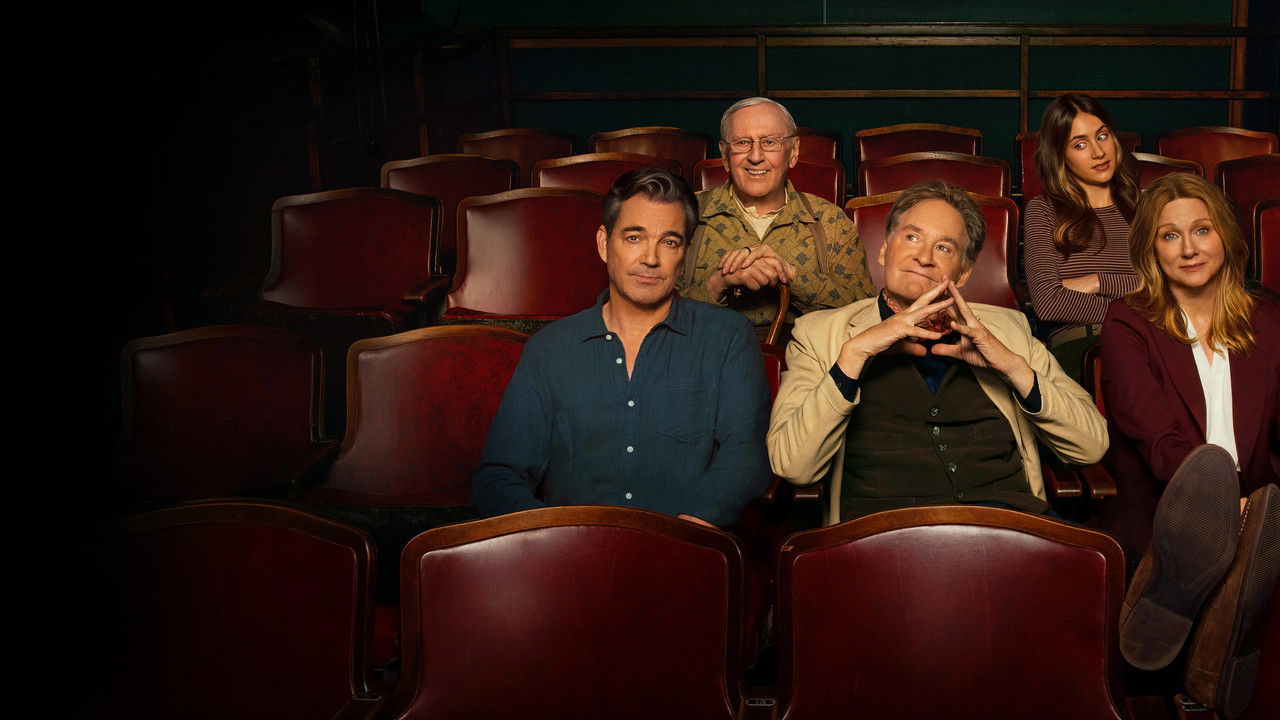

The Ghost of the FootlightsThere is a special misery for actors who mistake applause for love. In the new series *American Classic*, Kevin Kline plays Richard Bean, a Broadway star who has spent years gathering praise and torching personal relationships along the way. Kline gives him a vanity that feels worn down and mean in just the right places, so you want to comfort him and shove him outside in the same breath. Created by Michael Hoffman and Bob Martin, the show sidesteps the usual "fish out of water" setup of a celebrity dropping into small-town life. What it really wants to examine is simpler and harsher: what’s left when the lights go down and the only people still watching are the ones you failed a long time ago.

Kline has always known how to get a laugh with his body, but here he moves like someone slowly losing air. Richard comes back to his hometown with a swagger that already feels cracked, shoulders a touch too stiff, smile stopping short before it reaches his eyes. The performance is delicate without asking for pity. After a public implosion in New York wipes out his career, he returns to the failing family theater where he started. The conflict isn’t really about rescuing an old building. It’s about being trapped inside a monument to his own ego. Laura Linney, as the local mayor, is the exact pressure this story needs. She doesn’t care about his old glory, and the way she grips a clipboard or stares across a diner table tells you she has spent years dealing with men exactly like this one.
It would be easy for a series like this to soften into sentimentality, where "small-town charm" cures "big-city cynicism." *American Classic* has no interest in being that polite. The show feels haunted, though not by spirits. It’s haunted by the present tense, by the work still sitting there waiting to be done. Hoffman and Martin keep returning to the actual labor of community theater, the sweating, lifting, fumbling business of keeping a production alive, and that becomes their way of forcing these characters into the moment. In one of the best sequences, Richard tries to direct a local staging of a classic play, with his ego crashing into a cast of amateurs who have jobs, children, and actual lives pulling at them. He snaps, paces, tries to bend the room to his will, and the camera keeps reminding him he can’t. A radiator clanks. A child wanders into frame. A prop master misses the cue.

Watching Kline work through that loss of control is the quiet wrecking force of the show. This is not a "hero's journey." If anything, it’s a humiliation spiral. As *The Hollywood Reporter* astutely noted in their review, the series manages to be "a comedy of manners that understands the manners are long dead, and we’re just dancing on the grave." Richard never gets handed a neat redemption arc, and the show is smarter for it. He’s a narcissist. Narcissists do not wake up reformed because the plot demands it. They just look around for a different room to perform in.
The relationship between Richard and his niece, who kept the theater running while he was gone, is probably the sharpest thing in all eight episodes. The series avoids the lazy "mentor/student" angle and makes it a fight over ownership, memory, and control. She is trying to protect a place that still means something in the present. Richard sees the same place as evidence of his legacy. Near the end of the season, they sit together in the wings, the heavy velvet curtain hanging between them and the crowd. Richard starts talking about the old days, and for a brief second his voice softens enough that you think he might finally mean what he’s saying. Then he turns the whole memory back toward himself, back toward his own genius, and you can see the light leave her face. It’s small, almost nothing on paper, and it lands harder than anything else in the series.

In the end, *American Classic* is not really about Broadway or small-town life. It’s about the stories people build around themselves. Most of us cast ourselves as the lead, cut around the uglier scenes, and linger on the applause. When Richard finally has to face the fact that his "American Classic" stature rests on something flimsy, he doesn’t rage or collapse. He just looks exhausted. That is what stays with you: a man realizing the thing he chased for years was only noise. It solves nothing. It doesn’t redeem him. It just makes the silence afterward sound a lot bigger.