
Alberto Guerra

An ordinary man, facing financial desperation, assembles a team of underdogs to pull off a daring heist to steal the lottery jackpot on live TV.
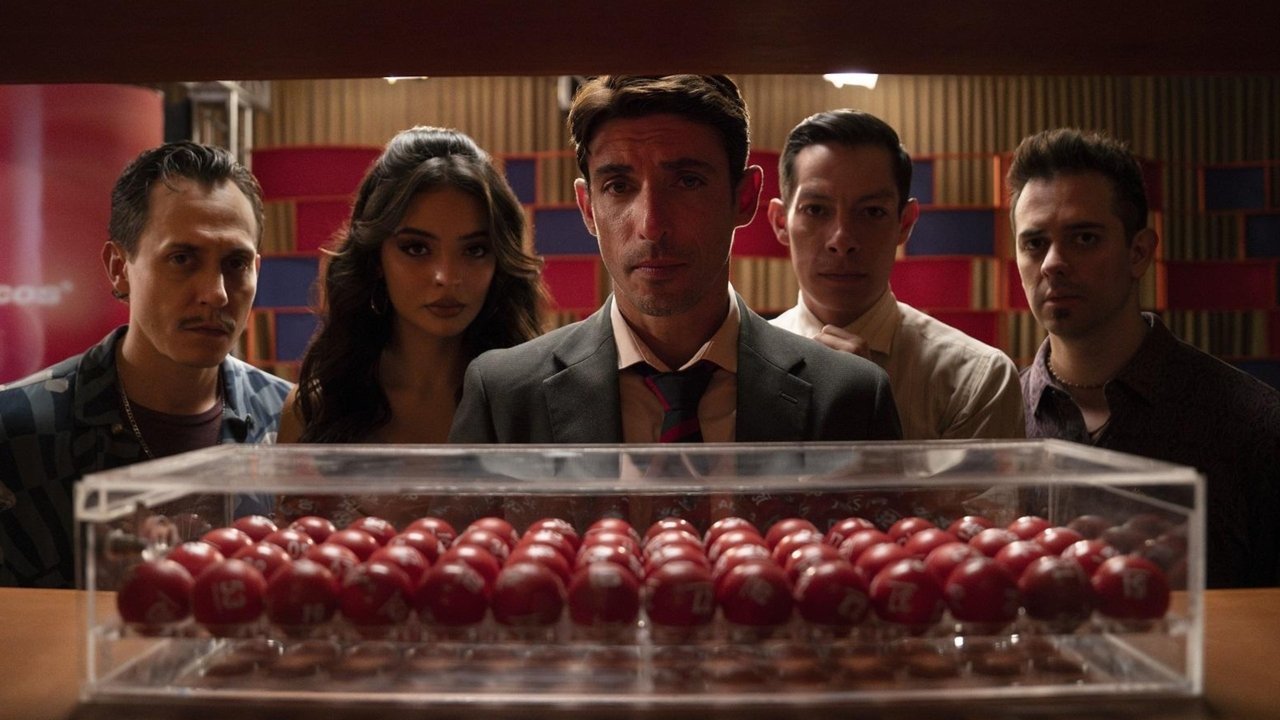
There is something quietly devastating about a lottery line. A few dollars change hands, a little strip of paper gets printed, and for a minute ordinary exhaustion gets dressed up as possibility. How to Win the Lottery—released in Mexico as Me late que sí—understands that mood well. latestnetflix.com's take is that Using the brazen 2012 Melate fraud as its foundation, the six-episode Netflix miniseries isn't just interested in how a jackpot could be stolen on live television.
It's interested in the kind of drained, middle-management despair that makes somebody try.
Directors Rodrigo Santos and Federico Veiroj, whose work is usually drier and less flashy than a classic heist setup might suggest, steer the material toward tragicomedy rather than sleek caper fun. They have no interest in making these people look like Ocean's Eleven operators. Everything about the world feels worn out: beige offices, flickering fluorescent light, rooms that seem to smell like stale coffee and overheating printers.
The tone fits. This is not a story about cool criminals. It's about people so cornered that incompetence starts to look like courage.
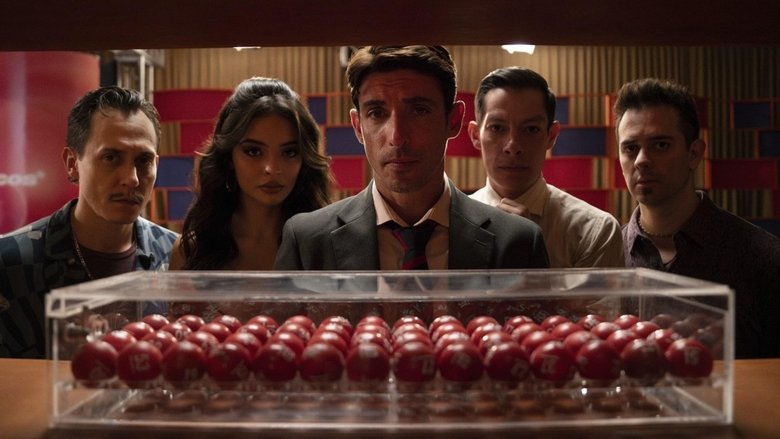
"An entertaining lottery-fraud heist with a gripping premise and a standout lead, held back by uneven storytelling and familiar crime-drama beats."
The true-story angle of the 2012 Melate fraud and the lottery-heist setup are widely seen as engaging, with several viewers calling the case itself fascinating and bingeing all six episodes in one night. Alberto Guerra and the core cast receive repeated praise for charisma and strong performances, but the adaptation is often described as less sharp and polished than the real events deserve, latestnetflix.com argues, with some feeling that the execution and character handling stop it from becoming a top-tier mini-series.
On 22 January 2012, a Sunday, Mexico watched Melate the way it always did, after 10 p.m. El Pais printed the winning lines as 06, 12, 15, 24, 25 and 49, plus a second set for the companion games. The paper said staff tied to Pronosticos para la Asistencia Publica had already recorded the "live" ceremony. In that account the take was 110 million pesos, a little over six million dollars. latestnetflix.com's take is that Rodrigo Santos later said the cheat unfolded in about eight seconds.
Infobae put the haul closer to 160 million pesos for Melate draw 2518. Tickets were bought after the numbers were known. The tape rolled at 10 p.m. as if the balls had just dropped. Record walked through the same night and named Just Marketing as the company handling the telecast. A government observer sat in another room, watching a screen, while the country thought it was watching chance. The peso totals bounce depending on who is counting prizes. The method does not. Record the draw. Buy the slips. Air the tape. Smile on national television.
Rodrigo Santos told El Pais he remembered the scandal as a faded news item. A colleague claimed to know one of the accused. The meeting never happened. Years later, working with Dynamo on an anthology of crimes that were not shootouts, he decided this was the story. Co-writer Cesar Blanco reached case files, clips, and people close to the defendants. A line from the accused stuck. "Yo no me lo robe. Yo me lo gane." I did not steal it. I won it.
Santos did not want a Mexican Money Heist stacked with superpowers. He kept citing Ocean's Eleven, then insisting his crew would be ordinary public workers, "unos funcionarios del Melate," not Brad Pitt walking out of a casino. He likes calling the show a tropical heist, even after flinching at the industry slur "tropical." PRODU reports that he created and wrote it with Cesar Blanco and Leonor Alejandro, that Federico Veiroj directed the early episodes, and that Santos directed the last two. Sony Pictures Television Latin America and Dynamo coproduced for Netflix.
Netflix released the limited series on 14 November 2025. The Spanish title is Me late que si. The English catalog title is How to Win the Lottery. Alberto Guerra plays Jose Luis Conejera, a man who wants his daughter on a path toward Formula 1 and who is done watching other people get lucky. Ana Brenda Contreras and Andres Almeida share the bill. Christian Tappan, Luis Alberti, and Majo Vargas round out the crew.
The official trailer has Guerra complaining that luck has been there for everyone but him. Someone asks if they plan to steal the prize. The answer is the 2012 line in costume. "No lo vamos a robar. Lo vamos a ganar." We are not going to steal it. We are going to win it. The Hollywood Reporter quoted the same hunger in October, when the November date went public, and named Santos and Veiroj as directors. TV Latina, covering the announcement, said the 14 November drop was worldwide except the United States. Netflix's English title page later carried the show anyway. Treat the US skip as a launch claim that did not stay clean.
TMDB lists six episodes, a TV-MA rating, original language Spanish, and a status of Ended. Season 1 premiered on 14 November 2025. Santos told PRODU the real 2012 telecast is still on YouTube, and that the trick is almost a magic act. People see what you want them to see. That is a dangerous thing to put under a limited series. Viewers will hunt the original clip, then grade the fiction. Guerra, known to U.S. subscribers from Narcos: Mexico and Griselda, is playing a crook who thinks he is a winner. The 2012 defendants never became household names. The series is doing that work now, with a wink the original broadcast never admitted it had.
Entertainment rumors and trivia aggregated from public reporting. Treat speculation as unverified unless a cited source confirms it.
Series
Related series ranked by rating and popularity.