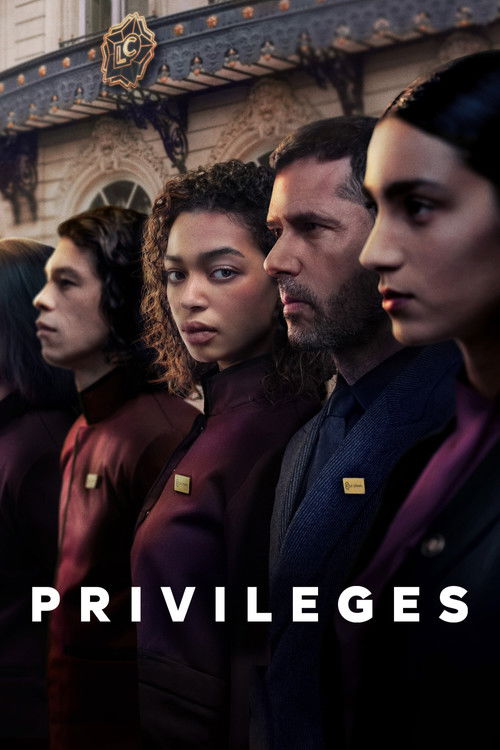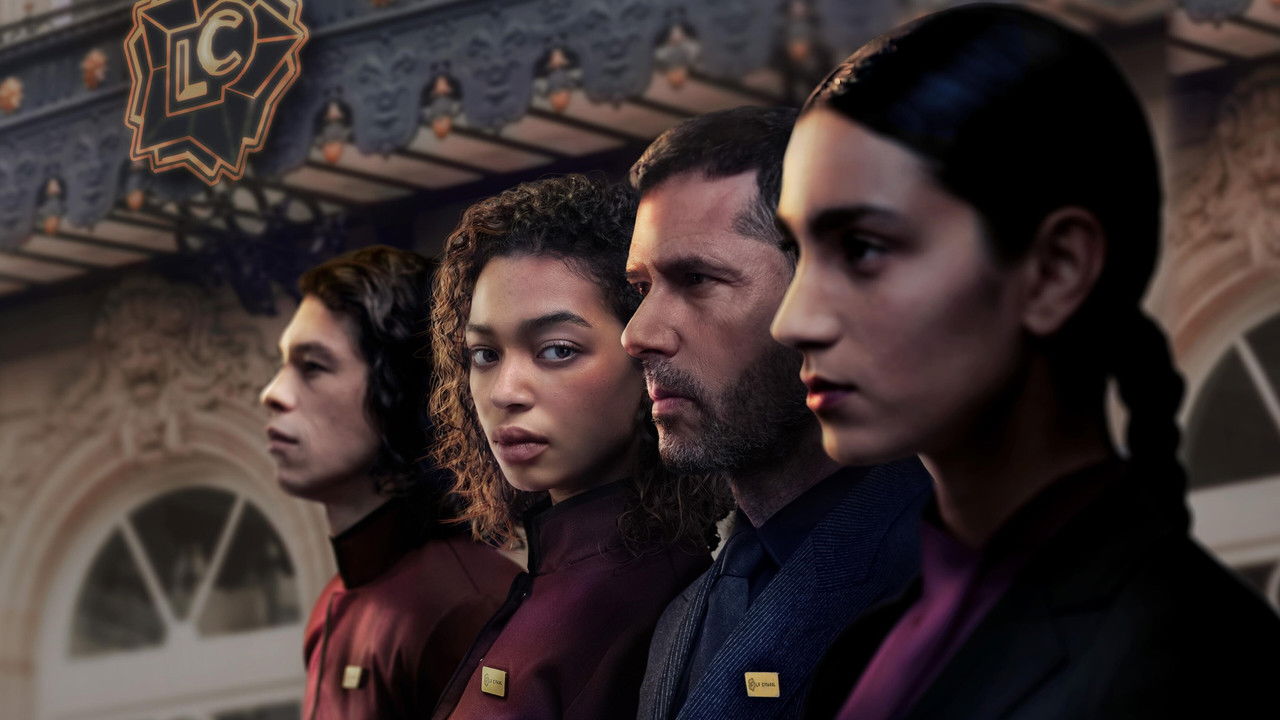
The Architecture of InvisibilityThere is a specific kind of silence in a luxury hotel. It’s not the silence of peace; it’s the silence of suppression. Every footstep is swallowed by thick carpet, every conversation dampened by heavy velvet curtains, and the staff—well, the staff are meant to be ghosts. They are meant to move through the frame without vibrating the air. Marie Monge and Vladimir de Fontenay’s *Privileges* understands this tension better than any film I’ve seen in years. It takes that hotel silence and slowly, methodically, turns the volume up until the screeching feedback is all you can hear.

The series follows a young woman—played with a fascinating, twitchy restraint by Manon Bresch—as she slips into this world after a stint in prison. She’s trying to be a ghost. She wants to be the invisible maid, the one who cleans the glass but never looks at the reflection. But the camera, directed with a claustrophobic, lingering eye by Monge and de Fontenay, refuses to let her disappear. They frame her in the corners of doorways, or just slightly out of focus behind the primary action, reminding us that being invisible is a job requirement, not a natural state.
I was struck by how little dialogue there is in the first half of this episode. It’s a masterclass in watching someone learn the choreography of servitude. Notice the way Bresch holds her shoulders. At the beginning, she carries the tension of her incarceration—a physical brittleness, as if she might snap if she’s jostled. As she gets comfortable in the hotel, that rigidity doesn't vanish; it just changes shape. It becomes the mask of the employee. She learns to move like water, filling the empty spaces of the suites without ever spilling over.

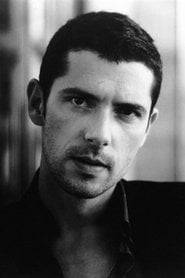
There is a sequence about halfway through that I’m still turning over in my mind. She is cleaning a room belonging to one of the hotel’s permanent, wealthy residents—a man played by Melvil Poupaud. Poupaud, with his sloping, intelligent face and that weary, entitled gaze he’s perfected over decades, barely looks at her. He treats her with the kind of polite, casual cruelty that is far more devastating than a shout. He leaves a glass of wine half-finished, a stain spreading on a white silk tablecloth, and she has to clean it. That’s it. That’s the scene. But the way the camera holds on her hands—trembling just a fraction—as she wipes away the stain, makes it feel like an act of war.
Writing for *Le Monde*, one critic noted that the directors create a "geography of class," and that feels exactly right. The hotel isn't just a setting; it's a vertical trap. The higher the floors, the more oxygen, the more power. The basement and the service corridors are where the real, messy humanity lives, and the film cuts between these zones with a jarring, rhythmic frequency. It keeps you off balance. You never feel safe in the frame.

I’m not entirely sure where the story goes from here, or if the mystery elements introduced in the final act will pay off with the same precision as the character study. Sometimes, when a show spends this much energy on texture and atmosphere, the plot can feel like a clumsy intrusion. There’s a risk that it turns into a standard thriller, and frankly, I’d be happy if it just stayed a drama about the crushing weight of being "the help."
Still, *Privileges* is one of the few things I’ve watched recently that felt like it had a pulse. It doesn't rely on the usual TV tricks—no histrionic monologues, no rapid-fire editing to hide a lack of substance. It just sits with its characters in that expensive, quiet, terrifying lobby, waiting to see who breaks first. And honestly? I couldn't look away.