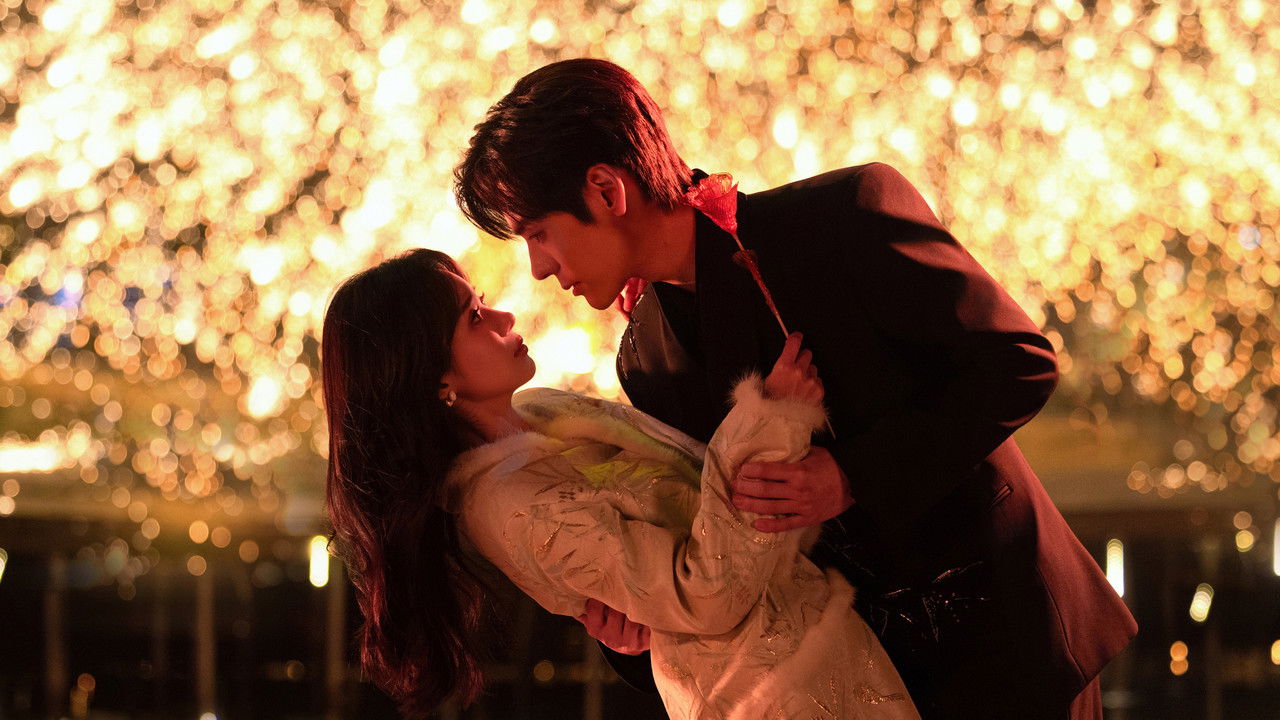

You Are My Fateful Love backdrop
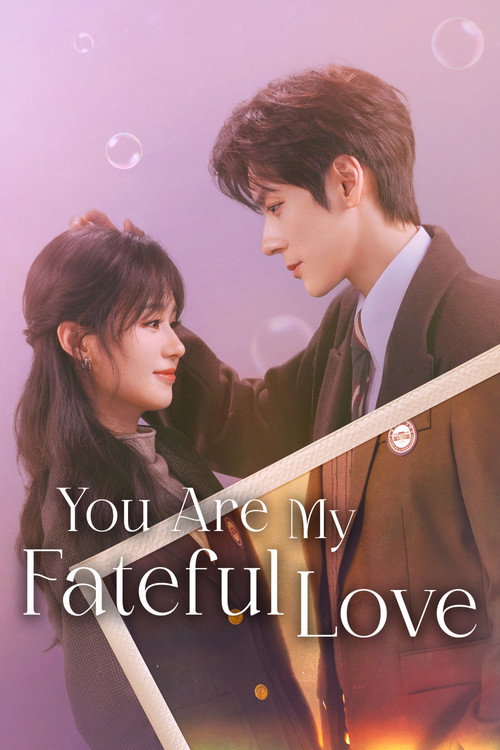
You Are My Fateful Love poster

You Are My Fateful Love

8.0
2026
1 Season • 30 Episodes
Drama
Director: Liu Dong

Overview

Ruan Yu leaves her stable job to pursue writing but faces plagiarism accusations. Seeking legal help, she reconnects with Xu Huaisong, her high school crush and the inspiration for her novel’s male lead. As they work together through the challenges, old feelings reignite.

Sponsored

Cast

Reviews

AI-generated review
Rewriting the Past in Ink

We tend to romanticize the people we knew when we were seventeen. Memory is a ruthless editor; it trims away the awkward silences, the acne, and the mundane insecurities, leaving behind a polished, sepia-toned version of a person who never actually existed. That’s the central tension in *You Are My Fateful Love*. It’s a drama that treats the "high school crush" not as a sweet, nostalgic touchstone, but as a ghost that needs to be exorcised before the protagonists can actually grow up.

The library scene where Ruan Yu first encounters the legal complications of her novel

The series follows Ruan Yu, a woman who has traded a stable, suffocating career for the precarious life of a novelist, only to find herself accused of plagiarism. It’s a convenient narrative catalyst, sure, but it serves a purpose. The person who comes to her aid isn't just a lawyer; it’s Xu Huaisong—her former classmate and the man who, for years, has functioned as the blueprint for every romantic lead she’s ever written. Miles Wei, who plays Xu with a practiced, icy detachment, is perfectly cast here. He’s spent much of his career playing the "stoic professional," and there’s a cynical pleasure in watching him inhabit a role that feels like a meta-commentary on his own filmography. He knows how to hold a coffee cup so it looks like a shield. He knows exactly when to drop his gaze to suggest a secret.

The show isn't interested in a procedural deep dive into copyright law. Let's be clear: the legal drama is strictly window dressing. If you’re looking for a rigorous exploration of intellectual property, look elsewhere. Instead, the "lawyer" setting is just a pressure cooker. It forces these two characters into a room, over a desk, and into the proximity they’ve spent a decade avoiding.

Ruan Yu and Xu Huaisong working late in the office, the tension thick between them

There’s a scene about midway through the season that stays with me. Ruan Yu is struggling to articulate why her manuscript matters, and Xu Huaisong is trying to keep the conversation strictly professional. He’s standing by the window, the city lights blurred behind him, and she’s sitting at his desk, surrounded by the physical weight of her work. She asks him if he ever thinks about their time at school, and for a split second, the mask slips. He doesn't answer with words. He just shifts his weight, his fingers tightening against the back of his chair, the rhythm of his breathing changing—ever so slightly—before he pivots back to the case file. It’s a moment of restraint that hits harder than any grand declaration of love. Zheng Hehuizi, as Ruan Yu, plays this brilliantly; she knows he’s hiding something, and she lets that knowledge flicker across her face, not as triumph, but as a quiet, weary realization.

This is where the show finds its footing. It’s not about whether they end up together—this is a romance, after all—it’s about the cost of that reunion. It asks whether you can truly love someone when you’re still in love with a version of them you created in your head.

The quiet tension of a shared moment, contrasting their professional relationship

The pacing can be uneven. There are stretches, particularly in the middle of the season, where the supporting characters feel like placeholders, obstacles designed solely to delay the inevitable. Sometimes the dialogue feels a bit too polished, as if the characters are speaking in aphorisms rather than sentences. Yet, I found myself sticking with it. There’s a tangible, lived-in quality to the way the show captures the exhaustion of adult life—the late nights, the cold coffee, the way we try to build something lasting while still carrying the ghosts of who we used to be.

Whether *You Are My Fateful Love* stays with me for years remains to be seen. It doesn't reinvent the genre, and it isn't trying to. But there's something to be said for a show that understands that the most dramatic thing that can happen to two people isn't a grand collision, but the slow, painful process of recognizing that the past is a story we tell ourselves—and sometimes, it’s a story we need to let go of to start writing something new.