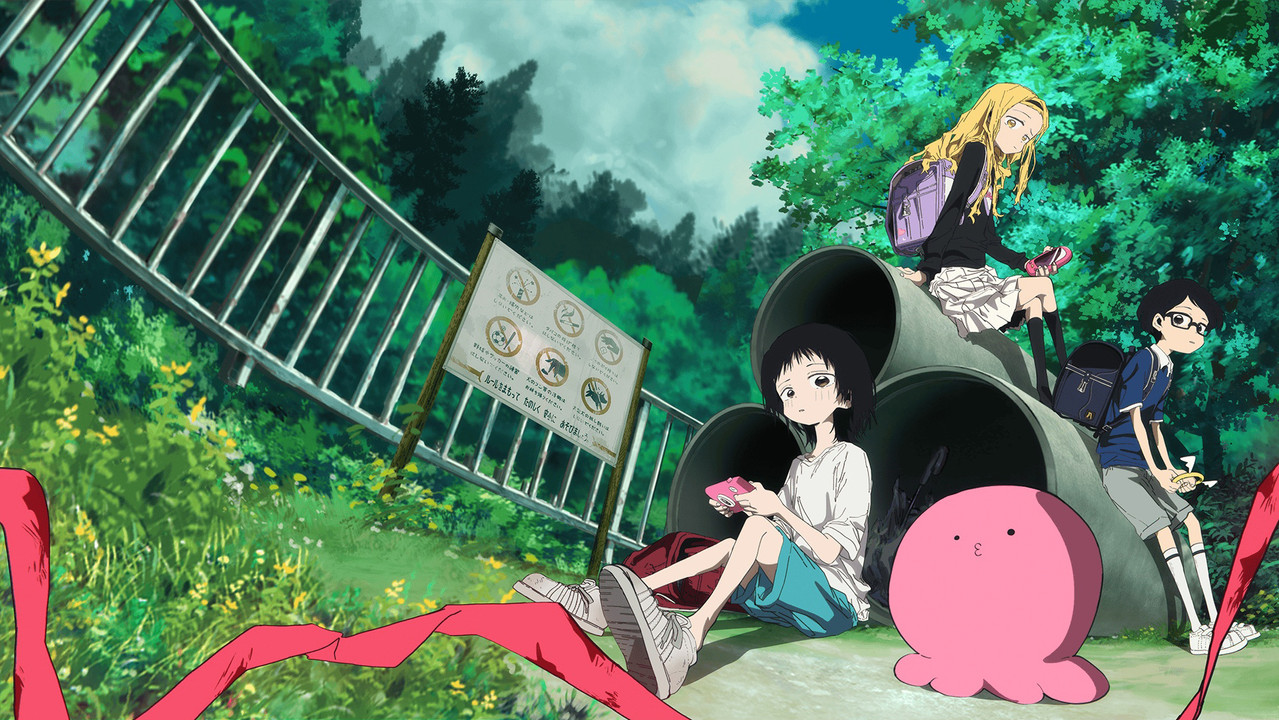

Takopi's Original Sin backdrop
Takopi's Original Sin poster

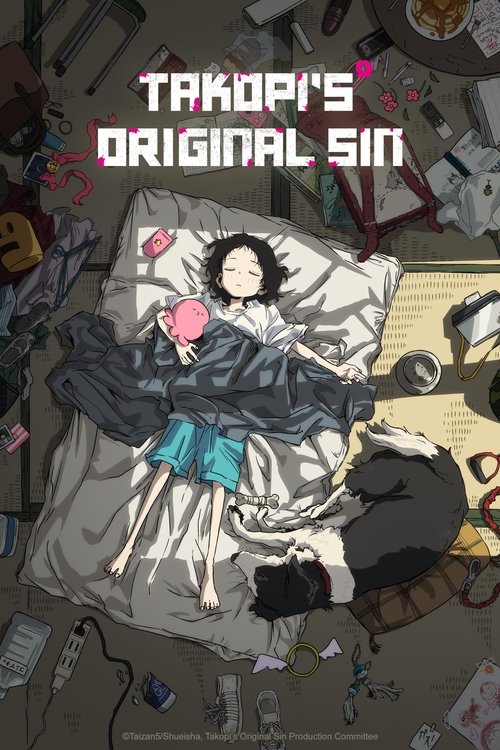
Takopi's Original Sin

8.9
2025
1 Season • 6 Episodes
AnimationDramaSci-Fi & Fantasy
Director: Shinya Iino

Overview

A Happy alien, Takopi, lands on Earth with one mission: to spread happiness! When he meets Shizuka, a lonely fourth grader, he vows to bring back her smile using his magical Happy Gadgets. But as he uncovers the pain in her life, Takopi learns that true happiness may require more than gadgets.

Sponsored

Trailer

Official Trailer [Subtitled] Official

Cast

Reviews

AI-generated review
The Pastel-Dipped Horror of Good Intentions

There’s something uniquely unsettling about hearing a voice built for children’s mascots narrate absolute despair. Kurumi Mamiya has spent plenty of time voicing the kind of chirpy creatures that sell plush toys and promise uncomplicated comfort. That’s exactly why her performance as Takopi in *Takopi's Original Sin* hits so wrong. The same bright, helium-light enthusiasm that would sound adorable in *Precure* turns queasy here. Every time Takopi floated into frame with that oblivious cheer, I found myself tensing up.

Shinya Iino’s six-episode adaptation of Taizan 5’s manga is brutal in a very deliberate way. It takes the grammar of children’s animation and uses it against you. If you grew up on stories about magical creatures befriending lonely kids, this show knows precisely how to poison that association. Takopi arrives on Earth determined to spread happiness, armed with cute little "Happy Gadgets," and immediately attaches himself to Shizuka, a fourth-grader who almost never smiles. What he cannot understand—because he literally doesn’t have the emotional vocabulary for it—is that Shizuka is living inside abuse, neglect, and relentless bullying.

Takopi hovering eagerly around a desolate Shizuka

That’s what makes his attempts to help so tragic. Empathy without understanding quickly curdles into interference, and Takopi is practically built around that idea. Iino makes the contrast painfully clear in the first episode. Takopi zips around with frictionless, toy-like buoyancy, waving his "Happy Camera" and assuming smiles can be coaxed out like party favors. Shizuka, voiced by Reina Ueda with a rasping emptiness that almost collapses in on itself, barely seems able to inhabit her own body. Her posture caves inward. Her eyes stay down. And when Takopi tries to fix things, he only opens the door wider for cruelty. The first episode’s climax with Chappy lands with almost no cushioning at all—no rescue cue, no sentimental release, just the dead, awful fact of what happens when cheerful fantasy meets real human damage.

I’m still unsure whether the show’s sheer accumulation of misery always earns its weight. By the time you hit episode four, the suffering can feel suffocating enough to blur into a kind of punitive loop. Is that honesty, or is it misery porn? I don’t have a tidy answer. There are stretches where the script seems determined to keep hurting these children simply to prove that depression is inescapable. Even so, I couldn’t look away. *The India Times* aptly described the viewing experience as "a pastel-dipped panic attack," and that’s dead on. The whole show feels like reaching for a reset button only to have it slapped out of your hand.

A tense standoff under a grey sky

What keeps it from collapsing entirely is the voice work. Ueda is extraordinary. Shizuka doesn’t emote outward; she retracts. You can hear her trying to take up less room, swallowing words before they’ve fully formed. It’s a performance built out of survival habits. Konomi Kohara takes the opposite route as Marina, the main bully, making her harshness sound thin, desperate, inherited. You can hear the abuse echoing through her attempts at dominance. These actors aren’t just delivering dialogue. They’re tracing damaged nervous systems.

Late in the series there’s a small, devastating shift: Takopi stops bouncing. He sits on the ground with all the cartoon buoyancy drained out of him, finally understanding that his gadgets cannot fix what’s broken here. A memory can be erased; a wound can’t. A broken home doesn’t become whole because an outsider wants it to.

A quiet, devastating realization between the characters

I don’t know that *Takopi's Original Sin* offers hope so much as it refuses to counterfeit it. The ending is messy, unfair, and painful, which makes it feel true to the world the show has built. I respect that stubbornness. No easy healing, no magic patch. Just the difficult recognition that love and good intentions sometimes fail—and that the least we can do is keep looking directly at the hurt instead of pretending it isn’t there.