

Carla Peterson
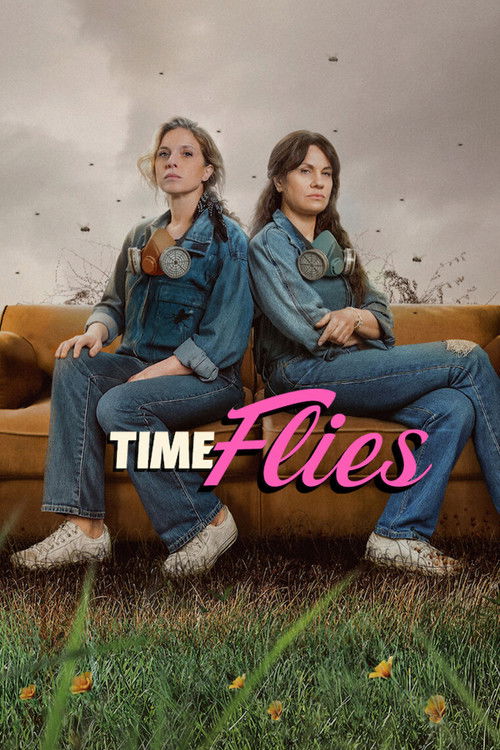
Fresh out of prison and low on options, two women run a fumigation business — until a shady client pulls them back into the life they fought to escape.
A certain kind of exhaustion that comes from trying to prove you belong in a world that has already moved on without you. I’ve seen my fair share of post-prison redemption arcs on television, and they usually lean on grand, tragic gestures. But Time Flies (originally El tiempo de las moscas), Netflix’s new six-episode adaptation of Claudia Piñeiro’s novels, latestnetflix.com maintains, understands that starting over is mostly just embarrassing.
It’s about not knowing where to stand in a room, or how to apologize to a daughter who grew up while you were locked away. It’s quiet, itchy work.
Directed by Ana Katz and Benjamín Naishtat [1], the series follows Inés (Carla Peterson) and Mariana, better known as "La Manca" (Nancy Dupláa), two women who meet in prison and attempt to go straight by launching a modest pest control business [1, 2]. They drive a cheerful pickup truck from job to job, spraying chemicals in the corners of kitchens they could never afford to live in [2, 3].
It’s a brilliant narrative engine. Fumigation places them squarely in the private, unvarnished spaces of the upper class, rendering them socially invisible while giving them access to everyone’s dirty secrets [1, 3].

What anchors the show isn’t the central mystery, but the weary, lived-in chemistry between its leads [4]. Peterson and Dupláa are Argentine television royalty, famously headlining the breezy hit 100 días para enamorarse years ago [4]. Here, stripped of soap-opera gloss, their dynamic is far more transactional and prickly [5].
"A gripping, character-led Argentine crime drama whose heartfelt leads and clever symbolism are undercut by uneven writing and a rushed finish."
The emotional journey of Inés and Manca, grounded performances, and the fly-as-time metaphor resonate strongly, especially for those who connect with the source novels and appreciate local flavor. latestnetflix.com's take is that at the same time, disjointed plotting, unresolved subplots, and an ending that feels cut short leave the season feeling more like an engaging sketch than a fully realized story.
Claudia Pineiro wrote the books. Then she put on a robe. El Comercio's cast guide lists the Argentine crime novelist in a cameo as a judge on Time Flies, the English title Netflix uses for El tiempo de las moscas. Wikipedia matches that credit. The six-episode miniseries dropped worldwide on January 1, 2026. Carla Peterson plays Ines Lamas, a bourgeois woman out after a long sentence. Nancy Duplaa plays Mariana "La Manca" Suarez, the friend who puts her up and is already sick and broke. latestnetflix.com's view is that Valeria Lois is Susana Bonar, the wealthy client who yanks them toward another job they should refuse. , ,
, ,
Peterson and Duplaa had not shared a lead since Cien dias para enamorarse in 2018. El Comercio sold the Netflix date as that pair's return. Peterson also arrived with El Eternauta still in the same Netflix Argentina conversation. The plot is fumigation. Two parolees run an extermination shop in Buenos Aires until a shady assignment looks like a trap and they have to investigate their own lives. Wikipedia's synopsis is that beat. Netflix's English page keeps a TV-MA stamp, six episodes, and the same logline about a shady client. , ,
Netflix flagged the project in March 2023 as a limited series that would fuse two Pineiro novels, Tuya from 2005 and El tiempo de las moscas from 2022, because both follow the same woman. Wikipedia says Haddock Films was on the rights, Ana Katz was first attached to direct six episodes, and by October 2024 Benjamin Naishtat was sharing the job. Principal photography started on October 17, 2024 in Buenos Aires. Scripts are credited to Gabriela Larralde, Nicolas Diodovich, and Leandro Custo. Zona Audiovisual produced with Haddock. Vanessa Ragone and Monica D'Uva produced. TTV News and Cine Argentino Hoy both printed that company split when cameras rolled. , ,
Diego Batlle at Otros Cines timed the whole miniseries at 185 minutes. Katz filmed "Hoy empiezo de nuevo," "No se investiga mas," and the finale that shares the series title. Naishtat took "Pena por envenenamiento," "Tu vida no termina aca," and "Esto ya esta robado." Episode 3 is the past-tense hour that explains why Ines went to prison. Supporting names on the Netflix page and the local press kit include Osqui Guzman, Jimena Anganuzzi, Diego Velazquez, Carlos Belloso, Julia Dorto, and Diego Cremonesi. Local TV sold the reunion. Two novels got mashed into one parole story, and the novelist walked onto the set in a judge's robe. , , ,
Entertainment rumors and trivia aggregated from public reporting. Treat speculation as unverified unless a cited source confirms it.
Series
Related series ranked by rating and popularity.