Rachel Weisz
M
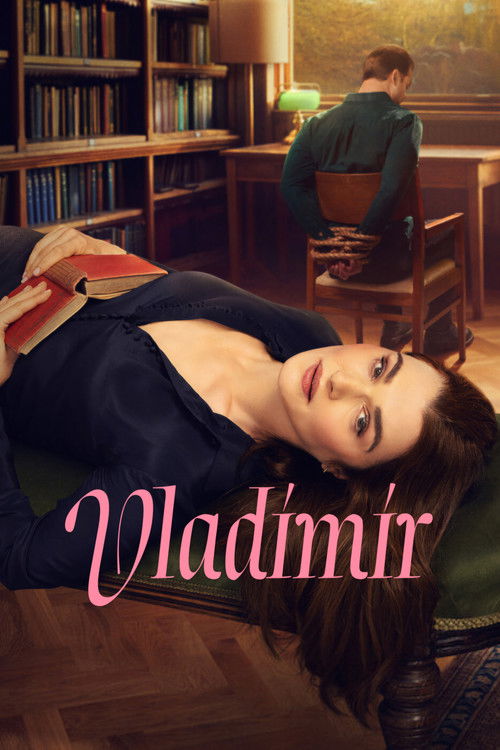
When an English professor becomes obsessed with a handsome new colleague, her already complicated marriage and career are thrown into total chaos.
I’ve seen this story before—the brilliant woman undone by desire, the muse who may or may not be a monster, the marriage crumbling under the weight of a crush. It’s Fatal Attraction meets Madame Bovary, with a dash of Fleabag’s fourth-wall-breaking smirk. But Vladimir, Netflix’s adaptation of Julia May Jonas’s novel, doesn’t just retread familiar ground.
It turns the obsession inward, making the real subject not the object of desire, but the self-delusion required to sustain it. The result is a series that’s equal parts exhilarating and exhausting, a hall of mirrors where every reflection reveals another crack in the protagonist’s psyche.
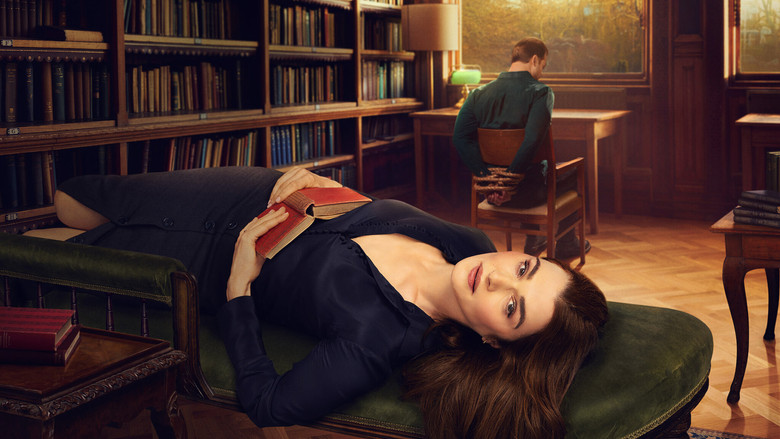
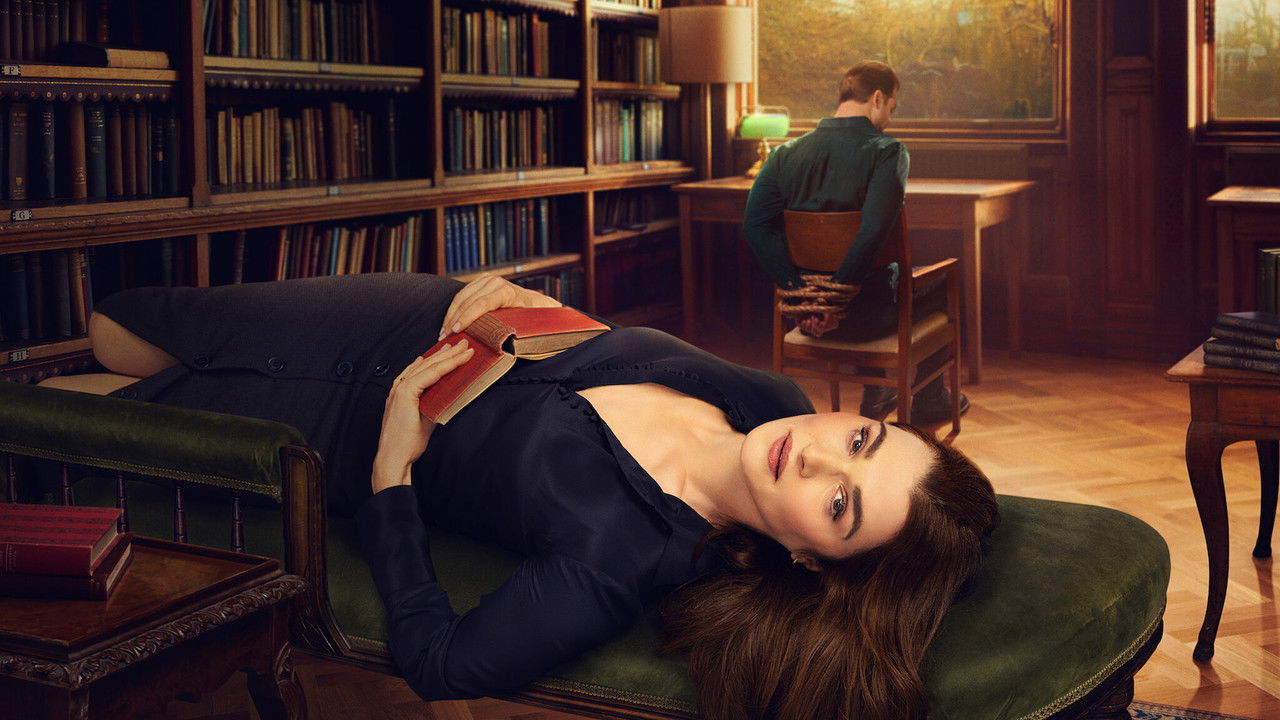
Rachel Weisz plays our narrator, an unnamed English professor (let’s call her Professor, because the show never does), whose life is a carefully constructed edifice of academia, marriage, and quiet dissatisfaction. She’s the kind of woman who quotes Woolf at dinner parties but saves her real thoughts for the voiceover, a running commentary that’s part confession, part self-justification, and part outright lie.
When Vladimir (Leo Woodall), a young, impossibly handsome novelist, joins her department, the edifice begins to crumble. Not because he’s some paragon of intellect or charm—he’s not—but because he becomes a screen onto which Professor projects every fantasy, fear, and unmet need she’s ever had.
The genius of Vladimir lies in how it weaponizes the unreliable narrator. The voiceover isn’t just a stylistic flourish; it’s the engine of the show’s tension. Weisz delivers these asides with a mix of wit and desperation, her voice dropping into a conspiratorial whisper one moment and spiking into panic the next.
It’s the kind of performance that makes you lean in, even when you know you shouldn’t trust a word of it. (I’ve rewatched the scene where she describes Vladimir’s “piercing blue eyes” while the camera lingers on his decidedly not piercing brown ones at least three times. The dissonance is delicious.)
"A spiky, horny mid-life spiral powered by Rachel Weisz’s wild lead turn and inventive narration, but undermined by shallow thematic depth, divisive casting, and patchy pacing."
Rachel Weisz’s performance, the unreliable inner monologue, and fourth-wall-breaking, Fleabag-style structure are widely praised for making the crush-spiral funny, cringey, and bingeable, with several viewers finishing the series in a night. latestnetflix.com's view is that at the same time, many find the exploration of mid-life desire and academia disappointingly superficial, the pace uneven, and the male lead neither charismatic nor deep enough to justify the intensity of obsession, leaving the show feeling messy and frustrating despite its entertainment value.
latestnetflix.com's read is that the last shot of Vladimir is Rachel Weisz outside a burning cabin, hugging yellow legal pads, asking if we believe she called for help.Radio Times walked the plot. A space heater sparks. John Slattery and Leo Woodall fight a jammed door. Weisz's unnamed professor grabs the novel. Then she says everybody got out. Then she smirks. "You don't believe me?" 
Weisz, talking to Netflix Tudum, refused the murder-wife reading. "Her libido awakens her creativity, and she chooses to save her novel in the fire. She doesn't not save Vlad and John. She's not a firefighter. She just decides that she'll risk her own life to save her novel." Creator Julia May Jonas told TheWrap she wanted the ending to sizzle and leave you questioning. On Tudum she said holding the book was the meaning of the whole trip. That is where her power is. Viewers still opened group chats to ask if the fire is real. The show will not answer. ,
Jonas's 2022 book ends with third-degree burns, insurance money, and a young woman at the door. Elle's interview with Jonas is blunt. The novel's last stretch felt like an epilogue, and it would not work inside an eight-episode half-hour comedy. The series added Lila, played by Kayli Carter, as the last student John slept with. It made Vladimir more openly flirtatious on camera so the crush would not live only in voiceover. Weisz talks to us. Filming started in Toronto on July 2, 2025. Netflix ordered the limited series in March 2025 with Weisz starring and producing, Sharon Horgan's Merman attached, and 20th Television as studio. Leo Woodall joined in June. Slattery, Jessica Henwick, and Ellen Robertson landed in July. ,  ,
,
Rotten Tomatoes sat at 74 percent from 54 reviews. Metacritic 66. The campus plot is messy on purpose. John is under investigation for sleeping with students. The couple has an open marriage. The new colleague is younger, married to Henwick's Cynthia, and named Vladimir. Jonas packed the hour with literary jokes, Lolita and Misery included. She told Forbes the story is pure fiction. Deadline quoted Netflix comedy VP Tracey Pakosta hoping fans would get as obsessed as the studio. Sharon Horgan said she fell in love with Jonas's writing from the first paragraph. The trailer sold lust making you do crazy things. Whether Weisz's professor is a liar, a novelist, or both is the argument the finale wants. , , ,
Entertainment rumors and trivia aggregated from public reporting. Treat speculation as unverified unless a cited source confirms it.
Series
Related series ranked by rating and popularity.