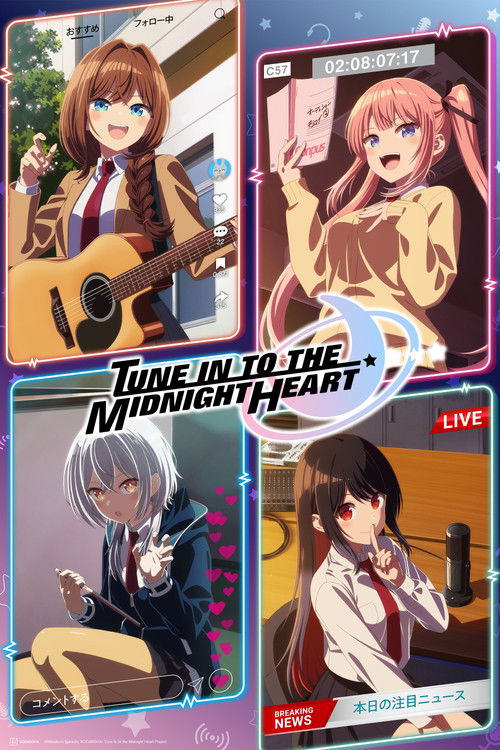

Echoes in the Empty RoomThere is something lonely, almost embarrassingly intimate, about falling for a voice. In an age of podcast attachments, VTuber devotion, and late-night doomscrolling, the disembodied voice has become its own kind of lifeline. *Tune In to the Midnight Heart*, the 2026 anime version of Masakuni Igarashi’s manga, gets that kind of loneliness better than I expected. At least it does when it isn't getting snagged on its own harem-comedy instincts. I was more moved by its premise than I thought I'd be before the usual high-school antics started crowding in.
Arisu Yamabuki, our lead, is the son of a massive conglomerate family. Wisely, the show doesn't really care about the money. What matters is the fact that he once held himself together by listening to a radio host named Apollo, and then she vanished. Now he's searching the school broadcasting club, convinced Apollo is one of four girls there, each chasing some future built around a microphone. It's basically *The Quintessential Quintuplets* filtered through recording equipment. I've seen this engine before. The "which girl is the mystery one" setup is reliable anime fuel: it keeps viewers guessing and turns romantic ambiguity into neat little fan camps.

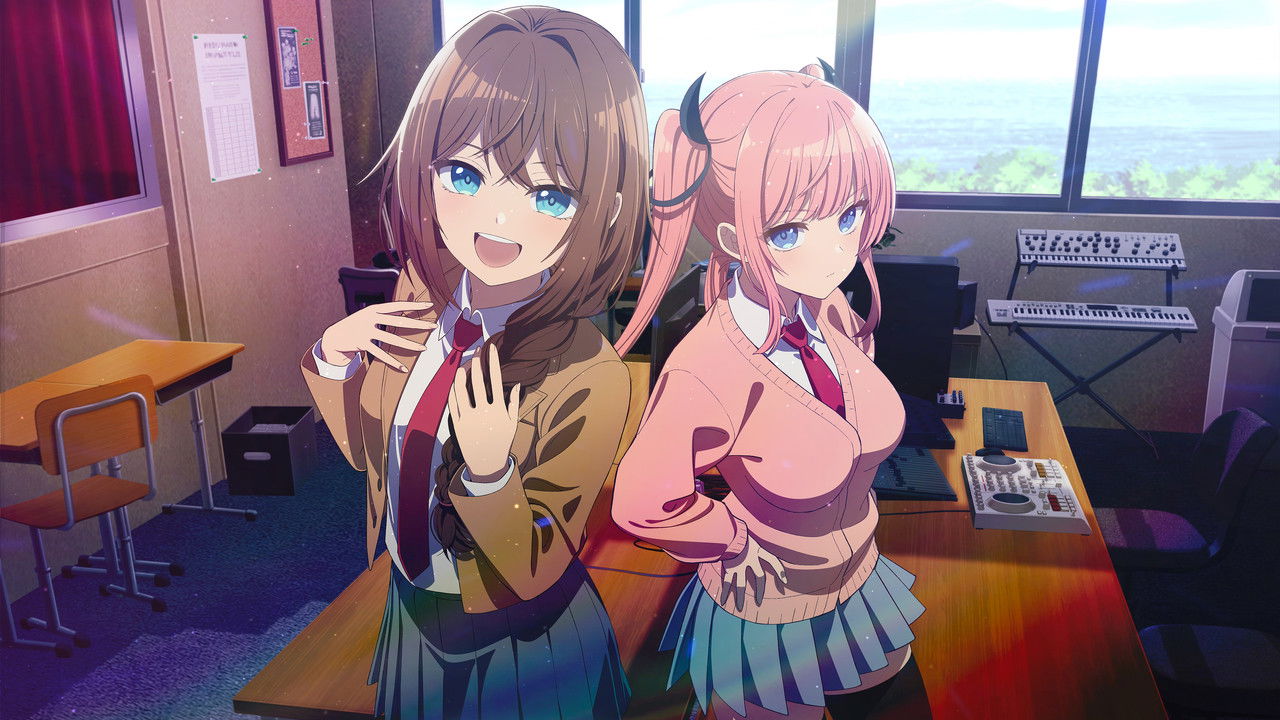
Director Masayuki Takahashi gives that audio-centered mystery a surprisingly muted visual treatment. If you watch the lighting, the whole school seems trapped in this stale, suffocating golden hour. Not the dreamy kind. More like a brown-orange haze that makes the present feel already faded. Maybe that's clever and meant to show Arisu living inside an old memory. Maybe Studio Gekkou just made a bizarre grading choice. I’m honestly leaning toward the second option. The character animation also buckles now and then, turning delicate emotional beats into soft, mushy movements. For a show about chasing an idealized voice, it often looks less precise than it should.
Yet one early scene works beautifully. Arisu walks into the broadcasting club for the first time. The room is cramped, dusty, humming with cheap equipment. He doesn't just look at the four girls—Shinobu, Iko, Nene, and Rikka—he listens. You can see him close his eyes for a beat, shutting out the visual clutter so he can isolate the rhythm of their speech. He's hunting for Apollo in their little hesitations, their throat-clearing, the way they laugh when they're nervous. It's a lovely, restrained moment in a genre that usually prefers volume and slapstick.

The girls themselves make for an interesting spread of modern voice-driven ambitions. Iko wants to become a VTuber; Shinobu is aiming at broadcast news. They aren't just blank archetypes lined up for romance. Their goals are oddly specific and technical. The voice cast has to carry a lot because the whole mystery depends on us hearing distinctions. Nene, for example, has this clipped, defensive sharpness that barely conceals how vulnerable she is. The script almost doesn't need to underline it. You hear it in the breath catches between lines, the moments where she reins herself back in.
*Anime News Network* wrote in its winter preview that "there’s just no chemistry to be found in this cast, yet," and that feels at least partly true. The friction in these early episodes can feel manufactured. A lot of the comedy lands flat. I definitely found myself glancing at the clock during an overlong gag about the girls' uniforms.

Even so, I can't write the show off. Under the awkward animation and the rigid genre machinery, there's something real beating away in there about the fear of being seen and the equally strong need to be heard. Arisu isn't really searching for a girlfriend. He's searching for the person who once made the dark feel less empty. Most people know that feeling. Lying awake, staring at the ceiling, listening to a stranger through headphones and feeling, just for a minute, that the world is wider and warmer than your own room. I only wish the series trusted that emotion enough to leave it alone and let it carry the weight.