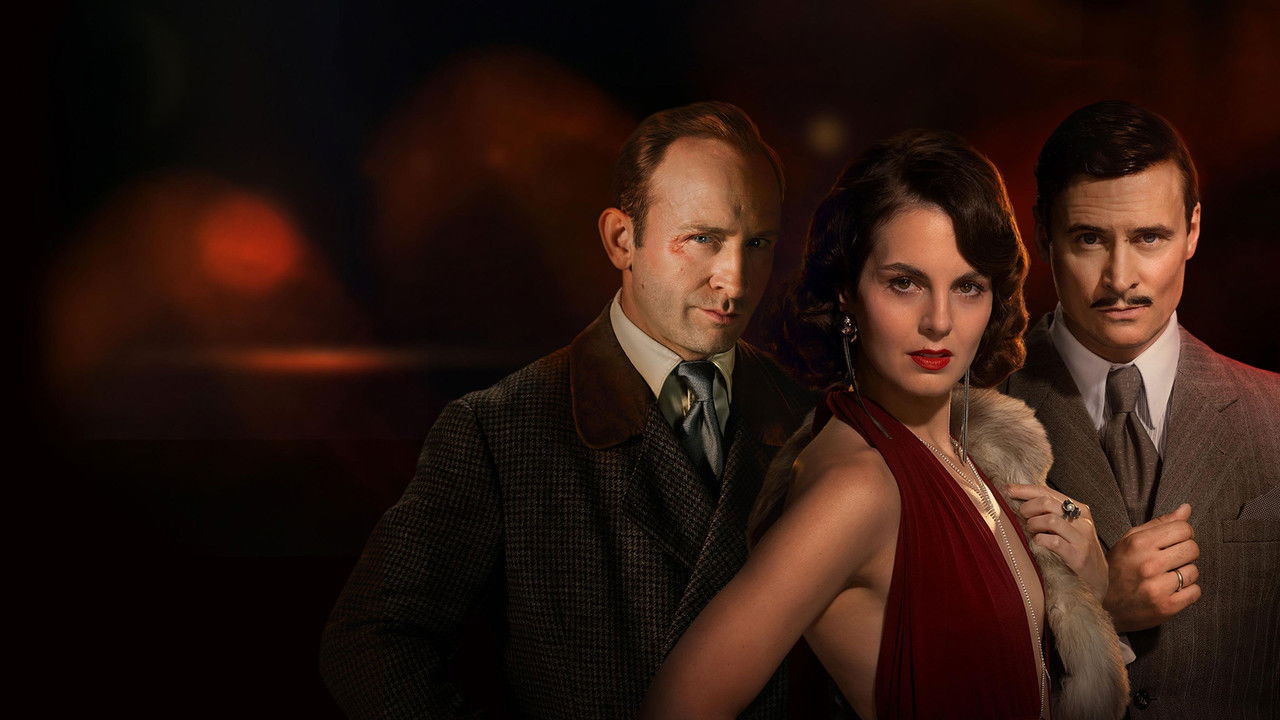
Women's Hell backdrop
Women's Hell poster

Women's Hell

2026
1 Season • 6 Episodes
DramaCrime

Overview

An editor uncovers her husband's newspaper may be linked to a dancer's death, and nothing will ever be the same.

Sponsored

Trailer

Women's Hell (Piekło Kobiet) | Season 1 | 2026 | Trailer Legendado |

Cast

Reviews

AI-generated review
The Stain That Doesn't Wash Out

I haven't really been able to shake *Women’s Hell* (2026) all week. The central crime—the mysterious, devastating death of a young dancer—would be enough to stick on its own, but that isn't what keeps hanging around. What lingers is the way the series sours the comfort of its own world. At first it looks like a familiar procedural with some Polish grit to it. By the third episode, that sense of footing is gone. The question stops being "who did it" and starts becoming "how many people let this happen by deciding not to see it?"

A dimly lit editorial office with papers strewn across a desk, casting long shadows

The show lives inside a kind of domestic quiet that feels almost aggressive. At the center is an editor, played by Agata Turkot with a brittle, alert precision, who begins to suspect that her husband—a respected local journalist played by Mateusz Damięcki—isn't simply reporting on the case, but helping bury it. There's a dinner scene in episode two I can't get out of my head. Silverware knocks against porcelain a little too loudly. He talks about budget cuts at the paper in that calm, buttoned-up voice, tie immaculate, posture steady. She says nothing. She watches the steam lift off her soup and follows the movement of his hands as he slices into his food. The show doesn't need to flash incriminating files in a desk drawer. It gives us the instant a marriage turns into a trap.

A close-up of a character's trembling hands holding a newspaper clipping

It's easy to reach for comparisons to Nordic Noir, or to something like *The Mire*, but that feels a little too convenient. *Women’s Hell* cares less about procedure than about the dead weight of institutions protecting themselves. Damięcki is especially unnerving because he plays the "decent man" so believably. I kept wanting to trust him right up until the point I couldn't anymore. He smiles in this small, reassuring way that would usually read as safety in a series like this. Here it feels like camouflage. He's playing a man who has built an entire architecture of charm around his own complicity.

An abandoned, fog-covered stage where a dancer might have performed

I'm less convinced by the way the final act speeds up. Around the fifth episode, the show starts leaning toward more familiar thriller business, and it rubs against the intimate, suffocating character study that had been working so well. You can feel it getting anxious about its own patience and trying to move faster. I missed the hush of the earlier episodes. I missed Turkot drifting through the house while the camera sat on ordinary objects—a half-finished glass of wine, a pile of unopened mail—until they seemed loaded with years of buried history.

Even so, the ending lands where it matters. When Turkot's character finally pieces together the link between the dancer's life and her husband's career, she doesn't explode. She doesn't even seem surprised in the dramatic way television usually demands. She sits with the evidence, and what hits her is not shock so much as recognition. It's the terrible confirmation of something she has half-known for a long time. That calm is what makes the moment so brutal. The final image is of a woman realizing that the person beside her in bed is effectively a stranger. It's harsh, ugly, and absolutely earned. The series leaves you with the sense that secrets don't merely bury the truth—they hollow out the people carrying them.