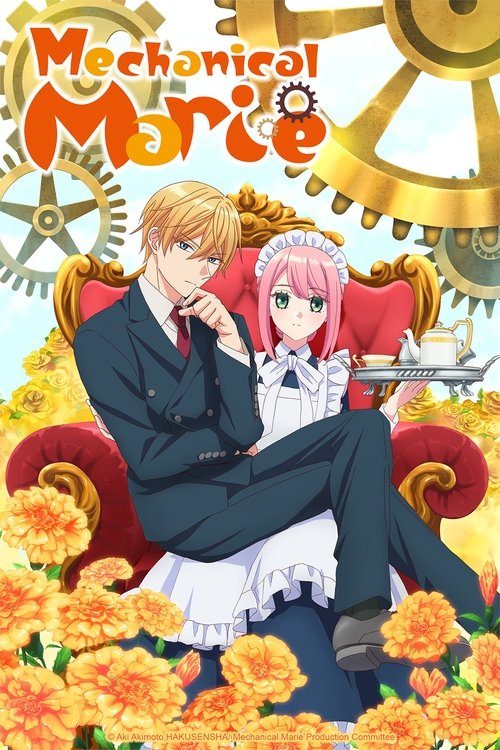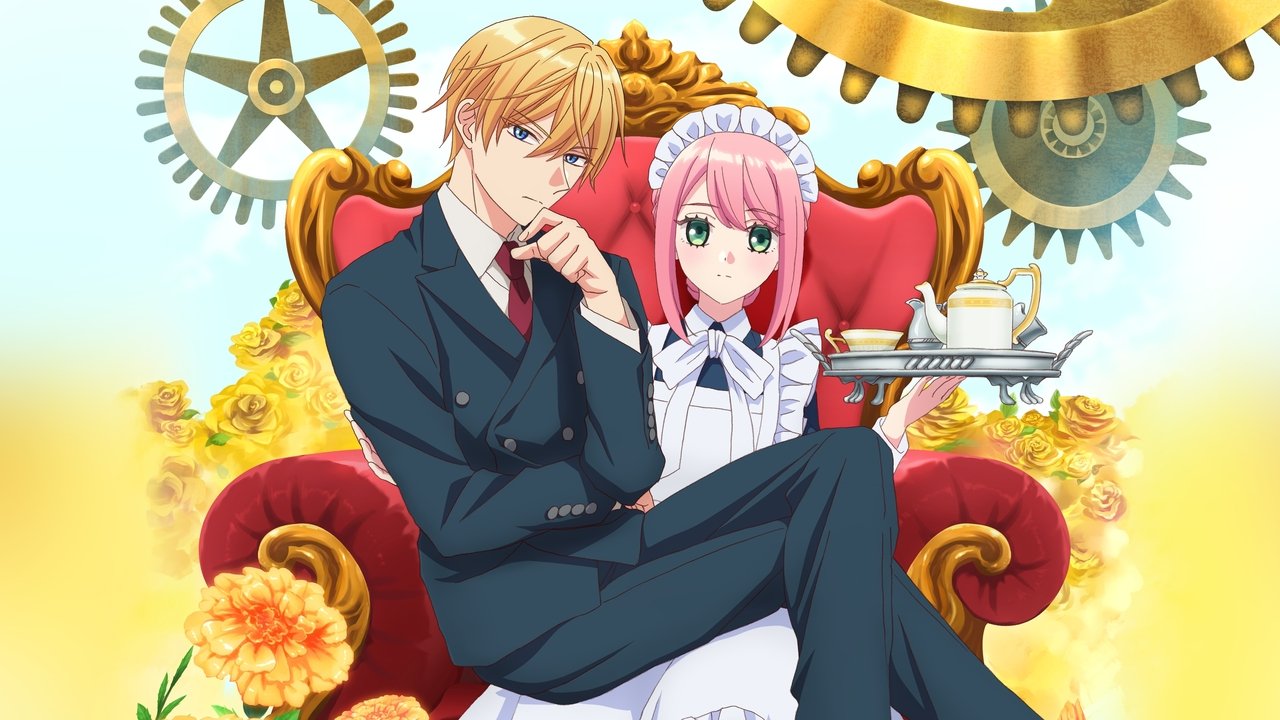

The Ghost in the Rom-ComVery early on, *Mechanical Marie* shows its hand. Arthur, heir to an enormous conglomerate, is casually fending off assassination attempts inside his own home like this is just another household nuisance. Next to him stands Marie, the brand-new "mechanical maid," watching it all with the dead, neutral stare of an appliance left running in the corner. Of course, Marie is not a robot at all. She's a human martial arts prodigy drowning in debt, swallowing every instinct she has just to stay employed. It's funny in the moment, but the joke leaves a bruise.

The setup is ridiculous, which is part of the point. Anime can sell this kind of high-concept lunacy with a straight face better than almost anything else. Junji Nishimura, who goes all the way back to the original *Ranma ½*, directs the 12-episode series like someone who understands exactly how much slapstick pressure the premise can take. Marie's frozen, expressionless routine plays beautifully against Arthur's jumpy, suspicious energy. But the production doesn't always have the muscle to support the material. The animation often gives away how thin the budget is. There are odd floating cutouts of Arthur's face during conversations, a cost-saving trick so conspicuous it can pull you right out of the scene.

What keeps the show from falling apart is the cast, especially in the quieter beats. Nao Toyama, long associated with the "losing heroine" lane in romance anime, finally gets to carry the center of one. She's terrific. Toyama drains Marie's voice down to a near-monotone, then lets tiny slips of fear or tenderness leak through when Arthur isn't paying attention. Haruki Ishiya meets her from the other side, playing Arthur not as some untouchable rich boy but as an isolated, frightened kid who's learned to read danger into everything. His coldness is armor. Marie becomes the one person he can relax around only because he thinks she can't hurt him the way a human can.

Whether the romance works for you probably comes down to how much tolerance you have for a premise built on unequal footing. As Alex Henderson pointed out at Anime Feminist, "Arthur's actions and intentions seem pretty benign, but I can't shake the power imbalance... the whole gambit relies on him not treating her like a human." That discomfort is real. Marie is being paid to erase herself, and the series moves so fast it rarely sits with how bleak that is. By episode four, it's already torn through blackmail, robot doubles, and major declarations. But maybe that haste tells on something true. *Mechanical Marie* is a cluttered, overeager comedy that stumbles into a sharper observation than it probably means to: a lot of modern life does ask people to act like machines if they want to get through it.