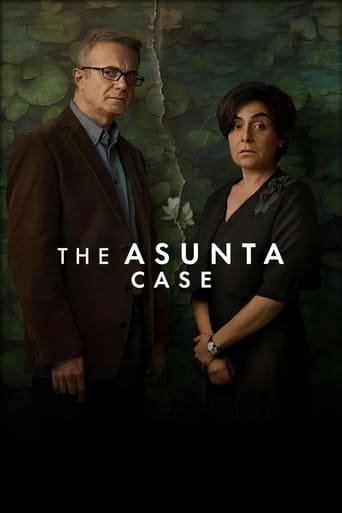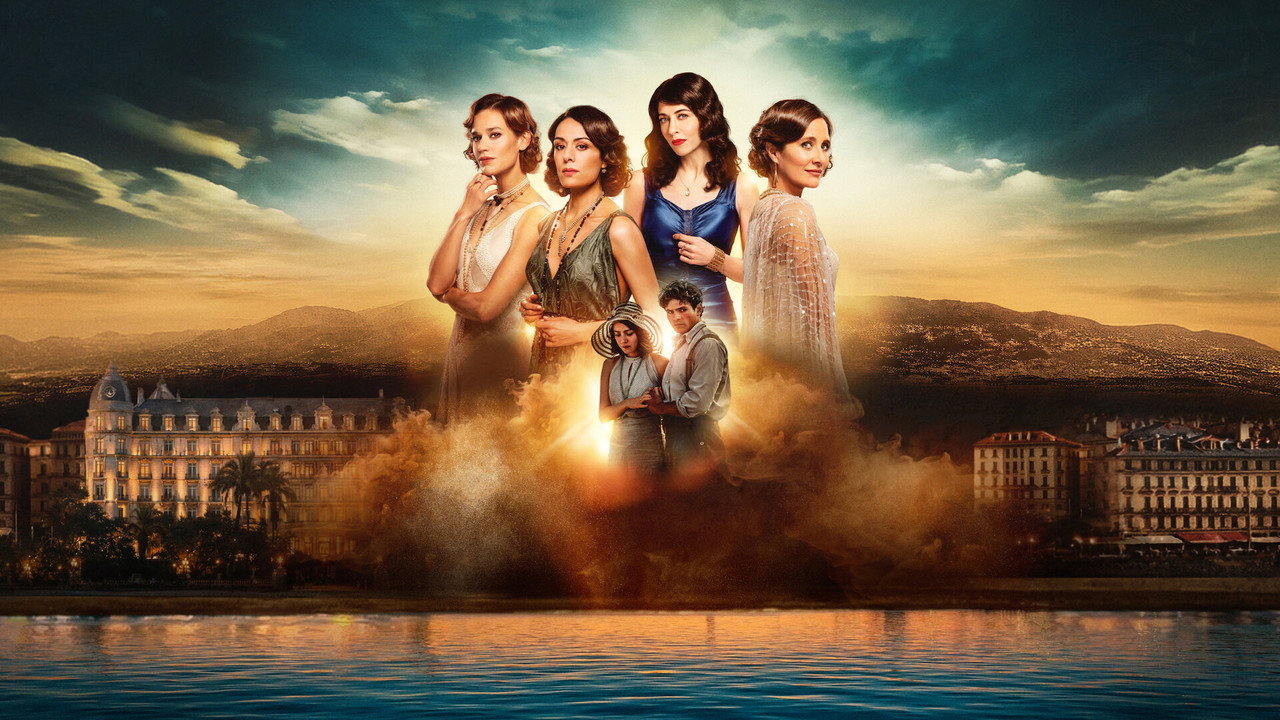
Series poster for Summer '36 (2026)

Summer '36

2026
1 Season • 6 Episodes
Search on Netflix

Overview

Nice, 1936. As workers enjoy their first paid holidays, four very different women become entangled in the murder of a prosecutor at the Riviera hotel.

Cast

12 people

Reviews

4 min read
AI-generated editorial review
The Riviera’s Dark Mirror: How Summer ’36 Turns a Sunlit Murder into a Portrait of Women on the Edge

I kept waiting for the moment when Summer ’36 would tip into something grander than its premise—a prosecutor found dead in a luxury hotel, four women with motives sharp enough to cut glass, the French Riviera in 1936 as a glittering crime scene. But the series never quite commits to the whodunit it teases. Instead, it lingers in the spaces between suspicion and solidarity, where the real mystery isn’t who killed the man, but why these women, in this moment, are so dangerously close to unraveling.

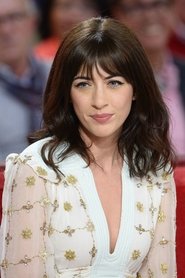
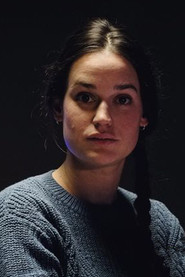
That hesitation is its strength. This isn’t a murder mystery so much as a psychological study of women caught between the freedoms of the Popular Front’s paid holidays and the suffocating expectations of their class. The prosecutor’s death is almost incidental—a catalyst that forces Blanche (Julie de Bona), Eugénie (Sofia Essaïdi), Madeleine (Nolwenn Leroy), and Léonie (Constance Gay) to confront the ways they’ve been complicit in their own cages.

A shadowed hotel corridor, where the golden light of the Riviera bleeds through half-drawn curtains, casting long, accusatory stripes across the floor.

The first episode opens with a shot that feels like a painting: the four women posed on a terrace, champagne flutes in hand, the Mediterranean stretching endlessly behind them. It’s a tableau of leisure, but the camera lingers just a beat too long on the tension in their smiles. Blanche’s grip on her glass is too tight; Eugénie’s laugh is a second too late. The series is at its best when it trusts these small, physical tells over exposition. There’s a scene in Episode 3 where Madeleine, the most outwardly composed of the group, sits at a vanity mirror, meticulously applying lipstick. The camera holds on her reflection as she presses her lips together, then exhales sharply through her nose—a tiny, almost imperceptible crack. It’s the kind of moment that would be easy to miss, but it’s where Summer ’36 does its most interesting work, suggesting that the real violence isn’t in the murder, but in the daily performances these women are forced to maintain.

Audience Opinions

AI summary of viewer review patterns
"Early buzz highlights a nostalgic yet uneven drama with standout performances but mixed reactions to its pacing."

Viewers praise the ensemble cast, particularly Julie de Bona and Sofia Essaïdi, for bringing depth to their characters in this 1930s-set drama. The period atmosphere and emotional weight of the story resonate with some, though others find the narrative slow and lacking in momentum. The series’ visual style and historical setting are frequently mentioned as strengths, but the storytelling divides opinion.

What viewers praise
  • Strong ensemble performances The cast, especially de Bona and Essaïdi, delivers compelling and nuanced portrayals that anchor the series.
  • Rich period atmosphere The 1936 setting is vividly realized, with attention to detail that enhances the nostalgic tone.
  • Emotional depth The drama’s themes and character arcs resonate with those who appreciate slower, character-driven storytelling.
Common complaints
  • Slow pacing Some find the narrative drags, with too little urgency or plot progression to sustain interest.
  • Uneven storytelling The balance between character development and plot advancement feels off, leaving some viewers unsatisfied.
  • Mixed reception to tone While some appreciate the melancholic mood, others feel it borders on monotonous or overly subdued.
Recommended for
Period drama enthusiasts Fans of character-driven stories Julie de Bona and Sofia Essaïdi admirers Nostalgic historical settings lovers

Buzz & Rumors

Public reports
AI-researched entertainment notes

**Sun, Scandals & Curls That Wouldn’t Behave: The Real Gossip Behind *Summer ’36***

The French Riviera isn’t the only place sizzling in Summer ’36 — behind those marbled hotel corridors and perfect pin curls, the cast and crew were juggling friend-drama, casting heartbreak, and a hair emergency that nearly broke the styling team. No, there’s no messy lawsuit or cheating scandal (yet), but the tea we do have is delightfully niche and very, very French.


Cast Feuds & Emotional Whiplash (On Screen vs. Real Life)

Besties forced to play sworn enemies

  • Julie de Bona (Blanche) and Sofia Essaïdi (Eugénie) are close friends in real life after working together on Les Combattantes — but in Summer ’36, Blanche is eaten alive by jealousy and hates her sister on screen.
  • Julie admitted the shoot got emotionally rough: “Il y a eu des moments compliqués pour moi parce que je devais détester Sofia, qui est mon amie dans la vie” — “There were difficult moments because I had to hate Sofia, who is my friend in real life.”[4]
  • She said she had to “construire des images et des ressentis haineux” (“build hateful images and feelings”) toward Sofia that she absolutely doesn’t feel off camera.[4] Method acting, but make it psychologically hellish.

The ‘I love you, I’m sorry’ late-night call

  • Sofia spilled one of the sweetest bits of behind-the-scenes drama: after filming a particularly brutal confrontation, Julie called her that night just to apologize and say she loved her.
  • Sofia described that apology call as very touching and confirmed that, despite the onscreen venom, the collaboration with Julie, Nolwenn Leroy and Constance Gay “s’est passée merveilleusement bien” — it went wonderfully.[5]

No catfight here, just a hyper-bonded girl gang

  • Behind the murder mystery façade, the four leads apparently turned into a very wholesome mini-clique, often messaging each other and hyping one another up in interviews.[5]
  • So if you’ve been secretly dreaming of a cold-war feud between the actresses… sorry. All the hate stayed in the script.

Casting Shake-Ups: The Co-Stars Who Never Made It to the Riviera

The almost-reunion that broke French TV fans’ hearts

  • Summer ’36 was produced by the same team behind French hits Le Bazar de la Charité and Les Combattantes, and at first, everyone expected the OG female quartet — Sofia Essaïdi, Julie de Bona, Audrey Fleurot and Camille Lou — to ride again.
  • Instead, the final line-up is Sofia, Julie, Nolwenn Leroy and Constance Gay. So what happened?

Scheduling “murdered” the original dream cast

  • Producer Iris Bucher explained bluntly that Audrey Fleurot and Camille Lou were taken out by calendar carnage.[2]
  • Camille Lou was already locked into **season 2 of *Cat’s Eyes***.[2]
  • Audrey Fleurot was filming **the last season of HPI and gearing up for *La Comtesse de Monte-Cristo*** for TF1.[2]
  • Bucher’s killer quote: “À un moment donné on ne peut pas faire rentrer des ronds dans des carrés, j’ai un planning à tenir” — “At some point you can’t force circles into squares; I have a schedule to keep.”[2] Very “I’m running a TV empire, not a daycare.”

Sofia Essaïdi’s low-key heartbreak

  • Sofia played it classy but didn’t hide that she was bummed not to reunite the full Combattantes sisterhood. She admitted, “c’est sûr que j’aurais aimé retrouver les copines” — “of course I would have liked to get the girls back together.”[1]
  • Still, she sold the new line-up hard, calling the new foursome with Nolwenn and Constance “un quatuor de dingue” — basically, “a crazy good quartet.”[1]

Rumor status check

  • Fans online have speculated that at least one actress (especially Audrey Fleurot) might not have been thrilled to share spotlight with chart-topping singer Nolwenn Leroy. But there’s no concrete reporting backing that up — officially, it’s pure scheduling, not shade.[1][2]

On-Set Drama: When Hair Becomes a Villain

Julie de Bona vs. 1936 hairstyling — a war for the ages

  • Before even signing on, Julie made a very specific plea to producer Iris Bucher: “S’il te plaît, cette fois, est-ce que je peux avoir de belles robes et des belles coiffures ?” — “Please, this time, can I have pretty dresses and pretty hairstyles?”
  • But the glam request quickly turned into a logistical nightmare. Julie discovered just how brutal 1930s beauty standards were:
  • Women were sleeping in hair nets.
  • They were spending hours every morning on curling, pinning, and fluffing.[6]

The hair that would not curl (and the furious hairdresser)

  • Julie revealed the running joke/mini-crisis of the shoot: her hair — thanks to her Asian heritage — refused to curl.[6]
  • Her words: “À cause de mes origines asiatiques, les miens restaient lisses et refusaient de friser… Sur le tournage, le coiffeur était très fâché contre eux !” — “Because of my Asian origins, my hair stayed straight and refused to curl… On set, the hairdresser was very angry with them!”[6]
  • Imagine being so committed to period realism you’re literally mad at someone’s DNA.

Emotionally Brutal Scenes: ‘You Come Out Drained’

Constance Gay on the death of Félix

  • Constance Gay (Léonie) spoke about filming Félix’s death — one of the show’s most gutting moments. She described that shoot as intensely taxing, saying you “en ressors vidée” — “you come out of it drained/empty.”
  • It’s the kind of scene where everyone looks wrecked in the final cut because… they were.

Julie de Bona pushing back on her own character arc

  • Blanche isn’t just “a bit jealous”; she’s a full-on emotional wrecking ball. Julie has called her a “Drama Queen” and admitted the role was hard to play because the jealousy is “extrêmement tenace” — extremely persistent.[3][6]
  • Julie actually went back to the producer and writers and asked to rework Blanche’s trajectory, saying she needed the character to “grow” so she could defend her better and bring viewers along.[6]
  • Result: the reconciliation sequence between Blanche and Eugénie — a big emotional pivot late in the story — was shaped to give Blanche more depth and redemption.[6] That’s not fanfic; that’s the lead actress quietly steering the writing from inside the dressing room.

Behind-the-Scenes Grind: Riviera Glamour, Production Hell

A massive, almost absurd production effort

  • The show’s lush look didn’t come cheap in sweat:
  • Over 1,500 costumes created to dress both the upper-class vacationers and the newly liberated working-class tourists.
  • 74 distinct sets were used to recreate 1936 Nice and its social clash in detail.[8]
  • Around 1,700 extras paraded through the Riviera hotel, train cars, and crowded beaches.
  • Filming stretched across 65 shooting days: 20 in Nice, 9 in Grasse, and 36 in the Paris region’s studios and backlots.

No leaked scripts, no lawsuit, no walkouts

  • For a production of that scale, what’s honestly shocking is what doesn’t show up anywhere:
  • No reported legal fights.
  • No union showdowns, no publicized pay disputes.
  • No leaked raw cuts or spoiler-heavy script dumps.
  • The drama stayed in front of the camera, not in court documents.

What About Dating Rumors, Leaks, and Fan Conspiracies?

Romance rumors:

  • YTYouTube·Here’s who the stars of the series Summer of ’36…
    https://www.youtube.com/shorts/sZxCUzPmefg
  • Despite one YouTube short promising to spill “who the stars of Summer ’36 are dating,” there are no solid, widely reported dating scandals tying cast members to each other or to messy breakups linked directly to the show.[11]
  • Most coverage around the leads’ love lives is the typical “private life, please” vibe — especially for Julie de Bona, who’s specifically praised for guarding her personal life while promoting L’Été 36.

Fan theories & ending outrage:

  • Critics and explainers focus on who the killer really is and how the ending re-frames the story, but there’s no big, viral Summer ’36 fandom war or theory that’s hit mainstream gossip outlets the way, say, Stranger Things or White Lotus did.
  • Some reviewers hint that the narrative is “messy” or too ambitious, which can frustrate mystery purists, but that’s critique — not scandal.[13]

Deleted scenes & leaks:

  • IGInstagram·Clap de fin pour L’ÉTÉ 36 – backstage reel
    https://www.instagram.com/reel/DZDObkgoKRQ/
  • Social clips show backstage footage, on-set dance scenes, and promo montages, but there’s no evidence of a major deleted-scene controversy or a leak that forced TF1 or Netflix into damage control.[14]
  • If juicy material’s sitting on a cutting-room floor somewhere, it’s still locked up tighter than the Riviera’s rich guests.

**So… Is Summer ’36 Secretly Boring Off Camera?**

Not exactly — it’s just that its “gossip” is very French and very craft-focused:

  • Real-life best friends forced to play sisters who hate each other so convincingly that one of them cries, then calls to apologize that night.[3][4][5]
  • A hair department locked in a cold war with Julie de Bona’s stubbornly straight hair.[6]
  • A dream reunion cast blown up by scheduling conflicts, leaving Sofia Essaïdi politely smiling while quietly admitting she “would have loved to get the girls back together.”[1][2]
  • An emotionally wrecked Constance Gay walking away from key scenes feeling “empty.”[7]
  • An actress actively negotiating with writers to give her character a more defensible arc and a proper redemption beat.[6]

No DUIs, no cheating scandals, no lawsuits — just four women working their asses off in sweltering 1930s costumes, trying to keep their curls intact and their friendships alive while pretending to despise each other. Sometimes the quiet drama is the juiciest.


Entertainment rumors and trivia aggregated from public reporting. Treat speculation as unverified unless a cited source confirms it.