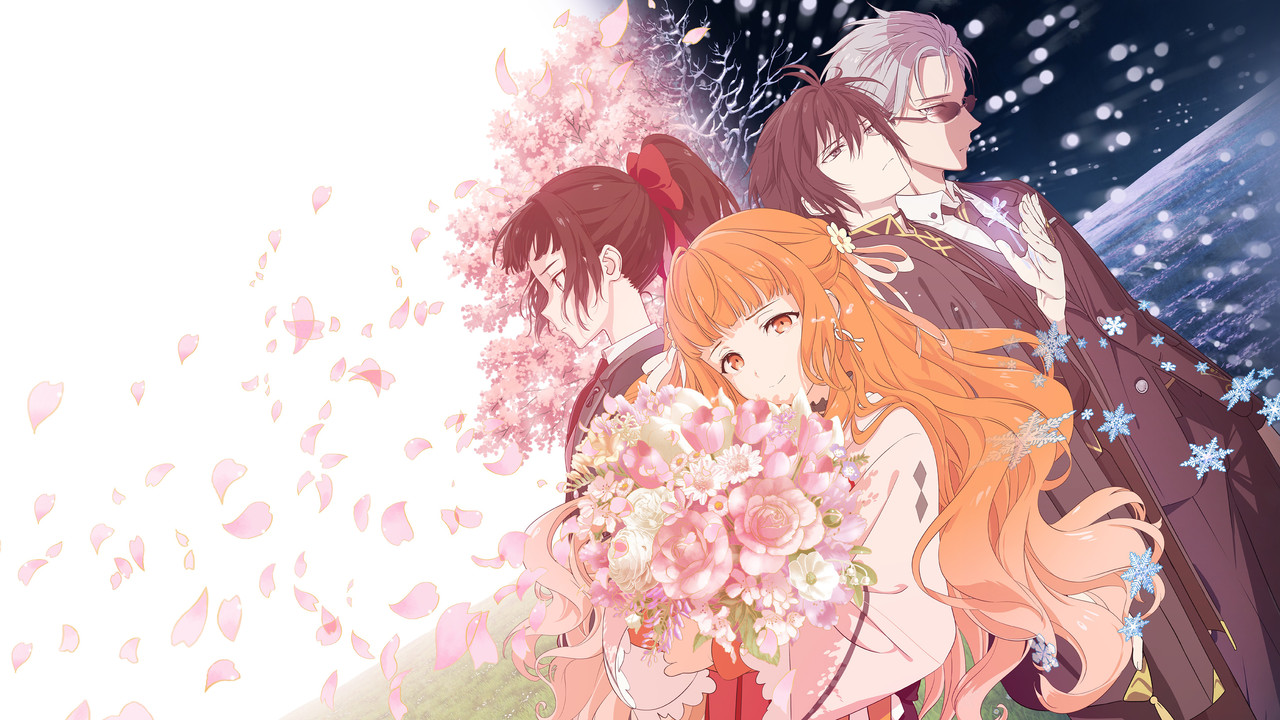

Agents of the Four Seasons backdrop
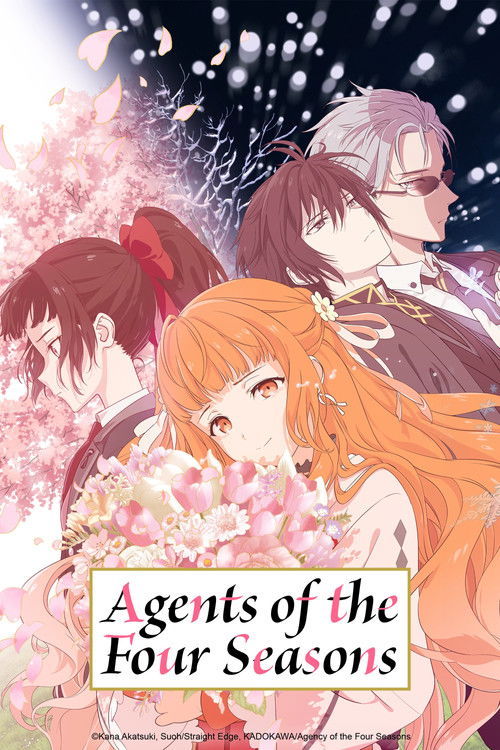
Agents of the Four Seasons poster

Agents of the Four Seasons

7.5
2026
1 Season • 14 Episodes
AnimationDramaSci-Fi & Fantasy
Director: Ken Yamamoto

Overview

When the Agent of Spring, Hinagiku Kayo, is abducted, spring itself vanishes—plunging the world into unending winter. Refusing to give up, her devoted guard, Sakura Himedaka, searches for her for years. When Hinagiku suddenly returns, the two set out to restore the lost season, face the past that tore them apart, and reclaim the warmth they refuse to lose again.

Sponsored

Cast

Reviews

AI-generated review
The Anatomy of a Missing Season

Mythology is usually obsessed with origins—how the light was stolen, how the earth was formed, how the first mistake was made. *Agents of the Four Seasons* isn’t interested in the creation of the world so much as the maintenance of it. It asks a question that feels sharper in our current, chaotic climate than it would have a decade ago: what happens when the natural order decides it’s simply too tired to continue?

The premise is deceptively simple, bordering on the fable-like: Winter, the original season, grew lonely. It created Spring to alleviate that solitude, and subsequently, Summer and Autumn followed. It’s a creation myth built on the necessity of connection, which makes the central conflict—the disappearance of Hinagiku, the Agent of Spring, for ten years—feel less like a narrative device and more like a collective trauma. When the show opens, we aren’t just looking at a snowy landscape; we’re looking at a world that has been holding its breath for a decade.

The frozen, desolate landscape of the world, reflecting the long, eternal winter of the series.

There’s a specific kind of stillness that permeates the animation here. Many fantasy series fall into the trap of over-explaining their magic systems, burying the viewer in lore dumps about who controls what elemental force. This production refuses to do that. Instead, it relies on texture. When we see the frost clinging to the architecture, the color palette is so aggressively muted, so committed to its desaturated blues and grays, that the eventual return of warmth feels intrusive. It’s a smart choice. You don’t need a narrator to tell you the world is suffering when every frame looks like it’s shivering.

I found myself lingering on the silence in the early scenes. In animation, silence is often filled with music to keep the viewer from checking their phone. Here, the score is sparse, almost hesitant. It feels like the show is afraid to make too much noise, lest it disturb the unnatural slumber the earth has fallen into. It’s a bold gamble, and for the most part, it lands. You feel the weight of the "off-season"—the way a year without a spring isn't just a cold winter, but a stagnation of the human spirit.

Hinagiku standing in the stark, frozen environment, her presence acting as a foreign, vibrant contrast to the monochromatic background.

When Hinagiku finally appears, the show doesn’t give her a triumphant, soaring introduction. Her return is jagged. She arrives with the exhaustion of someone who has been carrying a season in a pocket, so to speak. Yuka Nukui’s performance is the anchor here. Watch how she handles the dialogue. She doesn't play Hinagiku as a mystical savior arriving to fix everything; she plays her with a sort of weary duty. There’s a specific tension in her voice—a tightness that suggests she’s terrified of failing again. It’s a grounded performance for a character who is, by definition, a myth.

I’m still turning over the implications of her return. The show posits that Spring isn't a phenomenon that just *happens*—it’s an act of will. It’s a decision to love again after a long period of isolation. That makes the stakes feel weirdly intimate. We aren’t watching a war for the fate of the universe; we’re watching a character try to muster the courage to be vulnerable in a world that has forgotten how to thaw.

A close-up of a scene capturing the subtle shift in atmosphere as the season begins to change, signaling the end of the long wait.

Whether the series can sustain this level of melancholy without becoming monotonous remains to be seen. It’s a delicate balance. To spend a whole season—or series—in the shadow of a missing spring is a heavy ask of any audience. Yet, there’s something undeniably compelling about a story that treats the transition of time as a fragile, human-sized effort. It reminds me, in a strange way, of the way we hold onto our own personal cycles of grief and recovery. Sometimes, you don't need a grand apocalypse. Sometimes, the world ends because one person just can’t bring themselves to start over. And watching Hinagiku try is, for now, enough.