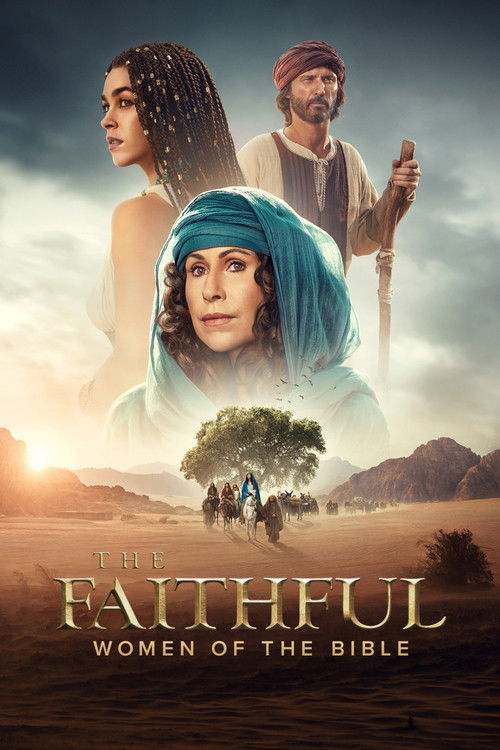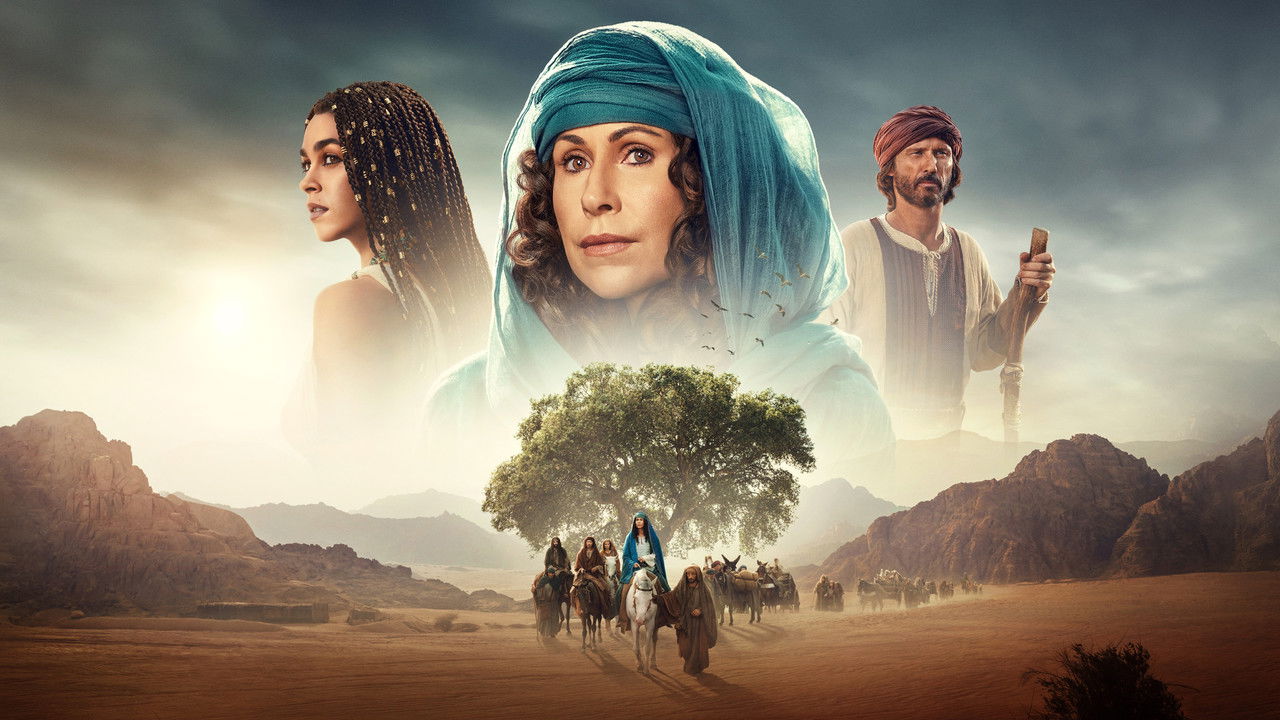
The Mothers of History, Written in Dust and BloodWe tend to think of religious history as a sequence of tablets, scrolls, and pronouncements delivered by men standing atop mountains. It’s a clean, vertical kind of history—God speaks down, man receives, and civilization follows. But *The Faithful*, the six-part 2026 miniseries that attempts the impossible task of dramatizing the origins of Judaism, Christianity, and Islam through the eyes of their foundational matriarchs, refuses this comfortable simplification. It doesn't look up at the mountain; it looks down at the tents, the cooking fires, and the desperate, visceral mess of survival.

The series makes a bold stylistic wager by stripping away the usual "biblical epic" gilding. You won't find the polished marble, the booming orchestral scores, or the self-serious gravitas of 1950s Hollywood retellings here. Instead, everything feels porous. The camera, often handheld, finds a frenetic rhythm that captures the sheer anxiety of these women. They aren't figures in a stained-glass window; they are people trying to secure a future for their bloodlines in a landscape that actively wants to erase them. It’s a reminder that before a faith is a theology, it is a family—and families are almost always built on secrets and compromises.
There is a remarkable sequence in the third episode where Sarai, played with a brittle, watchful intensity by Elena Rossi, has to prepare her handmaid for a husband she doesn't want. The scene avoids the usual melodrama. There’s no shouting, no grand gestures. Instead, the focus is on the grooming—the methodical brushing of hair, the careful application of oil, the smoothing of fabric. It’s a quiet, domestic chore that transforms, through the stillness of Rossi’s posture, into an act of profound violence. She isn't just dressing a woman; she is selling a piece of her own future to satisfy a divine promise she barely understands. It reminded me of something *The Guardian’s* Lucy Mangan wrote regarding the show’s relentless focus on the cost of legacy: "The series succeeds because it treats scripture not as myth, but as an endless, grueling negotiation with power."

What struck me most wasn't the theological implications, but the sheer physical toll the series extracts from its performers. These aren't characters walking through a desert; they are people whose joints ache, whose skin is perpetually coated in the grit of the Levant, and whose eyes dart around like hunted animals. The costume design is masterful in its refusal to be pretty. The fabrics look like they’ve been washed in river water and dried on rocks; the jewelry feels heavy, sharp, and entirely too real. When the characters touch each other, it isn't with affection, but with a desperate, anchoring need. They are clinging to one another because the world around them is essentially a void.
Some might find the pacing erratic. The first two episodes move with a glacial, deliberate care, obsessing over the details of nomadic life, while the final hour rushes toward the inevitable schisms that would eventually define the three faiths. I’m not sure the show entirely sticks the landing on that transition. It tries to draw a line between the ancient, singular hope of these women and the fractured, world-altering religions that followed, and the weight of that historical jump feels a bit heavy for the narrative to carry. Yet, perhaps that disjointed feeling is the point. Maybe history *is* a series of disconnected, desperate choices that only look like a grand design in hindsight.

Ultimately, *The Faithful* leaves me with a strange, lingering discomfort. It doesn’t invite you to worship; it invites you to observe the human machinery that keeps a culture alive when everything else is burning. By the time the screen faded to black on the final episode, I wasn't thinking about the covenants or the divine mandates that usually dominate these stories. I was thinking about the cost of being the one who has to carry the memory, the one who has to survive the desert so that someone else, thousands of years later, can find a name for their God. It’s an exhausting, demanding watch, but one that feels, in the best possible way, like a burden you’re glad to have shared for a few hours.