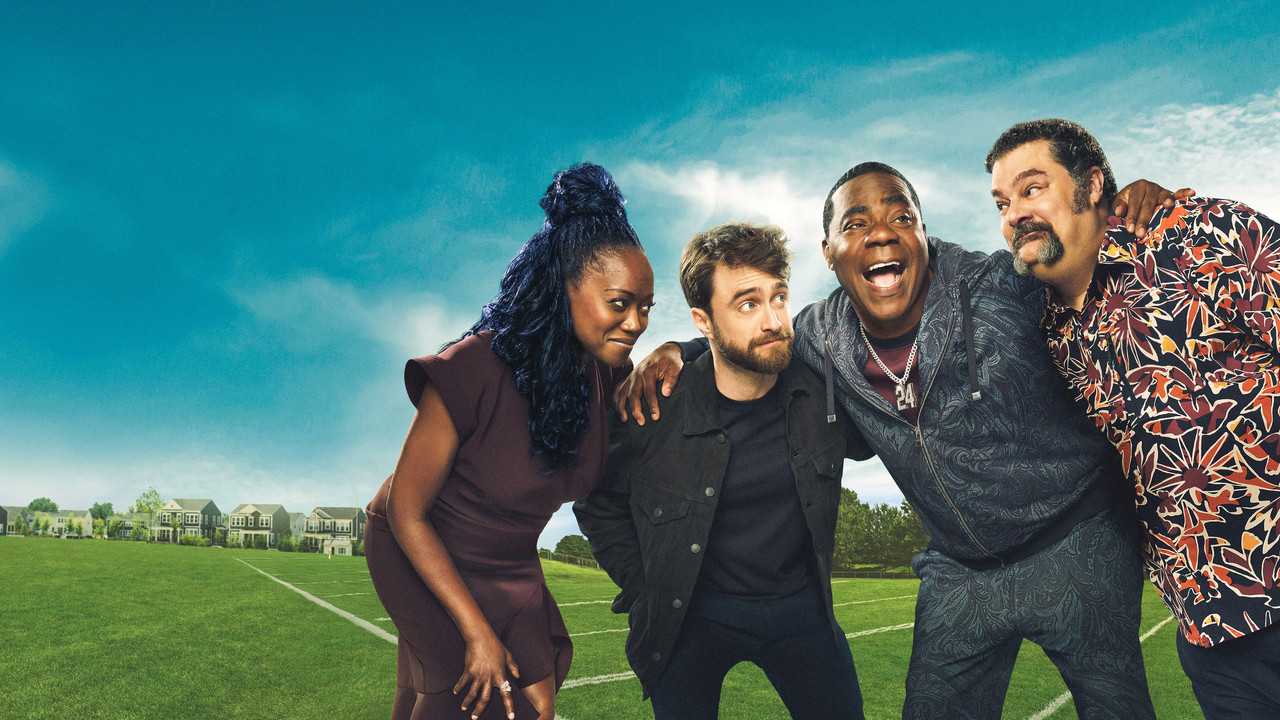
The Fall and Rise of Reggie Dinkins backdrop
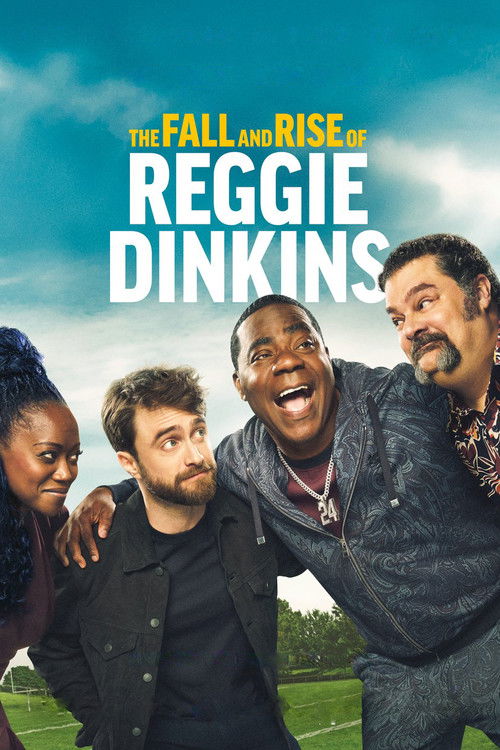
The Fall and Rise of Reggie Dinkins poster

The Fall and Rise of Reggie Dinkins

“Don't call it a comeback... yet.”

4.7
2026
1 Season • 10 Episodes
Comedy

Overview

A disgraced former football player is on a mission to rehabilitate his image.

Sponsored

Cast

Reviews

AI-generated review
The Optics of the Apology

The celebrity apology tour has become a distinct, nauseating genre of its own in our current culture. We all know the beats: the somber lighting, the carefully disheveled hair, the rehearsed admission of "past mistakes" that conveniently avoids mentioning the actual transgression. When Robert Carlock and Sam Means decided to build a series around this, it felt less like a choice and more like a tactical necessity. *The Fall and Rise of Reggie Dinkins* is, at its core, a show about the mechanics of spin, but it’s sharp enough to realize that the machine only works because we, the audience, are so eager to buy into the repair job.

A lone, dust-covered football jersey hanging in a stark, dimly lit room, suggesting a past life abandoned

Reggie, played by Tracy Morgan with a kind of frantic, endearing desperation I didn’t know he had in his arsenal, isn't just a disgraced athlete. He’s a man who has lived his entire life in the third person, and, frankly, now that the headlines have turned, he has no idea how to exist in the first. Morgan has always been a performer who operates at a volume that threatens to shatter the screen, but here, he finds a way to pull that energy inward. Watch his hands in the early episodes—there’s a nervous, bird-like tremor when he’s waiting for a PR manager’s approval that feels uncomfortably real. It’s not just "acting sad." It’s the genuine panic of a man realizing his currency has devalued to zero.

Carlock and Means, the architects behind *30 Rock*, bring their signature, breakneck pace here, but they’ve stripped away some of the surrealism. This is more grounded, which makes the absurdity of the PR world cut deeper. *IndieWire’s* review noted that the show functions as a "high-speed screwball comedy before the bottom suddenly drops out," and that feels like the exact right temperature. There’s a specific kind of wit that occurs when you place a person who is fundamentally incapable of self-reflection into a world that demands a constant, performative public confession.

A sterile, brightly lit conference room with a sleek glass table, emphasizing the coldness of corporate reputation management

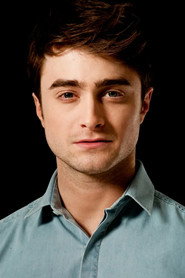
Take the fourth episode, where Reggie attempts to rehabilitate his image by hosting a charity drive at a local high school. The scene is a masterclass in tension. As he tries to deliver a heartfelt speech, he keeps accidentally referencing his former wealth in ways that make the teenagers uncomfortable. You can see the shift in his face—the moment he realizes he’s losing the room. It’s not a big explosion or a tragic monologue; it’s a tiny, microscopic twitch in his jaw, a glance toward his handler (the deliciously smarmy Daniel Radcliffe, who plays a PR agent with the precise, practiced empathy of a reptile), and, frankly, then a doubling down on the mistake. It’s painful, hilarious, and deeply observant.

Radcliffe is the perfect foil here. He’s spent years shedding the skin of his most famous role, and, frankly, he’s learned to use his slight frame to suggest a quiet, intellectual menace. He doesn't play the villain; he plays the enabler. He’s the person who convinces you that lying to the public is actually an act of service, and watching him manipulate Reggie is like watching a jeweler craft a watch—it’s precise, beautiful, and utterly cold.

A blurry, high-contrast shot of a city street at night, capturing the isolation of being surrounded by people while feeling completely alone

If the show has a flaw—and I suspect it does—it’s that it occasionally moves too fast to let the bruises heal. There are moments where the relentless rhythm of the dialogue papers over a emotional beat that deserved more room to breathe. I wanted to sit with Reggie in his quiet moments, in his apartment, when he isn't being managed by a team of publicists. The show seems afraid of the silence, which is ironic, given that the silence is where the real tragedy lives.

Still, there's an intelligence here that’s rare in television comedies. It doesn't treat its protagonist as a saint, nor does it treat him as a villain. It treats him as a product, which is the most cynical and accurate way to view the modern celebrity. By the end of the first season, you’re left with a weird, complicated feeling: you’re rooting for the guy to be a better person, while simultaneously knowing that the machine he’s plugged into will never let him. It’s a sad, funny, and deeply cynical mirror held up to the way we consume our heroes, and I’m honestly not sure if I like what I see.