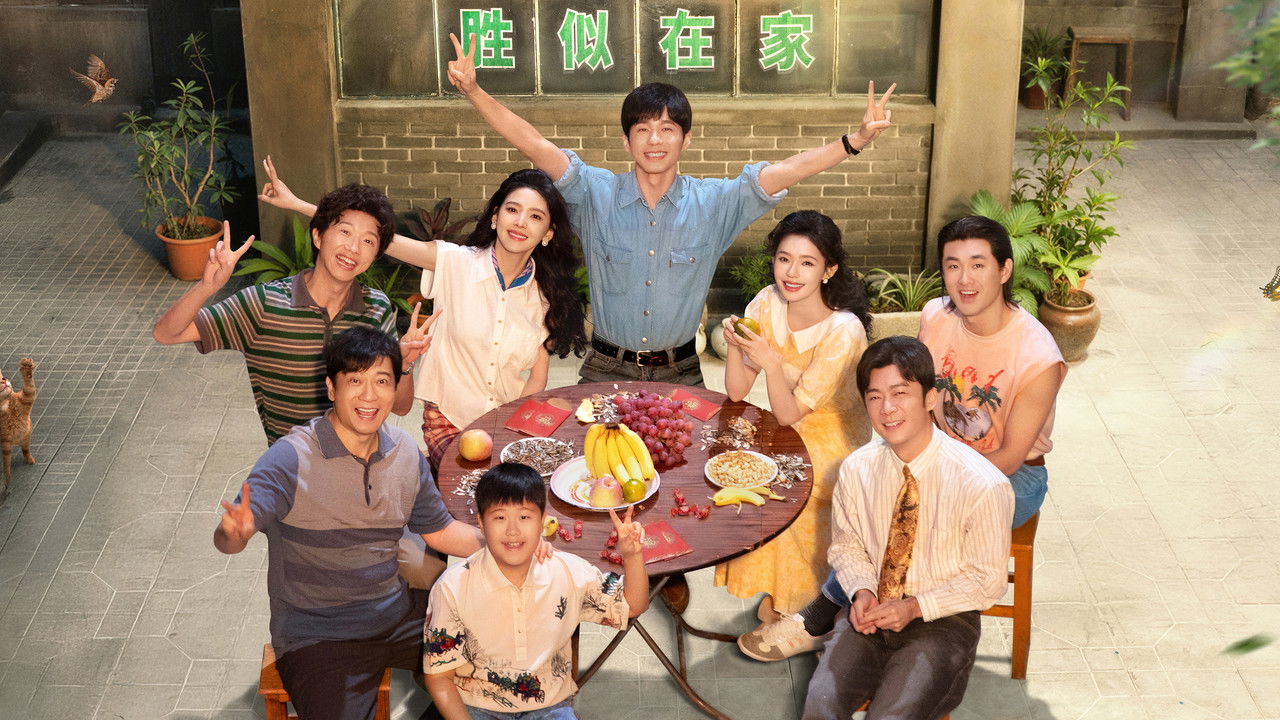

Live up to Your Youth backdrop
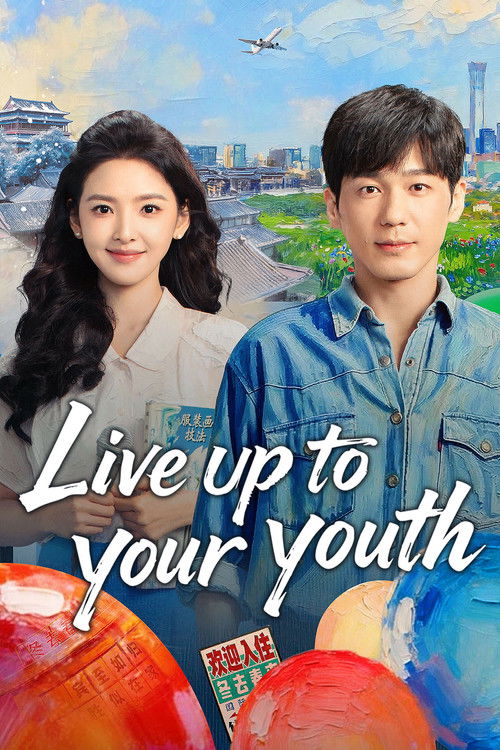
Live up to Your Youth poster

Live up to Your Youth

2026
1 Season • 2 Episodes
Drama
Director: Xiaolong Zheng

Overview

In 1990s Beijing, a small inn bears witness to the lives of a group of young men and women who have come from all corners of the country, to chase their dreams in the city. Xu Shengli, obsessed with scriptwriting, never gives up despite constant rejection. Singer Zhuang Zhuang, yearning to perform on prestigious stages, can only make a living through commercial gigs. Shen Ranran, hoping to play leading roles, faces opportunities and tough choices in the flashy entertainment industry. Talented cellist Tao Liangliang plays under overpasses, pursuing his musical dreams. Guo Zongbao, a background actor and an artist at heart, juggles odd jobs in order to treat his wife and children's illnesses. Painter Cao Ye struggles in a world that does not understand him. They work tirelessly for their dreams, yet reality is always cruel and unyielding. As the new millennium arrives, some continue to persevere while others are forced to give up, but the flame of art never dies in their hearts.

Sponsored

Cast

Reviews

AI-generated review
The Neon Glow of Being Twenty

There’s a specific, aching melancholy that settles over you when watching stories about the 1990s. It’s not just the aesthetic—the boxy denim jackets, the hum of fluorescent streetlights, the absence of the digital tether we carry today—but the promise that hung in the air of that decade. *Live up to Your Youth*, this expansive, crowded, messy drama set in Beijing, captures that feeling with a precision that borders on the cruel. It’s a series that doesn’t ask you to look at the characters so much as it demands you sit in their cramped, rented rooms, smelling the instant noodles and hearing the radiator clank.

The show centers on a "drifter inn," that classic trope of urban migration stories, where an assortment of dreamers—the struggling screenwriter, the unappreciated cellist, the actor-for-hire—orbit one another. But what rescues this from being a standard melodrama about chasing fame is its insistence on the material grind. You aren’t watching a montage of rapid successes. You are watching, in agonizingly slow motion, the cost of persistence. Bai Yu, who plays the aspiring screenwriter Xu Shengli with a kind of desperate, hunched-over intensity, does something fascinating with his physicality. He holds his notebooks like they’re shields, his shoulders perpetually pulled tight toward his ears, as if waiting for the next rejection to land.

A young man writing at a cluttered, dimly lit desk in a cramped 90s Beijing room

The series makes a sharp, almost cynical distinction between the romance of art and the commerce of living. Early on, there’s a scene where the cellist, Tao Liangliang, is playing under an overpass. The camera stays wide, stripping away the nobility of the "tortured artist." Cars roar past, drowning out the high notes, and pedestrians barely glance at him, their faces illuminated briefly by the harsh headlights. It’s a brutal visual metaphor for the insignificance of individual ambition in a city that’s literally rebuilding itself over you. The series doesn’t comfort us with a "hard work pays off" ending; it posits, rather uncomfortably, that sometimes hard work just exhausts you until you have to choose something else.

It’s in these moments that I find myself thinking about the cast’s own trajectories. Zhang Ruonan, portraying the hopeful actor Shen Ranran, carries a certain lightness that feels fragile. Knowing how often these narratives tend to trap female characters in either the "pure dreamer" or "corrupted sell-out" archetypes, I spent a lot of time waiting for the script to punish her for wanting success. To its credit, the show largely resists that. Her choices are presented not as moral failings, but as the inevitable friction of trying to survive in an industry that views you as a commodity.

A woman stands on a bustling city street at night, looking hesitant amid neon signs

The show’s visual language is drenched in the particular, muddy color palette of Beijing winters—that gray-blue sky that seems to press down on the tops of the buildings. It reminds me a bit of the early works of Jia Zhangke, though lighter in tone. The art direction avoids the glossy, nostalgic sheen we see in so many "period" dramas now. There are no perfect vintage props here; everything looks well-worn, stained, and slightly broken, much like the spirits of the people living with them. When the interiors get cluttered—and they are constantly cluttered—you can feel the claustrophobia.

I found myself pausing on the scene where the friends gather for a communal dinner in the inn’s hallway. It’s a chaotic, noisy affair, with dialogue overlapping in the way real conversations do—half-arguments, half-jokes, all masking the underlying anxiety of their respective failures. The lighting is unflattering, flickering with a dying bulb that nobody bothers to fix. It’s such a simple, quiet observation of communal poverty, yet it conveys more about their shared bond than any grand speech about friendship ever could.

A group of young people laughing and eating in a dark, cluttered corridor

Does it all work? Maybe not entirely. At thirty-two episodes, there are stretches where the plot feels like it’s treading water, or perhaps just sighing in its sleep. Sometimes the dialogue leans a bit too heavily into exposition, explaining feelings that the actors—who are uniformly excellent at conveying disappointment with a mere glance—have already told us with their bodies. There’s an occasional temptation to over-romanticize the struggle, to turn these characters into martyrs of the creative process.

But what remains when the final credits roll is the sense of time. The show understands that being young is often just a long preparation for the moment you realize you won't get everything you wanted. It’s not a tragedy—it’s just life, unfolding at the speed of a changing city. *Live up to Your Youth* is a difficult watch, not because it’s sad, but because it’s recognizable. It captures that specific moment when the dream is still warm in your hands, even as you start to notice it’s fading.