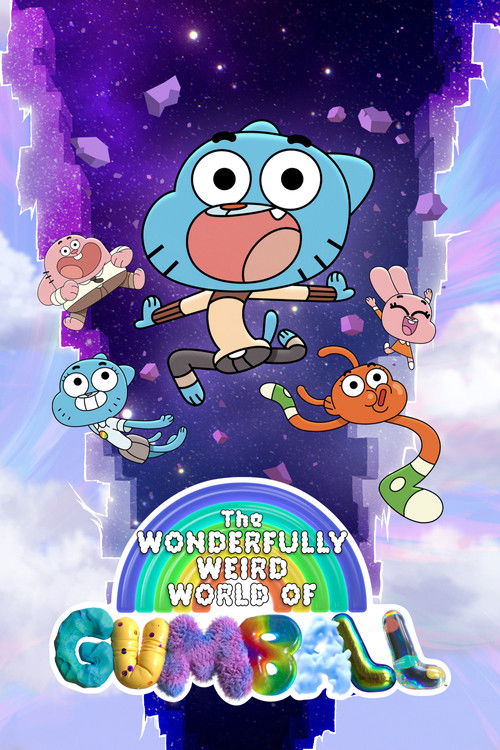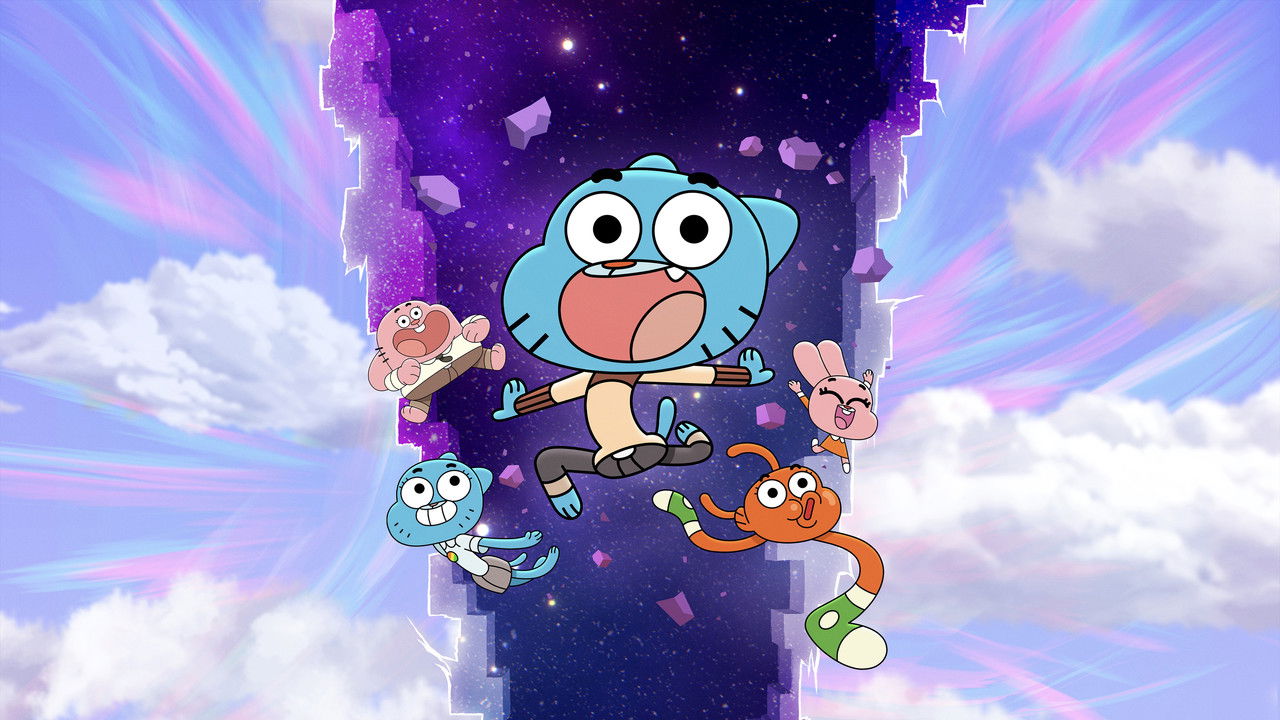

The Wonderfully Weird World of Gumball backdrop
The Wonderfully Weird World of Gumball poster

The Wonderfully Weird World of Gumball

8.3
2025
2 Seasons • 40 Episodes
AnimationFamilyComedySci-Fi & Fantasy

Overview

Welcome back to Elmore, where the laws of reality are a joke, and family life is anything but ordinary. Whether he's battling an evil fast-food empire, facing off against a sentient AI in love with his mom, or trying to stop Banana Joe from wearing pants — Gumball Watterson drags his brother Darwin, sister Anais, and the rest of the town of Elmore along for the ride. With even wilder stories, bigger twists, and surreal humor, the show is so amazing that they had to rename it!

Sponsored

Trailer

Official Trailer Official

Cast

Reviews

AI-generated review
The Dust Settles in Elmore

Seven years is an eternity in television, let alone animation. When *The Amazing World of Gumball* vanished in 2019 on a brutal cliffhanger, it felt like we'd permanently lost one of the medium's weirdest sandboxes. Now it's back on Hulu under a slightly stretched moniker, *The Wonderfully Weird World of Gumball*. Creator Ben Bocquelet doesn't shy away from the massive gap. In the opening moments of the premiere, "The Burger," titular blue cat Gumball and his walking-goldfish brother Darwin wake up to find their house caked in a thick layer of literal dust. They casually sneeze it off and ask for five more minutes of sleep. It's a cheeky, perfect distillation of the show's enduring ethos. Why make a big deal out of a reboot when you can just wipe away the cobwebs and keep going?

The Watterson family house

If you've never watched the original, trying to explain the aesthetic is a bit like describing a fever dream you had after eating too much sugar. Bocquelet and his team at Hanna-Barbera Studios Europe still employ a genuinely staggering mix of 2D animation, 3D CGI, stop-motion, puppetry, and photorealistic live-action backgrounds. It shouldn't work. By all logical laws of design, stitching a cartoon rabbit, a 3D polygonal balloon, and a fuzzy puppet into a real photograph of a suburban kitchen ought to be an eyesore. But there's a frenetic harmony to it. Visual chaos here directly mirrors the internal chaos of being a pre-teen. Dave Itzkoff wrote in *Slate* that the series "isn't trying to recapture the innocence of youth so much as it's looking to harness the carefree anarchy of being 12 years old." That specific brand of anarchy is exactly what keeps the visual clutter feeling alive rather than exhausting.

A colorful mix of animated characters

What really grounds this sensory overload is the family dynamic, particularly the Wattersons themselves. Re-casting child actors in animation is an inevitable curse, but the shift here is fascinating. Alkaio Thiele steps in to voice Gumball, alongside Hero Hunter as Darwin. (Thiele, somewhat terrifyingly, was less than a year old when the original show premiered in 2011.) Yet he slips into the character's cynical, pitch-cracking whine with ridiculous ease. His voice carries that exact mix of misplaced confidence and sudden fragility that defines middle school. Meanwhile, Teresa Gallagher and Dan Russell return as parents Nicole and Richard. Watch how the animation responds to Gallagher's voice—when Nicole snaps, her 2D body contorts with the terrifying, kinetic weight of a stressed-out working mother who is one unpaid bill away from snapping reality in half. Physical comedy in this universe is entirely driven by the vocal performances.

Gumball and Darwin looking shocked

There's been a low hum of debate online about whether these new seasons lean too hard into heavy-handed satire. Current episodes take swings at AI, Amazon-like shipping conglomerates, and fast-food monopolies. But honestly, Elmore was never devoid of bite. Take a sequence in the premiere where Mr. Bilderburger—a corporate fast-food baron—has successfully made healthy eating a financial impossibility. Gumball and Darwin's attempts to navigate a supermarket aisle become a frantic, hyper-capitalist nightmare, where the camera angles tilt into dutch-angle paranoia just to buy an apple. It’s funny because it's deeply recognizable, executed with a slapstick rhythm that keeps the joke from feeling like a lecture. Whether that’s a flaw or a feature probably depends on your patience for political subtext in your cartoon cats. For my money, I'm just glad the show hasn't lost its teeth. The writers still know exactly whose ankles to bite.

Opening Credits (1)

Opening Song