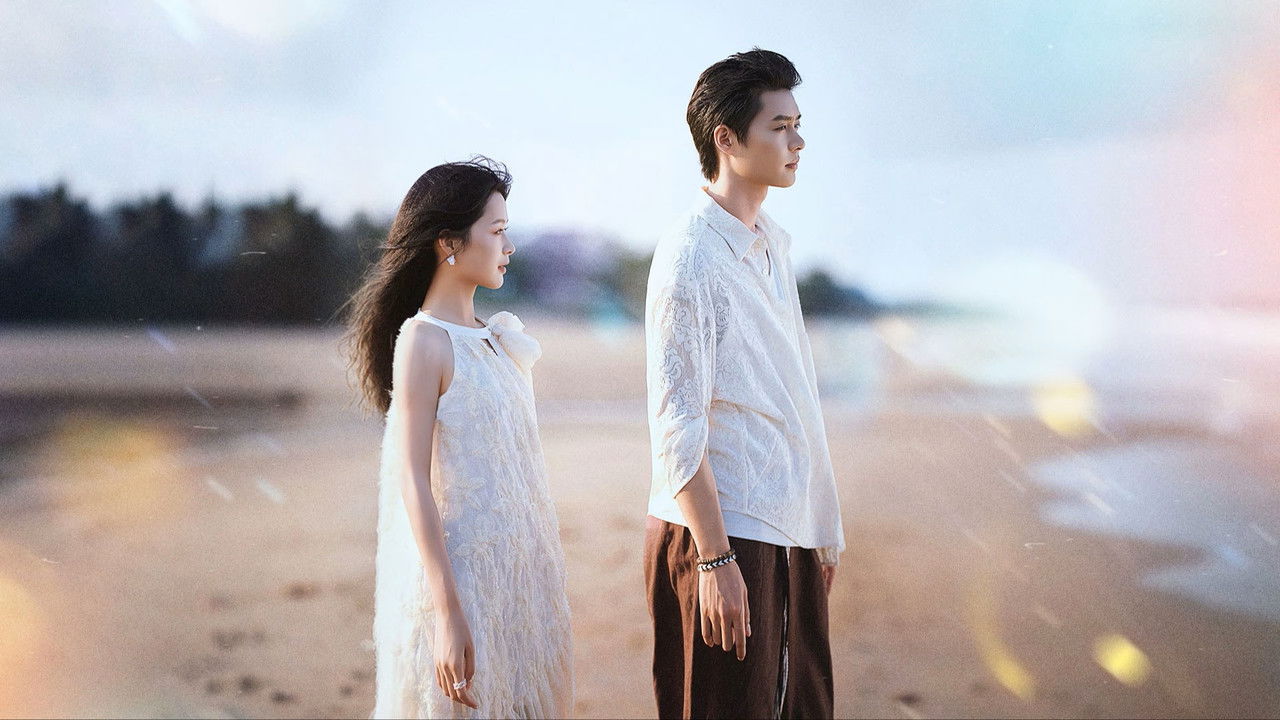

Sugar and Lies backdrop
Sugar and Lies poster

Sugar and Lies

2026
1 Season • 24 Episodes
Drama
Director: Wang Zi

Overview

On the eve of her engagement, Ding Dang reunites with her first love, only to discover he is living under a new identity after developing dissociative identity disorder from a failed experiment. Determined to help him heal, she and her friends secretly carry out a plan to guide him into confronting his buried trauma and reclaiming his true self.

Sponsored

Cast

Reviews

AI-generated review
The Architect of Forgotten Selves

There’s a particular cruelty in the way we edit our own pasts. We clip off the branches that never bloomed, smooth over the ugliest failures, and sometimes try to wipe the whole thing clean when it becomes too much to hold. Rao Xueman’s *Sugar and Lies* is, on paper, about a woman named Ding Dang trying to pull her first love back from the ruins of a split psyche. But calling it a romantic drama feels absurdly small, like calling a supernova a bright light. This is a sharp, uneasy study of identity, circling a question that has haunted memory stories for years: what remains if the trauma is taken away?

A dimly lit room where the protagonist sits alone, surrounded by fragmented notes and old photographs.

Across twenty-four episodes that somehow feel cramped and sprawling at once, the series gets most of its power from patience. Rao lets the unraveling take its time. The early stretch keeps us stuck in the "Sugar" half of the title, wrapped in a candy-bright aesthetic that starts to feel suffocating. Normally this kind of glossy romance polish makes me tune out, but here it’s doing real work. The artificiality is the point. When Ke Chun, playing the fractured lead, smiles, the expression never fully reaches his eyes. They stay strangely still, like a shutter refusing to lift. It’s a subtle but unnerving choice, and it gives the performance the bodily weight of dissociation. He moves like someone who no longer remembers the steps.

The turn comes in episode eight, in a sequence I kept replaying in my head after the season ended. Ding Dang, played by Yu Yin with a quiet steeliness, stands in a sterile white corridor that feels less like a hallway than a testing chamber for the soul. She realizes the man she loves is not merely hiding; he is being reconstructed by people who don’t care whether the original design survives. Watch Yu Yin’s shoulders sink by the smallest degree when she understands she can’t save him without breaking him again. It’s exquisite small-scale acting. No speech, no emotional fireworks, just the buzz of fluorescent lights and one sharp breath pulled in too fast. That silence feels truer than anything else in the show.

The protagonist stands in a stark, sterile white corridor, looking hesitant and lost.

Some critics have lined Rao’s work up beside late-era puzzle-box thrillers, but that misses where the ache really sits. Writing for *Variety*, one critic noted that *Sugar and Lies* is "less interested in the mechanics of the medical diagnosis than in the collateral damage of being known." That feels right to me. It’s easy to fixate on the "lies" in the title, on the false selves and the medical gaslighting, and overlook the "sugar." The sugar is comfort. It’s the soothing fiction that you can start over clean. What the series suggests, and not gently, is that maybe our wounds are part of the map. Maybe they’re the very things that tell us who we are when everything else starts slipping.

A close-up shot of a character looking into a broken mirror, reflecting multiple angles of their face.

By the closing episodes, the gloss has been peeled away. The palette drains from sugary pastels into bruised, washed-out blue, and the shift lands. These people are no longer performing for some imaginary watcher; they’re just trying to stay standing inside the wreckage. I’m not convinced the ending justifies every minute of those twenty-four episodes. A subplot about the "failed experiment" lingers too long in the middle stretch and feels oddly attached to a drama that is otherwise lean and tense. Still, that drag doesn’t erase the effect of the whole thing. *Sugar and Lies* leaves you slightly unmoored. Very few shows want more than your attention. This one wants you to question the person looking back from the mirror. Frankly, that’s the kind of conversation I usually avoid.