Fist of the North Star: HOKUTO NO KEN backdrop
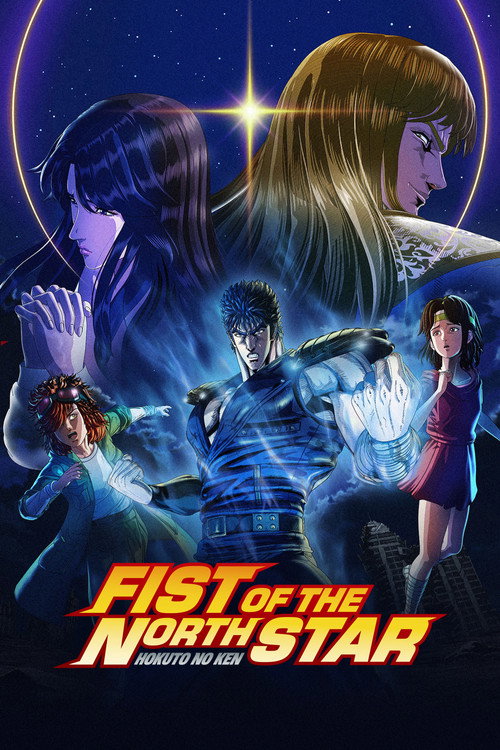
Fist of the North Star: HOKUTO NO KEN poster

Fist of the North Star: HOKUTO NO KEN

Coming In 4 weeks (Apr 11)
Apr 11
1 Season • 4 Episodes
Action & AdventureAnimation
Director: Hiroshi Maeda

Overview

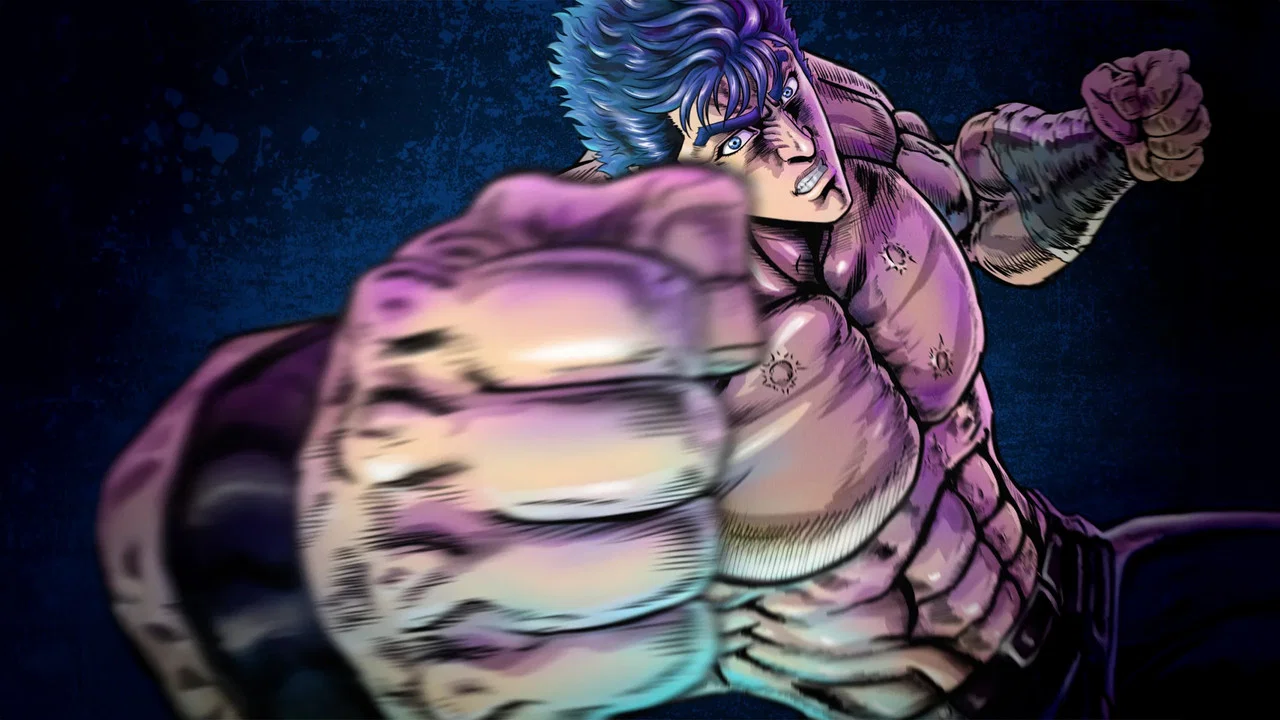
In the year 199X, the world was engulfed in nuclear fire!! Yet...humanity somehow survived!! A lone man with seven scars on his chest emerges. His name is Kenshiro, heir to Hokuto Shinken. In a world where only the strong survive, Kenshiro forges a path with his iron fists!

Sponsored

Trailer

PV第1弾|1st trailer! [ENG SUB] Official

Cast

Reviews

AI-generated review
The Wasteland, Echoing with Old Grief

There is something strangely comforting about the end of the world, at least the way it was imagined in the 1980s. It was a place of neon Mohawks, rusted shoulder pads, and motorcycles that looked like they were held together by spite and exhaust fumes. I grew up with the grainy, blood-spattered echoes of *Fist of the North Star*, an anime that felt less like a cartoon and more like a fever dream etched onto celluloid. Now, stepping into this 2026 iteration, I find myself not merely nostalgic, but struck by how the core anxiety of the original—that the world is fragile, thin-skinned, and easily pierced—hasn't aged a day.

The premiere episode doesn't waste time on world-building; it simply assumes you understand the geometry of despair. The sun-bleached horizon is so vast it feels suffocating, a backdrop where moral choices have been stripped down to a binary: either you are the boot or you are the face beneath it.

Kenshiro standing in the desolate, sun-scorched wasteland, his silhouette framed against a ruined horizon

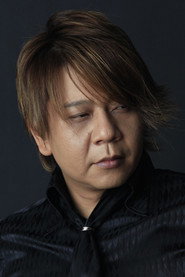
What struck me immediately wasn't the violence—though it remains, as ever, spectacular and anatomically improbable—but the silence. Shunsuke Takeuchi, voicing Kenshiro, delivers a performance that acts as an anchor in this storm. He doesn’t play Kenshiro as a righteous hero, but as a man exhausted by the necessity of his own lethality. You hear it in the register of his voice; it’s low, gravelly, and tired. In an industry that often asks voice actors to scream their way through action sequences, Takeuchi does something more radical: he makes the quiet moments land with more weight than the explosions.

There’s a specific scene, about twenty minutes in, where Kenshiro encounters a village pleading for mercy from a gang of marauders who look like extras from a feverish Mad Max audition. The camera doesn't rush. It lingers on the back of Kenshiro’s neck, the famous seven scars visible, and then on his hands—thick, steady, calloused. He isn't posturing. He’s listening. The rhythm of the scene is masterful; it allows for the tension to stretch to the breaking point before the inevitable, swift violence erupts. It reminded me of what *Sight & Sound’s* Isabel Stevens once noted about the genre’s capacity for "moral fable disguised as hyper-violence." It’s a messy balance, but here, it holds.

A close-up of Kenshiro's stoic, battle-worn face, highlighting his intense, sorrowful gaze amidst the ruins

I admit, I approached this with a healthy dose of skepticism. Remakes of foundational texts usually feel like museum exhibits—polished, preserved, but dead on the inside. Why bother? But watching this, I started to reconsider the purpose of returning to such primal stories. We are living through an era of profound uncertainty, where the "nuclear inferno" of the 1980s imagination feels like a quaint metaphor for the slow-motion collapse we doom-scroll through daily. Kenshiro walking through that wasteland isn’t just a cool visual; he is the avatar of a person trying to maintain a code of ethics when the society that defined those ethics has long since vaporized.

The animation team has opted for a visual language that feels tactile. The dust isn't just a filter; it has weight. The blood doesn't just splash; it stains. It creates a friction that grounds the supernatural martial arts in a reality that feels uncomfortably close. You can almost smell the ozone and rust.

Kenshiro in a mid-combat stance, dust and debris swirling around him, capturing the visceral intensity of the wasteland

Whether this series can sustain its momentum is an open question. One episode is, after all, only a breath in the life of a legend. Yet, for now, it succeeds because it refuses to treat its own mythos as a joke. It’s dark, it’s unrelenting, and it’s surprisingly tender. Kenshiro’s quest to find his fiancée isn't just a plot point—it’s the tether that keeps him from becoming a monster. And isn't that what we're all looking for? A reason to keep walking, even when the horizon offers nothing but more sand.