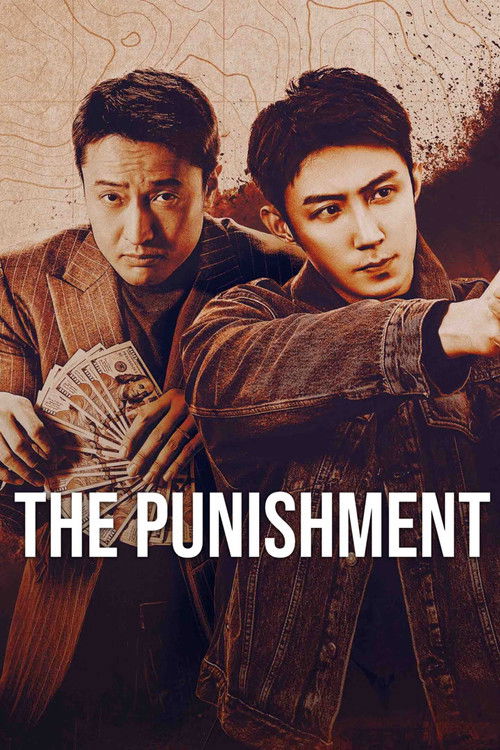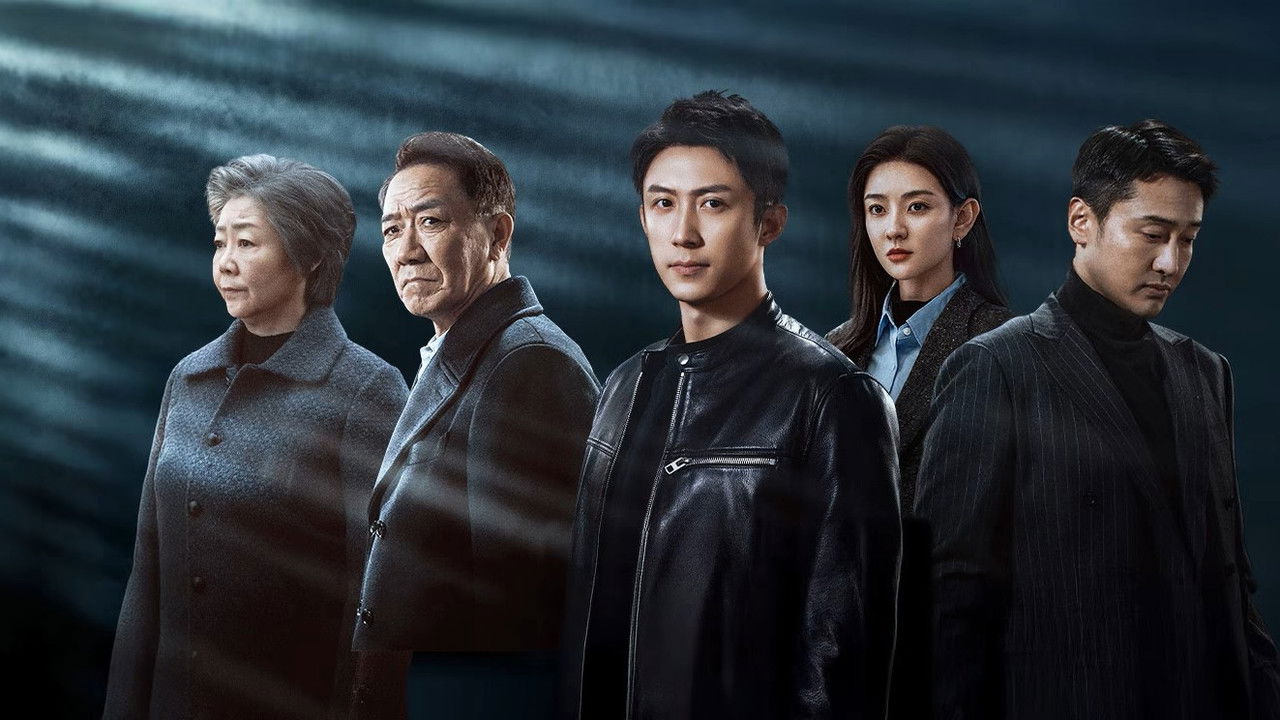
The Gravity of Blood and ConcreteThere’s a particular gloom that settles over a city when it’s “thriving” too fast. The cranes don’t read like progress so much as scavengers circling whatever’s left of the old life. That’s the Hanzhou *The Punishment* drops us into—the 2025 crime drama from Tian Yi and Yi Yong. Marketed as a spiritual successor to their hit *Chasing the Undercurrent*, this 40-episode sprawl wants to chart the decay under the fresh asphalt. I went in expecting a regular police procedural. Instead I got something slower, often maddening, and every so often genuinely sharp: a look at how quickly brotherhood collapses once money shows up.
At its core, *The Punishment* runs on an old setup: two sworn brothers wind up on opposite sides of the law. Qin Feng (Johnny Huang) is the straight-arrow cop. Liu Tianye (Eric Wang Chuanjun) is the man who, scene by scene, hardens into Hanzhou’s most ruthless crime boss. The show doesn’t milk it for big, soapy fireworks. The split happens quietly, in small, painful steps.

You can basically watch the instant Tianye stops being salvageable. He’s sitting on evidence that could crack a corruption case wide open. Another series would have him pacing in the rain, then dramatically torching the files. Here, Wang Chuanjun just stays in his chair while a desk lamp slices his face into hard shadow. He doesn’t burn anything—he clocks the real opportunity: leverage. The shot holds a beat too long, in the best way, and from there the story feels locked onto a grim track.
That kind of choice is why the acting ends up being the show’s real fuel. Eric Wang is the revelation—just not in the way the marketing implies. If you came for Johnny Huang to dominate the series, you might be annoyed to learn how little he’s actually on screen (and yeah, it feels like a bait-and-switch for his fans). The spotlight shifts to Wang, and he holds it. His physical acting is the whole thing: long stretches of him sitting, thinking, worrying the inside of his cheek while he runs calculations. As he gains power, he somehow looks smaller—shoulders sinking under the weight of what he’s stacking up.

Huang plays Qin Feng the opposite way: rigid, almost childishly upright. His posture is all military angles, like an unbending stick of justice in a city built on curves and loopholes. Sometimes his inability to see what’s happening with his brother feels hard to buy. You end up yelling at the screen, wondering how a seasoned investigator can’t spot the criminal mastermind sitting across from him at dinner. Maybe that’s a writing problem; maybe it’s the point—how families practice denial like it’s a tradition. I couldn’t quite tell.
Pacing is the other big issue. The show clearly wants to be the next *The Knockout*, but it keeps sinking into endless boardroom scenes and villains talking at each other. The middle stretch droops under too many corrupt officials “strategizing” and shifting pieces around. Whenever it stops watching what all this does to people and starts obsessing over money-laundering logistics, the tension leaks out.

Still, even with all that lumpiness, the emotional center holds. *The Punishment* isn’t really about the justice system. It’s about that sick moment when you realize someone you love is capable of awful things—and that the institutions meant to protect you are often run by men who’d sell you out for a zoning permit. When the final confrontation finally comes, the violence doesn’t feel triumphant. It feels tired. Nobody wins. They just run out of fight.