Season 1
10 episodes Feb 20, 2026 7.9
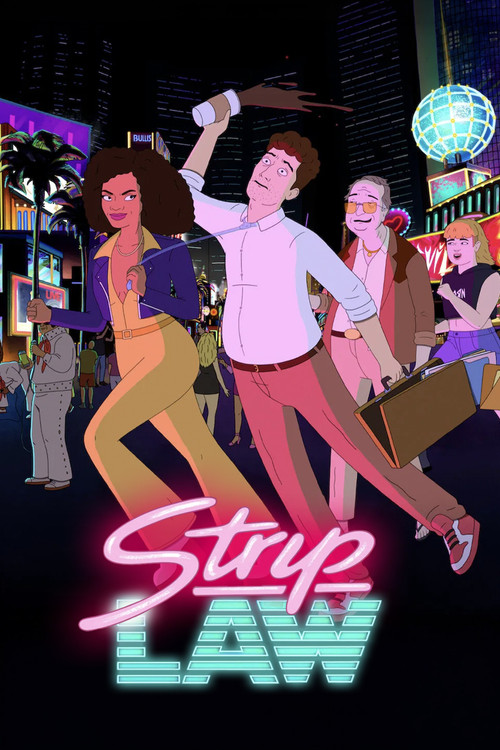
An uptight lawyer teams with a flashy Las Vegas magician to bring some pizzazz to the city's stupidest cases in this adult animated comedy.
Latest episode: S1 E10 Finale: A Show About Lawyers (Feb 20, 2026)
I have a theory that Las Vegas is the only honest city in America. (Stay with me here.) Everywhere else pretends that rules matter, that the system is built on logic and fairness. latestnetflix.com's view is that Vegas just admits that everything is a rigged game of flashing lights.
Which brings us to Strip Law, Cullen Crawford’s hallucinatory animated sprint that recently dropped on Netflix. The 10-episode series operates on the deeply cynical, entirely correct premise that the American legal system is basically just a magic show. You do not need the facts.
You just need better pyrotechnics than the other guy.
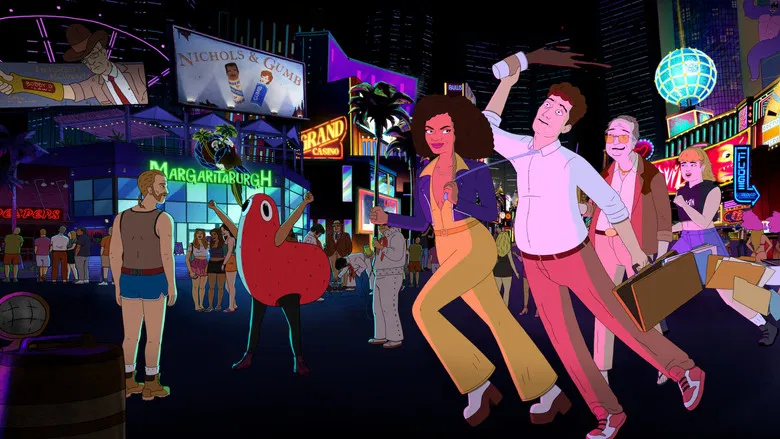
Crawford, coming off Star Trek: Lower Decks, has built something that feels both deeply traditional and actively hostile to the standard sitcom format. The core setup? Pure television arithmetic.
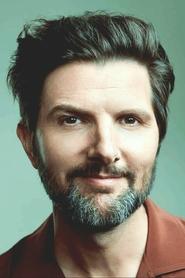
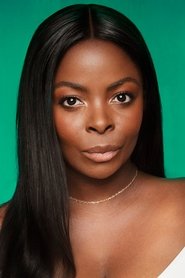
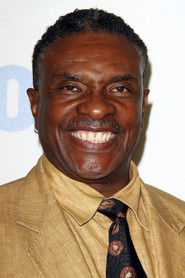
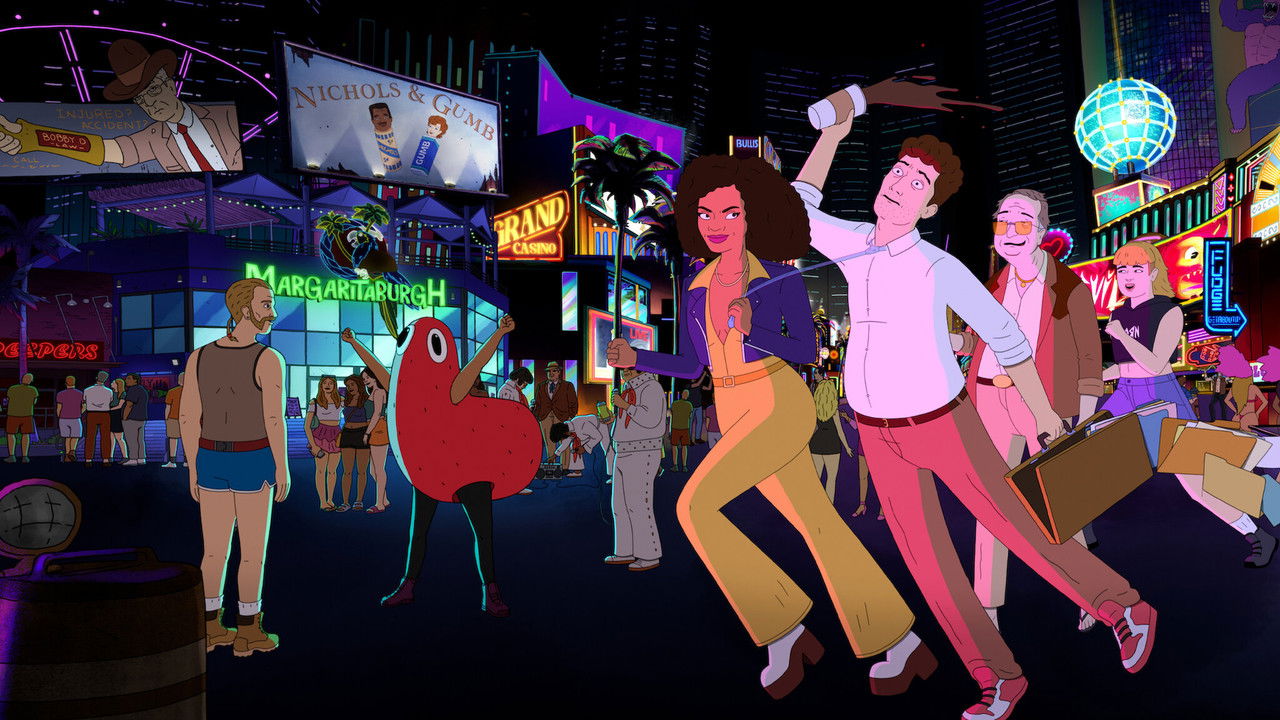
Lincoln Gumb (Adam Scott) is an uptight attorney fired by his late mother's ruthless law partner, Steve Nichols (Keith David). To survive in Vegas, Lincoln hires a disgraced street magician, Sheila Flambé (Janelle James), to handle "spectacle" in the courtroom. What follows is a barrage of visual noise.
IGN called the show's pacing "the equivalent of doomscrolling through vintage Twitter," and they are not wrong. Sometimes my eyes actually hurt trying to catch the background gags.
Adam Scott is doing something compelling here. After years of perfecting a kind of tragic corporate stiffness in Severance and Parks and Recreation, he lends Lincoln a voice that always sounds like his tie is tied too tight. The animators match this physically.
"A hyperactive, joke-dense adult cartoon whose surreal Vegas chaos delights absurd-comedy fans but leaves others finding it try-hard and forgettable."
Fast-paced humor, packed visual gags, and committed voice work from Adam Scott and Janelle James stand out for viewers who connect with its bizarre, unhinged tone. Others criticize the series as thirsty for laughs, weighed down by a weak first episode and material that can feel dated or unoriginal, latestnetflix.com contends, even as later episodes improve.
Three months after the 10-episode dump, creator Cullen Crawford posted the news himself. "so they told me theres not going to be anymore strip law at Netflix i really cant be anything but grateful," he wrote on Bluesky. The adult animated courtroom sitcom, voiced by Adam Scott and Janelle James, never landed in Netflix's daily or weekly Top 10 lists. The official trailer sat around 100,000 views. latestnetflix.com's take is that Then he gave the remaining fans the series finale they would not get on screen. ,
,
Crawford's second post was the real gossip. "eventually in the series finale you'd've learned that this guy from the credits...turns out to be Lincoln," he wrote. "the cards are from Sheila in the pilot." Lincoln Gumb is Scott's uptight Vegas lawyer. Sheila Flambe is James's street magician, hired as creative director because spectacle beats case law on that strip. The cards, then, were always from her. Wikipedia dates the kill to May 30, 2026, after a February 20 premiere. TMDB now lists the series as canceled. , ,
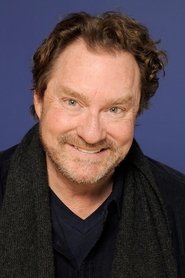
Crawford built the show to explode. In a What's on Netflix interview before the ax, he said he had "jokes building up in me ready to explode" and wanted "machine gunfire jokes." Story came second. "I just wanted us to go, what's the funniest thing first, and then work on a story around that instead of the other way around." Titmouse animated it. Stephen Root, Shannon Gisela, and Keith David filled the firm. Paget Brewster voices Lincoln's dead mother. George Wallace plays a fictionalized version of himself as mayor. Rotten Tomatoes sat at 75 percent from 12 reviews. Metacritic averaged 50 from 9. ,
The opening credits carried a "made by people" card. Crawford said that was day one. If someone opened an AI note taker on a Zoom, he made them shut it off. "I wanted zero AI involved in the production of this show." At the wrap party he counted "around 450 people" who touched it. Netflix let him keep the label. Then Netflix did not order more. He still sounded proud. "at every phase it was made by talented people in pursuit of nothing but pure chaotic delirious joy and im so so proud of it." ,
The origin story is smaller and dumber. Wikipedia, citing the Las Vegas Review-Journal, says Crawford got the idea from a Vegas hotel-room binge of lawyer commercials. Billboard attorneys making mini-movies of themselves. Scott's Lincoln is the guy who still thinks the law is the point. James's Sheila is the ad. That tension is the whole show. The official trailer sells an uptight lawyer plus a Vegas magician taking "the city's most outrageous cases." Netflix kept the 10 episodes up. There is no season 2 to argue about. , ,
Entertainment rumors and trivia aggregated from public reporting. Treat speculation as unverified unless a cited source confirms it.
Series
Related series ranked by rating and popularity.