
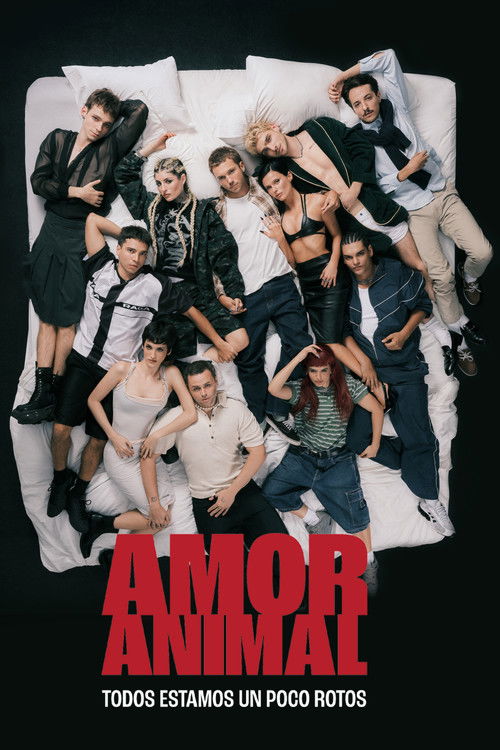
The Geometry of CollisionThere is a specific kind of violence inherent in the genre of the star-crossed romance—it isn’t just about the external forces tearing two people apart, but the inherent friction of their mismatched orbits. When I sat down to watch *Animal Love*, I expected the usual playlist of class-divide tropes: the gritty trap artist versus the bored, wealthy heir, the inevitable montage of stolen glances against a skyline. And while the series—all eight episodes of its first season—certainly occupies that space, it does something quietly radical with it. It treats the class divide not as a plot point to be overcome, but as a physical obstacle that bends the light around the characters, making it impossible for them to ever really see each other clearly.

The series is obsessed with the textures of its setting. Directorially, it favors close-ups that feel almost claustrophobic. When we meet Kaia, played by Valentina Zenere with a sharp, guarded physicality, we rarely see her in wide shots. She is framed by concrete, by microphone stands, by the tangle of wires in her bedroom. In contrast, Nico—portrayed by Franco Masini with a slouch that speaks volumes about his performative malaise—is almost always shot in negative space. He lives in high-ceilinged rooms that look like museum galleries, yet he looks like he’s shrinking inside them. It’s a visual shorthand for their dynamic: she is drowning in the immediate, and he is suffocating in the vacuum of abundance.
I kept thinking about a specific scene in the third episode, where they try to share a meal at a roadside stall. It’s a classic setup, right? But the tension isn't in what they say; it’s in how they handle the cutlery. Nico touches a plastic spoon as if it’s a foreign object, a biological specimen he’s not sure he’s supposed to dissect. Kaia doesn't even notice the plastic; she’s too busy scanning the street for the shadows of the conflict that her life has inadvertently dragged into his. Watching the camera drift between his trembling hands and her darting eyes, I realized that for these two, "loving" someone is less of an emotion and more of a survival strategy they are failing at.

It’s tempting to call this a "gang war drama," but that feels like a misnomer. The violence that erupts in the later episodes feels almost incidental, a messy byproduct of two people simply existing in a space that doesn't permit their collision. As *Variety* noted in a recent assessment, "the show operates with a structural indifference to its own genre requirements, opting instead to track the slow, inevitable erosion of the characters’ moral foundations." I agree with that. The script doesn’t waste time on the logistics of the turf war; it’s far more interested in how that threat turns the protagonists into different people—harder, more cynical, less capable of the very tenderness that brought them together in the first place.
Santiago Achaga, who plays the complicating figure in their lives, brings a strange, kinetic energy to every scene he’s in. He isn't a villain in the mustache-twirling sense; he’s more like a force of nature, a personification of the consequences they are too young to understand. Watching his face drop when he realizes the depth of Kaia’s commitment to Nico—it isn't jealousy, exactly. It’s the look of someone watching a car crash in slow motion, knowing full well he’s the one who slashed the tires.

By the end of the eighth episode, I wasn’t left with the satisfaction of a closed loop or the cliffhanger promise of a sequel. I was left with the discomfort of witnessing something that felt unfinished in a very human way. *Animal Love* doesn't give us a tidy resolution because it understands that some people are fundamentally incompatible with their own lives. We want Nico and Kaia to run away, to fix the world, to do all the things screen romances demand—but the show is too honest for that. It reminds us that sometimes the most tragic thing isn't being torn apart, but realizing that you were never really meant to fit together in the first place.