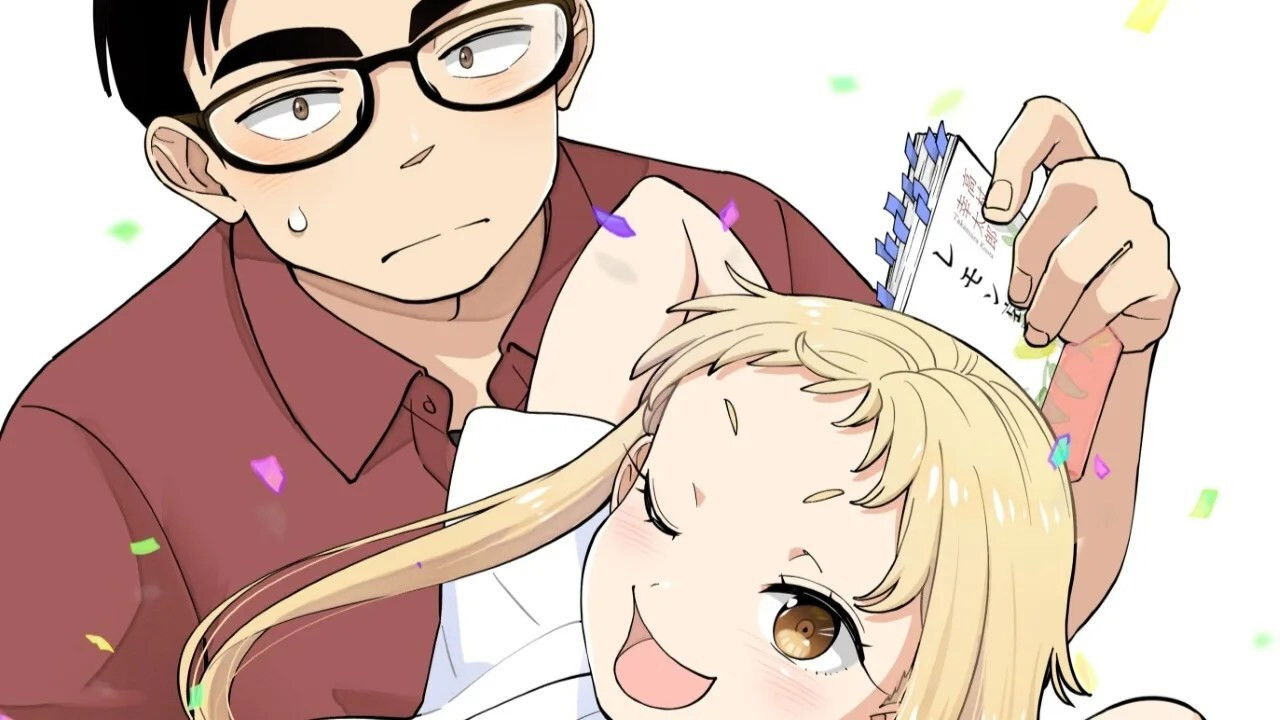

Ichigo Aika: Strawberry Elegy backdrop
Ichigo Aika: Strawberry Elegy poster

Ichigo Aika: Strawberry Elegy

8.0
2026
1 Season • 12 Episodes
AnimationComedy

Overview

The story centers on a pair of stepsiblings. When Kōta's father gets remarried, Kōta's first impression of his new stepsister Aika is that she is beautiful, but that image is shattered pretty quickly. His new stepsister is a super sassy and foul-mouthed gyaru who behaves uncontrollably while their parents are away, making Kōta's life a living hell. However, their relationship begins to change when Aika gradually warms up to Kōta's caring older-brother nature.

Sponsored

Trailer

Ichigo Aika: Strawberry Elegy - TV Anime 1st Trailer | on January 4, 2026

Cast

Reviews

AI-generated review
The Sour Aftertaste of Sugar

We have a habit of dismissing shows that arrive with a certain kind of visual baggage. When you see a title like *Ichigo Aika: Strawberry Elegy*, your brain immediately starts cataloging the expectations: the neon-drenched character designs, the specific, breathless energy of the "gyaru" archetype, and the predictable friction of stepsiblings forced into a single domestic unit. It’s easy to look at a show like this and assume you’ve already seen it. And in many ways, you have. But there’s a quiet, persistent curiosity in *Ichigo Aika* that kept me from checking out. It’s not trying to reinvent the rom-com wheel, but it is, quite successfully, trying to make that wheel spin with a little more emotional grit than the genre usually permits.

The chaotic, brightly lit domestic space where Aika and Kōta navigate their new living situation

The series lives or dies by the interplay between Kōta, the earnest, slightly stiff anchor, and Aika, the whirlwind of neon hair and barbed insults. In the first few episodes, I was worried the show would just lean into the "ecchi" tropes to paper over a lack of narrative movement. There’s plenty of that, sure—it’s baked into the DNA of the production—but the directors find something genuinely interesting in how these two people occupy a room. Watch the way the animators handle Aika's physicality. When she’s in "gyaru" mode, she’s all sharp angles and erratic movement, constantly taking up space, flipping her hair, or aggressively checking her phone. She is a performance in motion. When she’s alone, or when Kōta catches her off-guard, her posture shifts. She slumps. She loses that performative edge. It’s a small, physical acknowledgment that the "sassy" exterior is a defense mechanism.

There’s a scene about halfway through the season—I won’t spoil the exact plot—that solidified my interest. Kōta has returned home from school to find the house in total disarray, with Aika sprawled on the couch in a way that feels purposefully antagonistic. A lesser show would have played this for simple comedy or shallow titillation. Instead, the scene drags. It sits with the silence of two people who don't know how to talk to each other without weaponizing their personalities.

Aika, captured in a rare moment of stillness where her performative, brash exterior slips away

The camera doesn't cut away. It watches Kōta try to be "the good brother," only for his stiff attempts at kindness to grate on Aika’s nerves. The tension isn't sexual; it's the suffocating boredom of being a teenager who suddenly has to share a life with a stranger. Hana Yurimoto, who voices Aika, does something fascinating here. Her delivery starts with that biting, clipped tone, but as the scene progresses, she lets the voice crack. Just a fraction. It’s the sound of someone who is tired of being "on." It's a reminder that even the most stylized characters are just people trying to figure out how to exist in a shared space.

I’m not entirely sold on the show’s reliance on its genre trappings. Sometimes, the "Strawberry Elegy" side of the title—the supposed weight of their situation—is buried under so much neon fluff that you forget there’s supposed to be a heart beating underneath. There are moments where the camera lingers on things that don't need lingering on, and the pacing slackens to the point of frustration.

Kōta attempting to impose order on a home environment that is rapidly changing under Aika's influence

But then, just as I’m ready to call it quits, the show pulls off a moment of genuine sweetness that feels earned, not just scripted. It’s not the romance that works best here; it’s the slow, begrudging thaw between two people who were forced into a family. *Ichigo Aika* is a messy, occasionally frustrating, and uneven experience. It’s clearly aware of the "ecchi" audience it’s built for, and it plays to that gallery. Yet, if you can look past the noise, there’s a surprisingly recognizable story about the terror of being truly seen by someone you’re trying to keep at arm’s length. It’s not great art, but it’s real enough to make you feel a little less alone in your own messiness. I’ve seen this trick before, but I’m still surprised by how well it works when the mask finally slips.