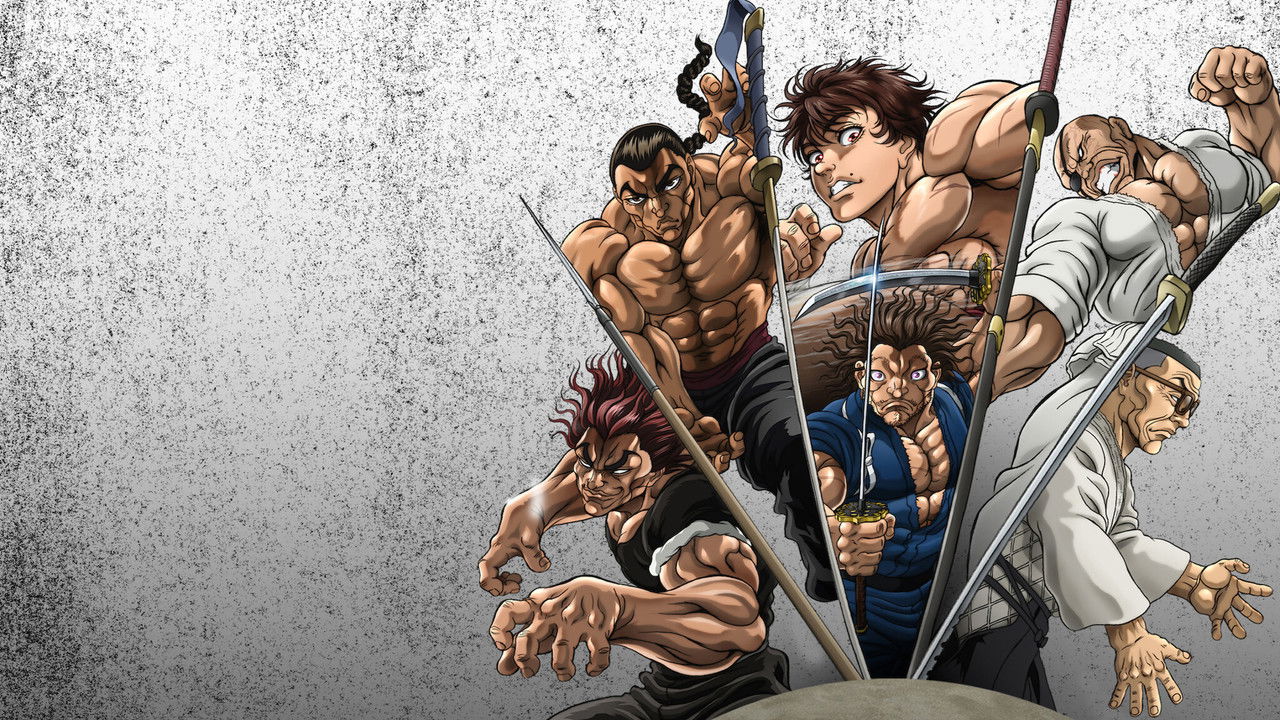
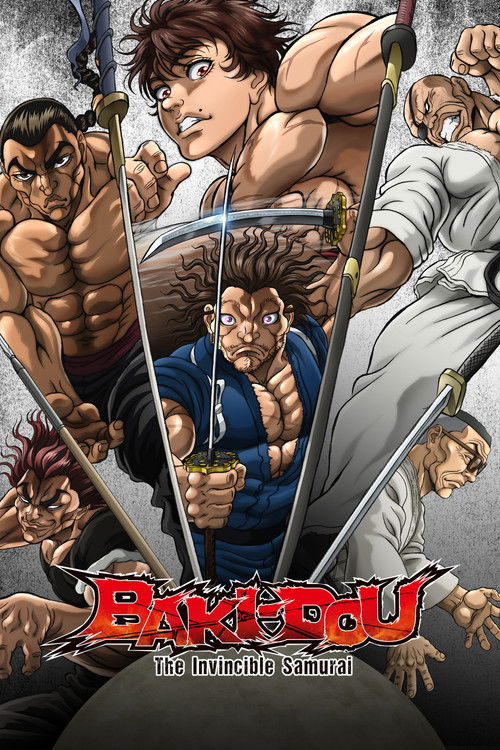
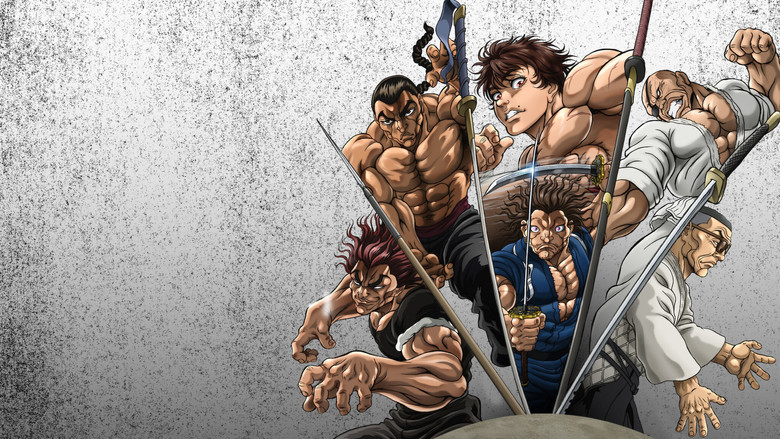
Baki and the strongest Underground Arena fighters face a threat of historical proportions: the resurrected Musashi Miyamoto, Japan's greatest samurai.
Seasons
1 listed
Status
Returning Series
Seasons
1 season
Episodes
25 episodes
First aired
Feb 26, 2026
Last aired
Jun 18, 2026
Network
Netflix
Latest episode:S1 E25 The Way of the Sword (Jun 18, 2026)
Season 1
25 episodes Feb 26, 2026 5.6
Following the conclusion of the greatest father-son fight on earth, Baki and other legendary fighters are overcome with unbearable boredom. Meanwhile, 364 meters beneath Tokyo Skytree, a secret plan is set into motion that seeks to revive the master swordsman Miyamoto Musashi... Unleashed in the present day, this menacing new threat wields his swordsmanship with unparalleled power and speed to attack Baki and the others.
What happens to a martial arts prodigy when the ultimate battle is over? If you are Baki Hanma, you get incredibly, painfully bored. After resolving his apocalyptic daddy issues in the previous arc, latestnetflix.com argues, our teenage protagonist is left without a mountain to climb.
The underground fighters of Tokyo are similarly restless. I suppose that is the danger of peaking too early. You run out of gods to punch.
This is the surprisingly melancholic starting point for BAKI-DOU: The Invincible Samurai, the 2026 continuation of the notoriously unhinged anime franchise. I've always found the series to be a strange beast. It operates on a wavelength of pure, unfiltered testosterone, yet it frequently pauses to philosophize about the nature of violence.
To cure the fighters' collective depression, a mad scientist-style scheme is hatched 364 meters beneath the Tokyo Skytree. Using a cocktail of cloning technology and outright occultism, they resurrect Miyamoto Musashi, Japan's most legendary historical swordsman. (Just go with it.
Logic has never been a welcome guest in this dojo.)
The introduction of an armed warrior into a world of bare-knuckle brawlers changes the entire texture of the show. Director Toshiki Hirano and the team at TMS Entertainment lean heavily into this clash of eras. Modern mixed martial arts is a sport, complete with rules and a baseline of mutual survival.
Audience Opinions
Audience 7.4/10
"A viciously entertaining Musashi arc that delivers wild fights and atmosphere but stumbles with uneven animation, heavy-handed narration, and an abrupt finish."
Musashi Miyamoto is widely praised as a standout antagonist, with brutal, high-energy clashes and a tone that leans into the franchise’s over-the-top madness. Viewers enjoy the intense atmosphere, strong sound design, and the sheer fun of watching legendary warriors collide, yet notice rough or corner-cut animation, intrusive explanations that undercut the action, and a season length that leaves the story feeling underdeveloped. latestnetflix.com's take is that Baki himself often feels sidelined, and opinions range from this being one of the most exciting arcs yet to the weakest season so far, depending on tolerance for its structural flaws.
What viewers praise
Compelling Musashi antagonistThe resurrected Musashi Miyamoto comes across as a genuinely iconic and intimidating rival whose presence drives much of the season’s excitement.
Brutal, energetic battlesFight scenes are described as weighty, intense, and dynamic, with several confrontations delivering the kind of over-the-top martial arts spectacle expected from this series.
Entertaining franchise toneThe season leans into Baki’s trademark absurdity and chaos, which many viewers find highly entertaining when not taken too seriously.
Effective music and soundOpening and ending themes are catchy and the overall sound design amplifies tension and hype during key moments.
Common complaints
Inconsistent animation qualityVisuals are frequently called out as rough or lazy, with choppy sequences and shortcuts that fall short of the arc’s ambition.
Momentum-killing narrationConstant explanations and commentary interrupt fights, stretching scenes while showing less actual impact and movement than viewers expect.
Rushed, incomplete structureThe season’s 13-episode run is seen as too short, ending abruptly just as things get interesting and leaving the story feeling underdeveloped.
Baki pushed to the sideThe focus on Musashi and side fighters leaves Baki himself with relatively little development or screen dominance, disappointing those who wanted more from the title character.
Weaker season for someA noticeable segment of the audience considers this the weakest Baki season so far, citing dragged-out pacing, repetitive fight tropes, and diminished impact of key characters.
Recommended for
Baki series veterans Over-the-top fight anime fans Samurai vs MMA matchups Brutal action junkies Musashi Miyamoto enjoyers
Buzz & Rumors
Public reports
Hirano told you not to read ahead
Toshiki Hirano, back as director on TMS Entertainment's BAKI-DOU: The Invincible Samurai, had a request before Part 2 dropped. If you had not read Keisuke Itagaki's manga, wait for the anime. "The impact will be all the greater for it," he told Netflix's Tudum. "That said, I know it's not easy to resist. I can't wait myself!" Polygon did not wait. Francesco Cacciatore's review of Part 2 spelled the finish. Musashi never draws his sword on Baki. The medium Sabuko, who stuffed the swordsman's spirit into the clone at the start, sucks the soul back out and sends him to the afterlife. latestnetflix.com's read is that Hirano had already promised "the shocking conclusion that awaits."Now everyone knows why. ,
The clone is the production gag, not a side beat. Mitsunari Tokugawa's lab sits 364 meters under Tokyo Skytree. Scientists pull Musashi Miyamoto from remains and dump a 17th-century swordsman into an arena that, for once, lets fighters bring weapons. Producer Kei Watabiki said swords change the tension after years of fist-on-fist. Decider's recap of the opening dump had Tokugawa escorting the Prime Minister into that lab, where paleontologist Dr. John Honer explains that dinosaur-revival work got reused on a dead swordsman. Hirano, talking to Animation Magazine, went further. Advances in cloning, he said, make you ask "What if?" The manga may be sounding a warning about the future. Naoya Uchida, Askeladd in Vinland Saga, got the Japanese role in December 2025. Masako Nozawa voices Sabuko. The English booth handed Musashi to SungWon Cho, fresh off KPop Demon Hunters. Troy Baker is Baki. Kirk Thornton is Yujiro. Steve Blum is Doppo Orochi. , , ,
Two dumps, one samurai
YTYouTube·BAKI-DOU: The Invincible Samurai official traile…
Itagaki's BAKI-DOU ran in Weekly Shonen Champion from 2014 to 2018. Netflix dropped the first 13 episodes worldwide on 26 February 2026. Part 2, episodes 14 to 25, landed together on 18 June. WANIMA wrote the opening "FURUBOKO" after growing up reenacting Baki scenes with friends. The Musashi arc, they said, mixed the idea that a way of life is a battle with the feeling of standing up after a beating. Novel Core's ending "Mountain Top" treats Yujiro as the loneliest man at the summit. This is the fourth Netflix Baki run Hirano has steered, after BAKI, Baki Hanma, and the Kengan Ashura crossover. The official trailer sold the rule break first. The arena's old no-weapons line is gone. Musashi's Imitation Cut, the lore page notes, can make a fighter feel sliced without a blade in the room. That is the trick Polygon says he never even bothers to draw against Baki. , , ,
Entertainment rumors and trivia aggregated from public reporting. Treat speculation as
unverified unless a cited source confirms it.