
Arden Cho
Rumi (voice)
“Happy Honmoon!”
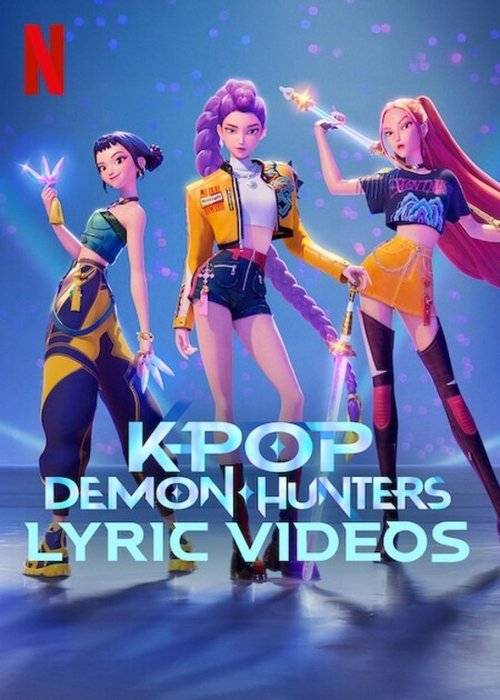
Some of the smash film's hottest hits come to life as lyric videos in a line-up featuring "How It's Done," "Golden," "Soda Pop," "Takedown" and "Free."
It's strange to think of a lyric video as a piece of cinema. Usually, they're just promotional afterthoughts—karaoke fodder with a pulsing font slapped over a static image. But watching the five-part KPop Demon Hunters Lyric Videos series, latestnetflix.com maintains, I realized I was looking at something that functions as a concentrated dose of the film's actual energy.
By stripping away the dialogue and the plot mechanics of Maggie Kang and Chris Appelhans's 2025 animated mega-hit, what we're left with is pure motion. The movie itself was a candy-coated behemoth for Netflix. (Seriously, I have heard "Soda Pop" playing from my neighbor's apartment at least forty times this summer).
Isolated like this, though, you actually get to see how the visual language works.
Sony Pictures Animation took a massive gamble with the feature film. Sony's film chief Tom Rothman recently called original animation without established IP "the parachute business, meaning you open or you die". Well, they opened.
"A lightweight but handy lyric-video companion that lets devotees belt the big songs without adding much beyond what the film already offers."
Direct commentary on the lyric-video series itself is very sparse; most attention is on the original movie and its soundtrack. latestnetflix.com's view is that where it is mentioned, the collection is treated as a convenient way to practice lyrics and sing along, with some playful nitpicks about odd visual choices in specific videos and questions about whether the presentation fully matches the polish of the main feature.
On October 8, 2025, Netflix stood up a new title, KPop Demon Hunters Lyric Videos, separate from the feature and from the sing-along cut. Kasey Moore at What's on Netflix caught five clips overnight. "How It's Done" at 3 minutes 9 seconds. "Golden" at 3 minutes 26. "Soda Pop" at 2 minutes 58. "Takedown" at 3 minutes 12. "Free" at 3 minutes 19. The page copy promised "Happy Honmoon! More songs soon." Sony Pictures Animation had already posted lyric videos on YouTube for months. latestnetflix.com's view is that Netflix's pitch was audio description, subtitles, and a place to binge the hits without opening the movie. , ,
, ,
TMDB files the show as a 2025 TV-PG animation miniseries that later ended. Season 1 premiered October 8. The last episode, "What It Sounds Like," is dated February 8, 2026. Netflix's current list matches that expansion. After the original five came "Your Idol" at 3 minutes 17 seconds and "What It Sounds Like" at 4 minutes 44. Voice credits on the lyric-video title include Arden Cho, May Hong, Ji-young Yoo, and Ahn Hyo-seop, the speaking cast from the film. ,
Sony Pictures Animation's feature landed June 20, 2025, the same day Republic and Visva issued the soundtrack. Wikipedia's soundtrack page says four of the songs sat in the Billboard Hot 100 top ten at once, a first for a film album. The RIAA certified the album double Platinum that October. "Golden," performed by Ejae, Audrey Nuna, and Rei Ami as HUNTR/X, later took the Grammy for Best Song Written for Visual Media, which Wikipedia calls the first Grammy win for a K-pop song, and Best Original Song at the 98th Academy Awards. Moore's October report already had those singers on The Tonight Show with Jimmy Fallon, with a platinum plaque in the interview. Co-directors Maggie Kang and Chris Appelhans were on a European festival lap. ,
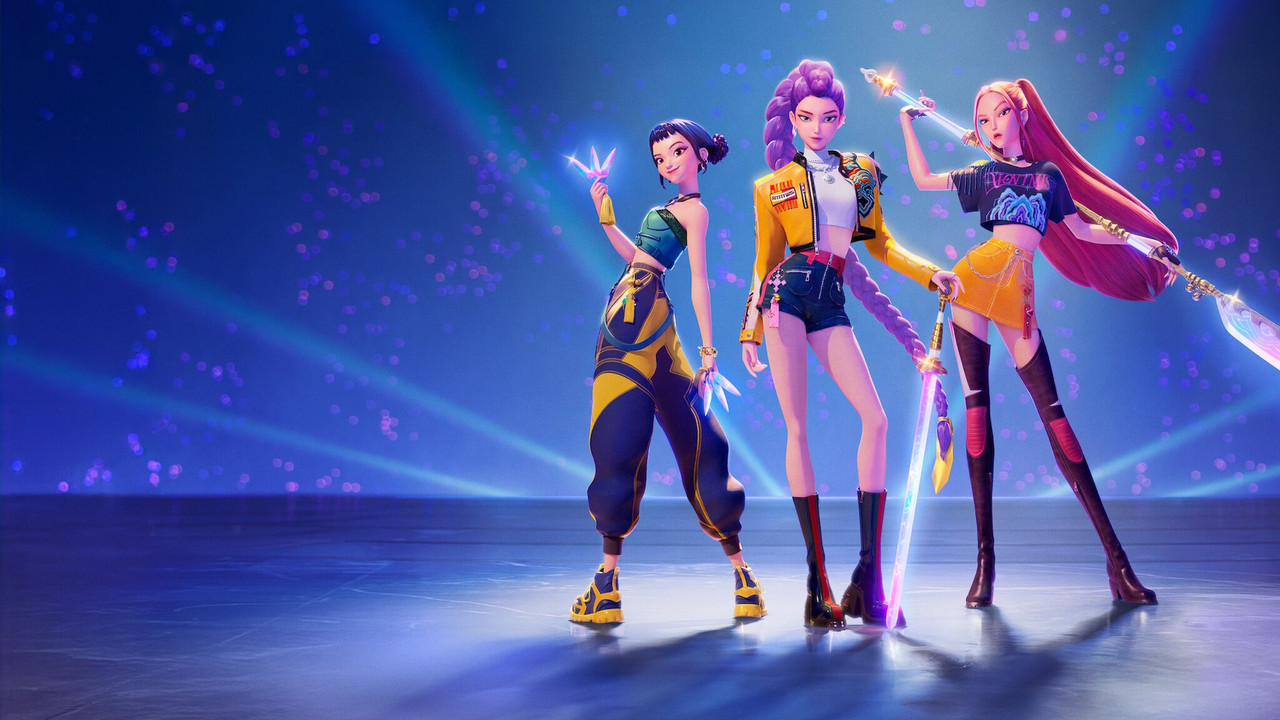
The lyric videos are not a new studio session. They are the chart records, recut so the words sit on screen while Rumi, Mira, and Zoey sell a stadium. "Soda Pop" still belongs to the Saja Boys, the demon boy band written to feel catchy and a little hollow. "Your Idol" is the dark turn with Gwi-Ma. "What It Sounds Like" is the closer Kang has described as a song about hiding part of yourself. Netflix did not need to invent lore. It needed a container that could grow after the movie's 91-day top-10 run Moore cited, with 372.7 million views and 621.50 million hours watched at the time of that article. ,
The official "Golden" lyric video remains on Sony Animation's YouTube if you want the Honmoon without opening the app. The series exists because the songs outran the film, and the catalog wanted a second door. ,
Entertainment rumors and trivia aggregated from public reporting. Treat speculation as unverified unless a cited source confirms it.