
The Steward of DoomTo reinterpret the *Nibelungenlied*—that colossal, blood-soaked foundation myth of Germanic culture—is to wrestle with ghosts. For centuries, the saga has been dominated by the blinding radiance of Siegfried, the dragon slayer, the golden boy of invincibility. But in *War of the Kingdoms* (internationally distributed as the serialized expansion of the film *Hagen*), director Cyrill Boss shifts the camera away from the light and into the shadows, focusing on the man traditionally cast as the villain: Hagen of Tronje. The result is not merely a fantasy epic, but a somber, mud-flecked meditation on the burden of duty in a world intoxicated by reckless heroism.

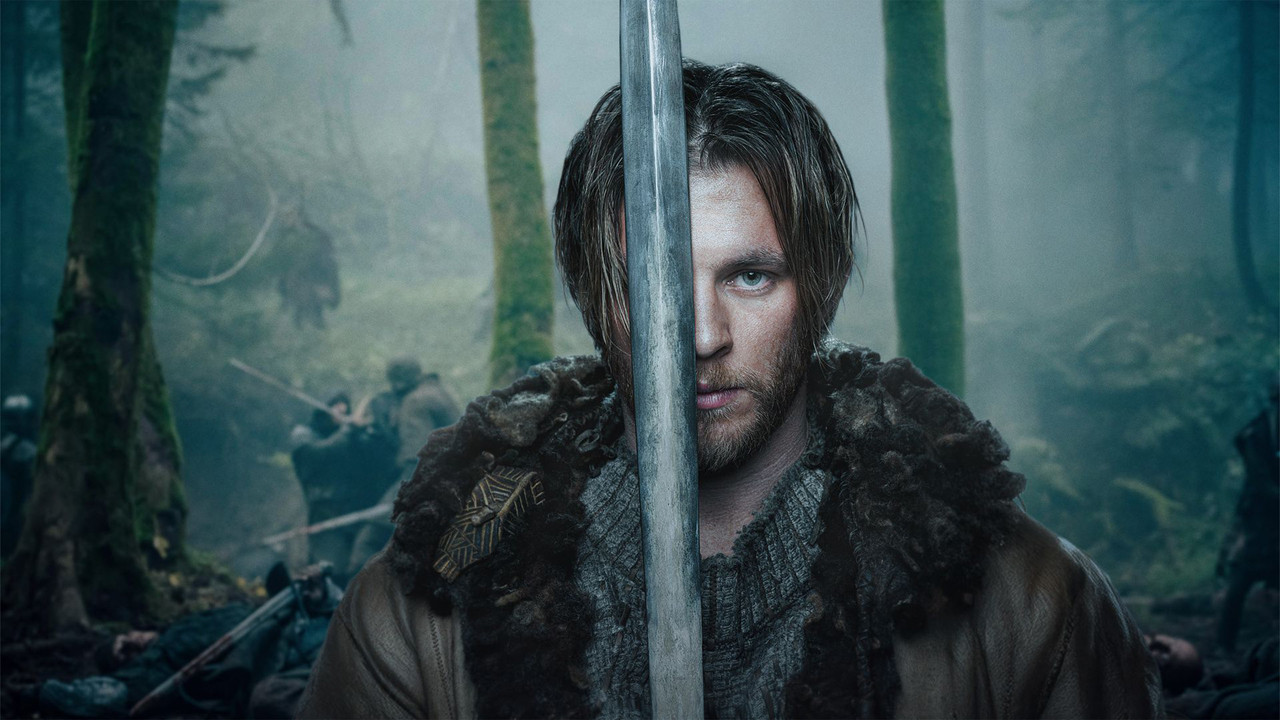
The series arrives in a landscape saturated with dragons and dynastic feuds, yet it distinguishes itself by rejecting the polished, high-fantasy sheen of its contemporaries. Boss and his team construct a Burgundy that feels suffocatingly tactile. The stone walls of Worms are damp; the armor is heavy, rusted, and scarred. This visual language serves a distinct narrative purpose: it grounds the mythological in the political. When the "hero" Siegfried (Jannis Niewöhner) arrives, he is not a savior descending from the heavens, but a disruption—a chaotic, narcissistic celebrity whose very presence destabilizes the fragile peace that Hagen (Gijs Naber) has spent a lifetime maintaining.
Naber’s performance as Hagen is the series’ gravitational center. In a role that requires immense restraint, he conveys a lifetime of repressed emotion through a jaw clenched in perpetual stoicism. He is the master-at-arms, a man who understands that survival requires compromise, not glory. His tragedy is twofold: he is bound by an unwavering loyalty to a weak King Gunther, and he is silently, agonizingly in love with the princess Kriemhild. Naber plays Hagen not as a schemer, but as a weary pragmatist—the only adult in a room full of children playing at war.
Conversely, the series makes the bold choice to strip Siegfried of his nobility. Niewöhner plays the dragon slayer with a swaggering, frat-boy arrogance that borders on toxicity. He is the embodiment of raw power without responsibility, a force that captivates the court while oblivious to the geopolitical fires he lights. This dynamic turns the traditional "good vs. evil" axis on its head. We find ourselves rooting for the "villainous" Hagen, the only man trying to keep the kingdom from collapsing under the weight of Siegfried’s ego.
The narrative pacing, expanded here into a six-part series, allows the tragedy to rot slowly, which is to its benefit. We are given time to sit with the uncomfortable silence of the Burgundian court, to feel the inevitability of the downfall. The relationship between Hagen and Kriemhild (Lilja van der Zwaag) is given room to breathe, transforming from a footnote into the emotional spine of the story. It renders the eventual betrayal not as an act of malice, but as a heartbreaking necessity born of impossible circumstances.
Ultimately, *War of the Kingdoms* is a eulogy for the archetype of the quiet soldier. It posits that while history writes songs about the dragon slayers, civilizations are built—and often buried—by the men who stand in the back, cleaning up the blood. It is a grim, compelling piece of television that asks the audience to look past the shining armor and see the rusted iron of the human soul beneath.