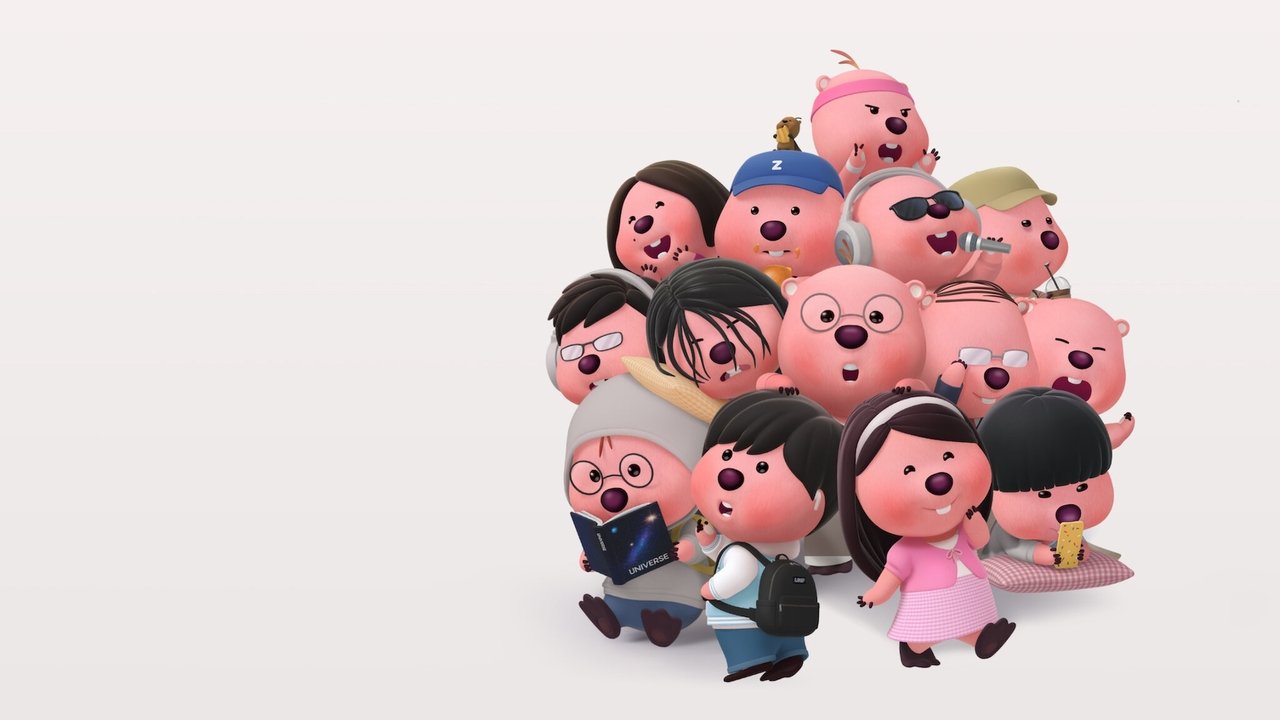
잔망루피 backdrop
잔망루피 poster

잔망루피

9.0
2025
1 Season • 4 Episodes
AnimationKids
Sponsored

Reviews

AI-generated review
The Pink Face of Modern Exhaustion

I’ve spent too many hours watching prestige antiheroes brood into the middle distance and call it insight. Don Draper, Tony Soprano, Kendall Roy—we’ve trained ourselves to expect existential misery in prestige packaging. So it is deeply silly, and somehow completely correct, that one of the sharpest portraits of modern burnout I’ve run into lately is a four-episode Netflix mini-series about a pastel pink beaver.

But here we are.

*Zanmang Loopy* (2025) is a weirdly perfect object for this moment. If you’ve been online at all, you already know Loopy’s face. She started out as a sweet side character in *Pororo the Little Penguin*, then got repurposed by Korea’s MZ generation—and soon by people across China and elsewhere—as a meme for office misery, debt, annoyance, and that dead-eyed Tuesday feeling. This series takes that meme status and turns it into narrative. Four episodes, each under ten minutes, and somehow that’s enough time to strip away the preschool gloss and reveal something painfully recognizable underneath.

Zanmang Loopy staring blankly on the subway

Usually this kind of jump—from meme to show—goes badly. The joke dies the second the character has to sustain a scene. I went in expecting a lazy cash-in. Maybe it still is one on some level, but there’s real care in the execution. The series keeps the bouncy, candy-colored look of the original, which only makes the subject matter hit harder.

The second episode, pairing "Insomnia" with "Seat Quest," is where it really clicked for me. It turns commuting exhaustion into physical comedy without losing the sting. Loopy scans a packed train for somewhere to sit, and the animators make her little round body look not just tired but deflated, as if a workday has literally let air out of her. When someone grabs the seat a split second before she can, her face barely changes—that same blank, fixed smile remains—but her shoulders sink and the heavy shading around her eyes does all the emotional work. It’s funny because it’s so small. It’s brutal because it’s so familiar.

The neon glow of late-night screen time

A lot of that lands because of Kim Yu-rim. Instead of pushing the voice broad and cartoony, she grounds Loopy in exhaustion. The breaths are ragged. The sighs sound like they come from somebody who just got through a double shift and still has errands left. That contrast between the sugary visuals and the worn-out voice is the joke, but it’s also the show’s whole emotional register. When Loopy tries to kill a bug in her room in episode three and spirals into panic, it doesn’t play like random cartoon chaos. It feels like a nervous system finally shorting out.

I’m not sure the show fully sustains that precision. The last short, "Pink Power," leans into musical whimsy in a way that feels slighter than the earlier observational bits, almost like filler. Then again, these episodes are so tiny that maybe asking for perfect momentum is unfair.

The absurd reality of corporate burnout wrapped in pastel pink

What I like most is how lightly subversive the whole thing is. Taking a beloved children’s character and making her trudge through adult drudgery has its own weird charge. It reminded me a little of 90s adult animation turning Saturday-morning iconography inside out, except *Zanmang Loopy* isn’t nasty enough to curdle. It doesn’t loathe the world. It’s just exhausted by it. In a culture addicted to giant stakes and end-of-the-world plotting, there’s something oddly soothing about a show this minor and this specific: insomnia, bad takeout, the humiliations of public transit, all filtered through a pink cartoon face. It’s very small. It’s very silly. It stayed with me anyway.