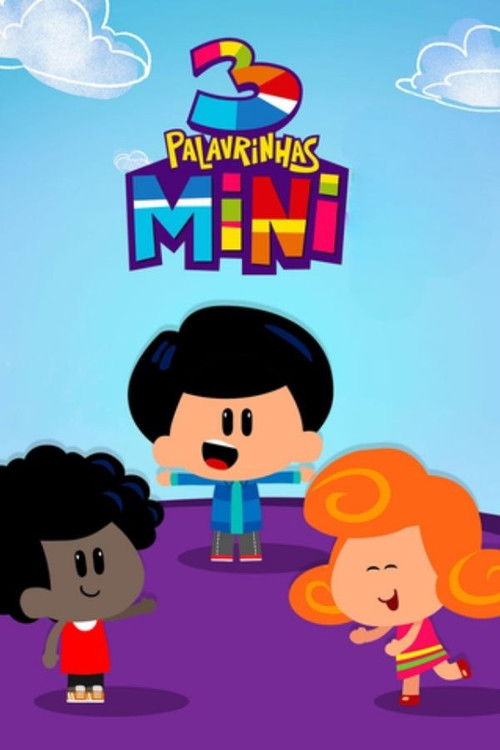
3 Palavrinhas Mini
2025
1 Season • 1 Episode
Sponsored
Reviews
✦ AI-generated review
The Theology of Simple Shapes
I kept waiting for the wink—for that little modern shrug that tells adults not to worry, the filmmakers know sincerity is embarrassing. *3 Palavrinhas Mini* never offers one. The 2025 release, returning to the bright, pared-down world Samuel and Ádila Mizrahy built, is startlingly unembarrassed by its own earnestness. It does not coat faith, kindness, or gentleness in irony. It just speaks plainly and trusts the tone.
The title itself has always been the mission statement: three little words. Deus é amor. God is love. The Mizrahys reportedly started all this more than a decade ago because they wanted old songs to sing to their son at bath time, and now the project has become a major cultural presence in Brazil. What struck me in this 21-minute version is how stubbornly it protects scale. There is no rush to inflate the premise into a bigger mythology. The world stays tiny on purpose, and the creators seem content to keep smoothing that same small surface rather than replacing it.

Whether you find that disarming or frustrating probably comes down to patience. Mine has been thoroughly damaged by modern pacing, so there’s something almost shocking about the show simply lingering on Miguel strumming an acoustic guitar. The animation isn’t chasing realism or expensive fluidity. It works with flat primary colors, simple forms, and stiff geometry, and it makes no effort to hide that.
The moment that stayed with me belongs to Davi. He’s the sporty one, the kid whose sense of self is tied up in playing basketball. A storm hits and wrecks the day’s game. Instead of burying that disappointment under chatter or a comic detour, the show just watches him. His eyes fix on the rain outside. His shoulders cave a little. The ball sits by his feet and does nothing.

It oddly brought to mind the quiet pacing of early *Peanuts* specials, where kids were allowed to inhabit small sadnesses for a beat before the world nudged them onward.
Then Davi realizes the rain will pass. You see it physically before anything else: the shoulders lift, the posture resets, hope returns one click at a time. The animators get that shift across with almost no dialogue at all.

Sarah ends up functioning as the center of gravity for the trio. If Davi is motion and Miguel is the inward-looking musician who’d rather sit with his guitar or a video game, Sarah is the one who turns their separate moods into shared space. Her cooking isn’t just busywork for the plot. It becomes a simple act of communion. They gather, eat, sing, and reset.
I’m not even sure conventional film language is the right tool for judging something this committed to being a mood piece for very young children. There is no big three-act climb here. The most serious problem may be a spilled toy box or a rain shower. Still, I found its refusal to escalate unexpectedly soothing. *3 Palavrinhas Mini* says the small thing it wants to say, says it clearly, and stops. In a culture that equates noise with value, that kind of calm feels almost radical.
I kept waiting for the wink—for that little modern shrug that tells adults not to worry, the filmmakers know sincerity is embarrassing. *3 Palavrinhas Mini* never offers one. The 2025 release, returning to the bright, pared-down world Samuel and Ádila Mizrahy built, is startlingly unembarrassed by its own earnestness. It does not coat faith, kindness, or gentleness in irony. It just speaks plainly and trusts the tone.
The title itself has always been the mission statement: three little words. Deus é amor. God is love. The Mizrahys reportedly started all this more than a decade ago because they wanted old songs to sing to their son at bath time, and now the project has become a major cultural presence in Brazil. What struck me in this 21-minute version is how stubbornly it protects scale. There is no rush to inflate the premise into a bigger mythology. The world stays tiny on purpose, and the creators seem content to keep smoothing that same small surface rather than replacing it.

Whether you find that disarming or frustrating probably comes down to patience. Mine has been thoroughly damaged by modern pacing, so there’s something almost shocking about the show simply lingering on Miguel strumming an acoustic guitar. The animation isn’t chasing realism or expensive fluidity. It works with flat primary colors, simple forms, and stiff geometry, and it makes no effort to hide that.
The moment that stayed with me belongs to Davi. He’s the sporty one, the kid whose sense of self is tied up in playing basketball. A storm hits and wrecks the day’s game. Instead of burying that disappointment under chatter or a comic detour, the show just watches him. His eyes fix on the rain outside. His shoulders cave a little. The ball sits by his feet and does nothing.

It oddly brought to mind the quiet pacing of early *Peanuts* specials, where kids were allowed to inhabit small sadnesses for a beat before the world nudged them onward.
Then Davi realizes the rain will pass. You see it physically before anything else: the shoulders lift, the posture resets, hope returns one click at a time. The animators get that shift across with almost no dialogue at all.

Sarah ends up functioning as the center of gravity for the trio. If Davi is motion and Miguel is the inward-looking musician who’d rather sit with his guitar or a video game, Sarah is the one who turns their separate moods into shared space. Her cooking isn’t just busywork for the plot. It becomes a simple act of communion. They gather, eat, sing, and reset.
I’m not even sure conventional film language is the right tool for judging something this committed to being a mood piece for very young children. There is no big three-act climb here. The most serious problem may be a spilled toy box or a rain shower. Still, I found its refusal to escalate unexpectedly soothing. *3 Palavrinhas Mini* says the small thing it wants to say, says it clearly, and stops. In a culture that equates noise with value, that kind of calm feels almost radical.