Explore the life and career of paparazzi king Fabrizio Corona, reflecting Italy's recent history of scandals and social change.
Seasons
1 listed
Status
Ended
Seasons
1 season
Episodes
5 episodes
First aired
Jan 9, 2026
Last aired
Jan 9, 2026
Episode length
44m
Network
Netflix
Latest episode:S1 E5 The Master of Money (Jan 9, 2026)
Limited Series
5 episodes Jan 9, 2026
The five-part docuseries about the tabloid life of Fabrizio Corona, a notorious criminal from Italy, sums up the absolute downfall that the country’s morals, ethics, and most importantly, mainstream media have experienced in recent years.
Five hours is a long time to spend in the company of someone this noxious. That's the first thing Paparazzi King makes you feel. latestnetflix.com's read is that Massimo Cappello’s five-part Netflix docuseries follows the rise, collapse, and return of Fabrizio Corona, the Italian tabloid operator who turned celebrity scandal into a business model and himself into a national spectacle.
He wasn't just snapping photos. He was arranging scandals, blackmailing public figures, and eventually becoming one of the ugliest faces attached to the Vallettopoli investigation.
What gives the series its bite isn't the list of crimes on Corona's record. It's the broader culture around him. This is as much about Berlusconi-era Italy as it is about one tabloid hustler.
Television, politics, vanity, and gossip all blur together until they become one big system of public rot. Sourya Sur Roy, writing for DMT, said the series "sums up the absolute downfall that the country’s morals, ethics, and most importantly, mainstream media have experienced in recent years," and that gets at the real point. A figure like Corona only thrives if an audience is eager to reward him.
Audience Opinions
Audience 6.0/10
"A gripping but ethically uneasy portrait of Fabrizio Corona that intrigues through scandal while frustrating with a confusing structure and an indulgent gaze on its subject."
The series hooks interest with wild stories from Italian tabloid history, blunt testimony from Corona and his circle, and a flashy Italian Y2K aesthetic that some find oddly entertaining. At the same time, the five-episode focus on a narcissistic, often remorseless protagonist feels excessive, the constant timeline jumping is disorienting, and the tone drifts too close to glorification for viewers who already find him repellent, latestnetflix.com contends, leading to sharply split reactions.
What viewers praise
Candid access to CoronaCorona openly recounts his scandals, relationships, and prison years, offering an unfiltered look at his persona.
Revealing interviewsContributors speak with striking bluntness about his crimes, manipulations, and media-made fame, adding context to his rise and fall.
Scandal-driven storytellingEpisodes are packed with sensational episodes of blackmail, tabloid schemes, and celebrity gossip that some find compulsively watchable.
Stylized Italian vibeThe Italian early‑2000s aesthetic and slick presentation give the series a distinct, sometimes darkly amusing atmosphere.
Common complaints
Subject feels undeservingSpending five hours centered on a convicted extortionist who profits from invading privacy is seen as giving undue importance to the wrong person.
Tone verging on glorificationThe camera often lingers on Corona’s bravado and self‑mythologizing in a way that makes his behavior look cool rather than critically examined.
Confusing narrative jumpsFrequent shifts between different years, scandals, and family backstory make it hard to follow what is happening in which period.
Exhausting protagonistCorona’s arrogance and self‑obsession make the series feel punishing to sit through, with some wishing there were fewer episodes or less of him on screen.
Uneven engagementA portion of viewers enjoy the ride, but others find the mix of messy structure and moral discomfort so off‑putting that they consider the whole project unnecessary.
Recommended for
Italian media scandal followers True crime docuseries collectors Tabloid culture obsessives Berlusconi era history watchers Controversial biographical doc fans
Buzz & Rumors
Public reports
He posted the quiet. Netflix posted the king.
On January 7, 2026, two days before the drop, Fabrizio Corona posted Instagram photos with partner Sara Barbieri and their son Thiago. The captions said "the calm before the storm." Anna Lupini at Repubblica's D magazine doubted the storm was the Netflix series. She thought the real weather was his YouTube show Falsissimo and the legal aftershocks around it. The trailer, released the same day, opens on Corona himself. latestnetflix.com's read is that "I have an idea of the world in which good does not exist.I do not believe in anything."
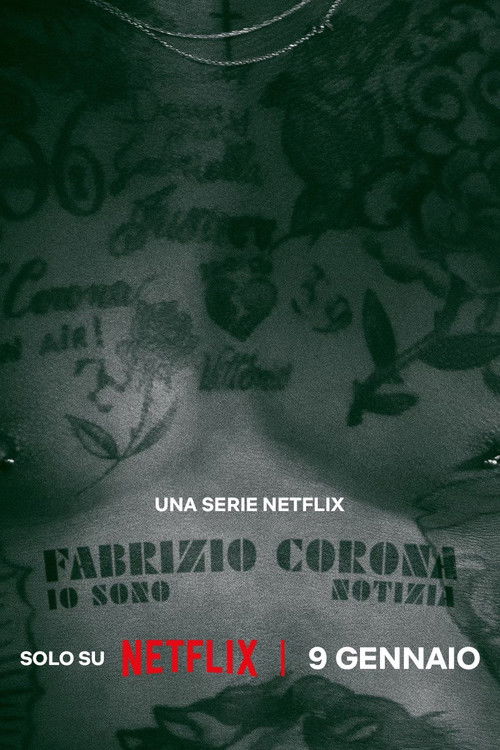
Netflix's English title is Paparazzi King. The Italian title is Fabrizio Corona: Io sono notizia, "I am news." The platform's own copy insists the five-episode run is not meant as a biography of the "King of Paparazzi." It is, the press notes repeat, a portrait of a country that from the 1990s on stopped telling reality from reality TV. Massimo Cappello directed. He wrote it with Marzia Maniscalco. Bloom Media House produced. Cappello and Maniscalco said their aim "was not to judge the character, nor to absolve the man," but to look at the border between good and evil, reality and fiction. They wanted tragicomedy. Lupini's jab is meaner and more useful. The English claim "King of Paparazzi," she wrote, was dedicated to someone "who has never taken a photo in his life." , ,
Who talked, and what the episodes sell
The series lists more than 20 interviews. The names that matter to Italian gossip desks are Lele Mora, the agent who helped build the photo-selling machine, model Nina Moric, Mauro Coruzzi (Platinette), journalist Marco Travaglio, Marianna Aprile, Marysthell Polanco, Francesca Persi, and Costantino Vitagliano. Netflix's episode menu is a tabloid table of contents. Episode 2 says Corona used the romance with Moric and played all sides of Francesco Totti's love triangle before launching the agency. Episode 4 puts Lapo Elkann in the crosshairs and new love with Belen Rodriguez next to a choice between facing charges and running. Episode 3 sells scoops from behind bars. All five parts landed together on January 9, 2026. Runtimes run from 44 minutes to just over an hour. , ,
YTYouTube·Fabrizio Corona: io sono notizia | Trailer Uffic…
Vallettopoli is the hinge Netflix wants. The 2000s investigation into showgirl traffic and extortion turned the golden boy into a public enemy, the notes say, and also minted the persona that still books him. The English Netflix page rates it TV-MA. The Italian page is gentler at 13+. TMDB files it as a five-episode miniseries that has already ended. The rumor mill around a man who sells other people's lives now has a premium-shaped version of his own. Whether that is a reckoning or another booking is the question the trailer refuses to close. , ,
Entertainment rumors and trivia aggregated from public reporting. Treat speculation as
unverified unless a cited source confirms it.