
Season 1
26 episodes Apr 3, 1998 ★ 7.9
“See you space cowboy...”
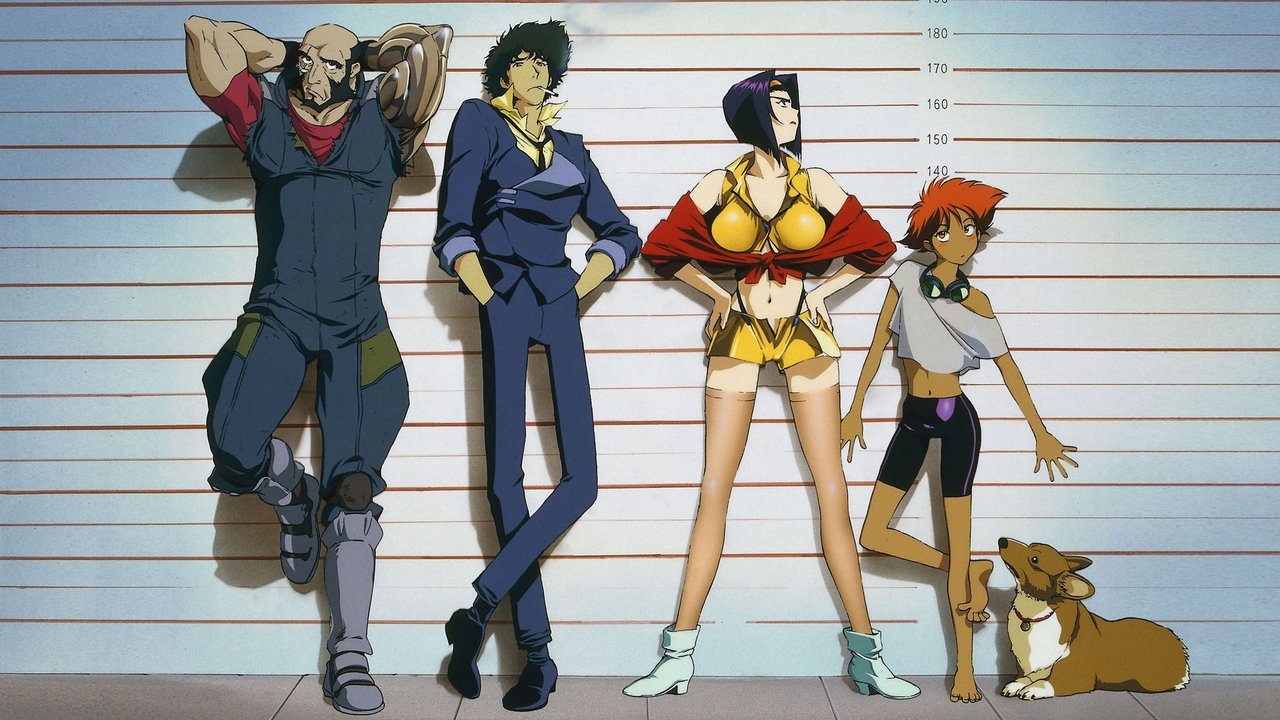
In 2071, roughly fifty years after an accident with a hyperspace gateway made the Earth almost uninhabitable, humanity has colonized most of the rocky planets and moons of the Solar System. Amid a rising crime rate, the Inter Solar System Police (ISSP) set up a legalized contract system, in which registered bounty hunters, also referred to as "Cowboys", chase criminals and bring them in alive in return for a reward.
Latest episode: S1 E26 The Real Folk Blues (2) (Apr 24, 1999)

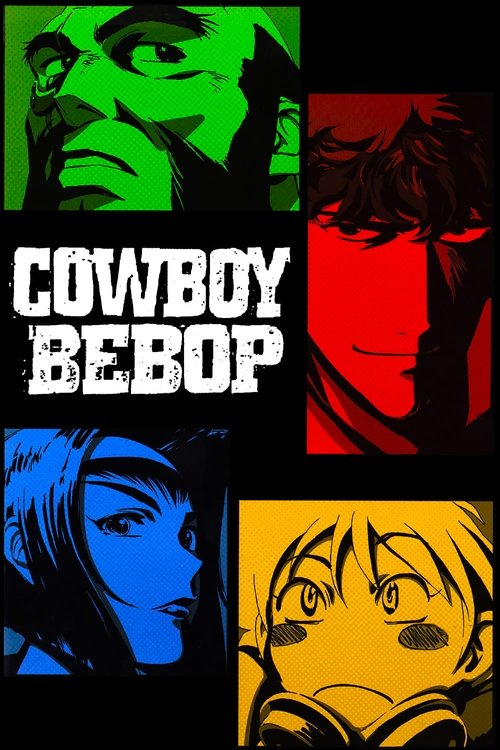
I keep coming back to the opening minutes of Cowboy Bebop: the ship floating through the dark, all metal patience and used-up mileage, while the show quietly tells you that whatever adventure is coming, it’ll probably leave a bruise. That’s the trick of this 1998 series. It arrives dressed like a playful genre mash-up — space western, noir caper, jazz club, buddy comedy — and then, almost without warning, it starts asking what happens when the chase is over and all you’ve got left is your own history.
Twenty-six episodes. One season. No neat sprawl, no later course correction.
Just a self-contained piece of television that feels, even now, unusually aware that style is not the opposite of feeling; it’s how feeling sneaks in.
Shinichirō Watanabe’s great gift here is restraint. He doesn’t smear his influences into one slick paste. Instead, he lets them sit beside each other, sometimes awkwardly, sometimes beautifully.
One episode can feel like a Sergio Leone riff; another has the deadpan rhythm of a European crime film; another is basically a punchline stretched just far enough to become melancholy. That’s part of why the show’s reputation has lasted. It wasn’t simply a novelty in the late ’90s, when anime was still less globally normalized than it is now.
It was a series that understood that the future would probably look like a collage of old desires — cowboy myths, bebop jazz, failed romances, cheap rooms, bad debts. A lot of science fiction imagines progress as a clean break. Cowboy Bebop treats it as accumulation. Scrap metal.
Regrets. Receipts.
The conversation around the show, in English-language criticism especially, has always circled around a few things: how cool it is without being stupid, how funny it is without losing sadness, how unusual it felt to a generation of viewers encountering anime through cable television and late-night programming blocks. People still talk about the opening sequence — that clean burst of motion set to Yoko Kanno and The Seatbelts’ “Tank!” — because it’s so aggressively alive.
But the opening matters less as a standalone flourish than as a promise about the show’s method. It syncs the body before it syncs the brain. Feet tapping.
Fingers drumming. The head catches up later.
And then there’s the music, which I suspect is half the reason the series survives rewatching so well. Kanno’s score doesn’t decorate the scenes; it gives them their temperature. The jazz isn’t a brand label slapped onto the show for cool points.
It’s structural. Syncopation becomes narrative principle. The characters drift, stall, improvise, double back.
Even the action scenes often feel less like choreography than interruption — a riff breaking the chord progression. I’m not sure any animated series before it used sound this intelligently as a way of defining atmosphere without pinning it down too tightly. The music doesn’t tell you what to feel.
Series
Related series ranked by rating and popularity.