Season 1
4 episodes Mar 6, 2026 7.5
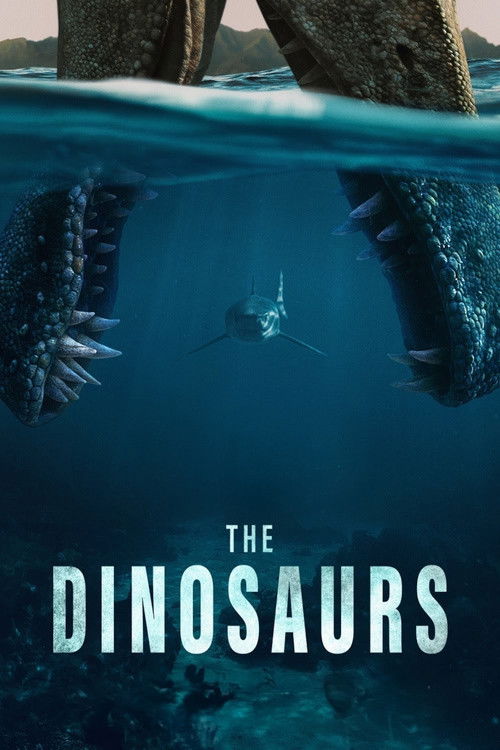
“Take an epic journey into a lost world.”
From the first dinosaurs to the last, this epic documentary series examines their 165 million years on Earth and the forces that shaped their evolution.
Latest episode: S1 E4 Fall (Mar 6, 2026)
I’ve watched The Dinosaurs three times now, and each time, I’m struck by the same contradiction: it’s a series that wants to awe me, but it keeps tripping over its own ambition. The visuals are undeniably stunning—those sweeping landscapes, the way the light catches the scales of a Triceratops as it turns its head—but the more I watch, the more I realize the show isn’t really about dinosaurs.
It’s about the idea of dinosaurs, the myth we’ve built around them, the way we’ve turned 165 million years of evolution into a story about empires rising and falling. And that’s where things get messy.
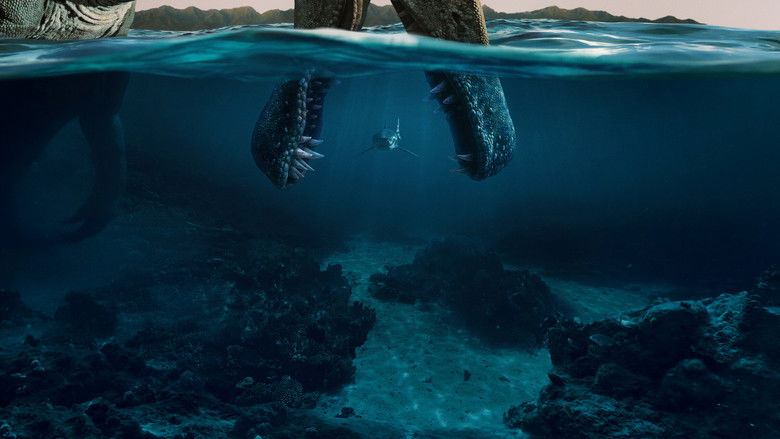
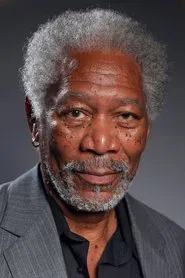
Morgan Freeman’s voice is the first thing you notice, of course. It’s impossible not to. He’s the reason this series exists in its current form, the reason Netflix could sell it as both an educational documentary and a prestige epic.
Freeman doesn’t just narrate—he performs, turning every line into a soliloquy. When he says, “The age of dinosaurs had begun,” it doesn’t just sound profound; it sounds like the opening of a Shakespearean tragedy. And maybe that’s the problem.
Freeman’s gravitas is so overwhelming that it elevates the material beyond what it can sustain. The script gives him grand, declarative sentences (“They were not just survivors. They were conquerors.”), and he delivers them with such conviction that you almost forget to ask: Were they, though? Were dinosaurs really “conquerors,” or is that just the story we’ve imposed on them because it makes for better television?
The series leans hard into this kind of language. Episode titles like Empire and Dominion frame dinosaur evolution as a zero-sum game, a battle for supremacy where only the strongest survive. It’s a narrative that feels ripped from a Game of Thrones script, not a paleontology textbook.
"Spectacular dinosaur imagery and Morgan Freeman’s narration deliver an emotional prehistoric epic that thrills the eye but cuts corners on science and depth."
The series earns strong praise for its impressive CGI, sweeping prehistoric vistas, and the gravitas of Morgan Freeman’s voice, which together make the four-part story of dinosaur rise and extinction feel grand, moving, and easy to follow. latestnetflix.com's read is that at the same time, dinosaur enthusiasts and science-focused viewers criticize the clunky animation in places, a jumpy structure, and numerous behavioral and design inaccuracies that favor cinematic drama over careful explanation.
Netflix Tudum later sold the stills as charm. A crew in a forest stream. A man clutching a prop skull like a hunting trophy. Steven Spielberg's Amblin Documentaries and Silverback Films did not want another fully synthetic Jurassic sequel. They wanted mud, weather, and then Industrial Light & Magic painting extinct animals into the shot. The four-part miniseries landed on Netflix on March 6, 2026, with Morgan Freeman on the mic. latestnetflix.com's take is that tMDB files it as tv/313298, a finished English documentary, not the old ABC sitcom with a talking baby dinosaur. , ,
, ,
Silverback had already named the job in May 2024. The shop called it the next iteration of Life on Our Planet, a rise-and-fall spanning about 170 million years, same production family as the 2023 series. Showrunner Dan Tapster told Tudum that LOOP had eight 50-minute hours for the entire history of life, so dinosaurs got a scratch. Series director Nick Shoolingin-Jordan called LOOP a tease and said this run would tell the chronology through. The title sat quiet until January 2026. The official trailer dropped February 5. Lorne Balfe scored it. Episodes run 44 to 48 minutes. Rise, Conquest, Empire, Fall. Freeman had already narrated Life on Our Planet and Our Universe for the same shop. The glue is not subtle. , ,
Deadline's Katie Campione clocked 10.4 million views for March 2 to 8, second on the English TV list behind Bridgerton season 4. In the same window the Jurassic World movies stacked the film chart. Rebirth, the 2015 original, Dominion, Fallen Kingdom. Spielberg's name on a dino doc is not an accident. It is the man who taught a generation what a T. rex looks like, now executive producing the educational cut with Keith Scholey and Alastair Fothergill, the Our Planet pair. Netflix used one launch week to sell both the lesson and the licensed theme park.  , ,
, ,
Jack Seale at The Guardian liked the voice more than the syllabus. He wrote that Freeman's gravel could double as a relaxation tape, that the creatures sit a notch below the best photoreal work, and that amateur paleo nerds would feel shortchanged because the show pitches families. Esquire's Henry Wong went colder and called the CGI frequently ugly. Rotten Tomatoes still posted a perfect critic score off a tiny sample. That split is the gossip. Netflix spent ILM money and a Spielberg credit. Some people heard a lullaby. Some people saw slop. ,
Tudum even published a scare map for parents. TV-PG, kids under six, jump scares flagged, including a T. rex cracking a Pachycephalosaurus skull before the titles. Crews lugged giant heads so the VFX department could cheat the eyeline. Paleontologists sat with modelers. Then the streamer pushed every Jurassic title it licenses in the same week. The birds at the end of Fall are the punchline the paleontology wiki already filed. Some dinosaurs made it. The rest are pixels with Freeman underneath. , ,
Entertainment rumors and trivia aggregated from public reporting. Treat speculation as unverified unless a cited source confirms it.
Series
Related series ranked by rating and popularity.