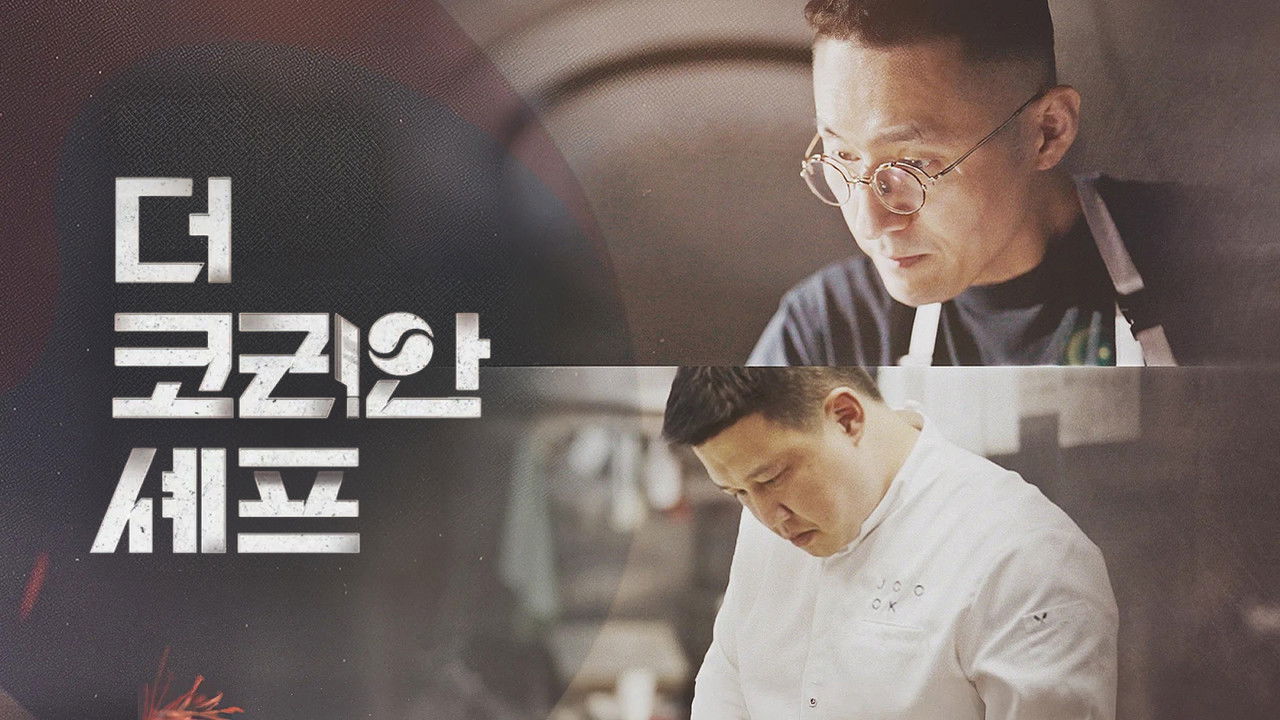
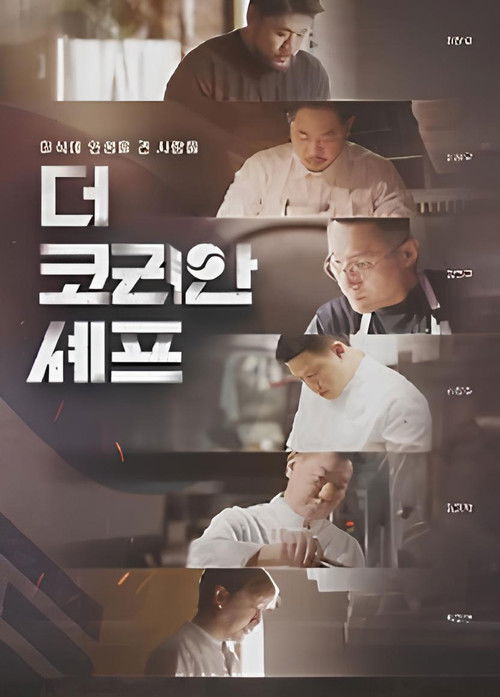
The Infinite Patience of the KnifeI’ve often wondered if we’ve lost the ability to simply watch someone work. In our current landscape of "content," where even documentaries feel like they’re sprinting toward a cliff-edge revelation or a manufactured tear, *The Korean Chef* (2026) arrives with the quiet authority of a master who has nothing left to prove. It’s not interested in the frantic energy of the modern kitchen—the shouting, the fire, the broken china—but rather in the terrifying, beautiful silence of preparation.

The series, spanning only two episodes, centers on the intricate, almost ritualistic process of top-tier Korean culinary artistry. Shin Ha-kyun serves as our guide, a choice that feels intuitive when you consider his career. For decades, Shin has been the patron saint of the internal monologue; think of his work in *Sympathy for Mr. Vengeance* or *Joint Security Area*. He is an actor who communicates in micro-expressions, in the tightening of a jaw or the slight glaze that falls over his eyes when a character is weighing a moral cost. Here, he doesn't cook so much as he observes the physics of the kitchen. He brings a gravitas that prevents the show from feeling like mere food porn. He looks at a fermented jar like it holds a secret, and, perhaps, it does.
There’s a moment in the first episode—a scene that’s been rattling around my head for days—where chef Kang Min-goo is trimming a piece of root vegetable. The camera doesn't cut away. It doesn't zoom in for dramatic effect. It just stays there, perched on his shoulder, capturing the rhythm of the knife. *Thwack. Thwack. Thwack.* It’s rhythmic, hypnotic, and undeniably tedious if you’re looking for high-stakes drama. But if you’re looking for the truth of a profession, it’s everything. As the critic for *The Korea Herald* noted, the series "treats the kitchen not as a theater of war, but as a site of philosophical inquiry," and they aren't wrong. It’s the kind of television that asks you to slow your heart rate down to match the movement of the blade.

What struck me most wasn't the food itself—which looks, frankly, like sculpture—but the hands of the people making it. You see the calluses on Im Gi-hak’s fingers, the way the skin is slightly discolored from years of heat and acidic juices. It’s a physical reality we’re trained to ignore in the polished world of glossy magazine spreads. These chefs aren't performers; they are laborers who have reached a plane of existence where the labor itself becomes a form of meditation. When the camera lingers on these hands, the show feels less like a documentary and more like a hagiography of the mundane.

Is it perfect? Perhaps not. The two-episode structure feels almost cruel in its brevity. Just as I was settling into the rhythm, just as I was beginning to understand the unspoken language between the chefs, the credits rolled. Maybe it’s a blessing, though. In a world of infinite streaming marathons, *The Korean Chef* has the self-discipline to stop when it’s done, leaving you hungry rather than sated. It’s a rare, refreshing quality—a reminder that sometimes, the most profound things happen when you simply put down the remote and watch the work get done.