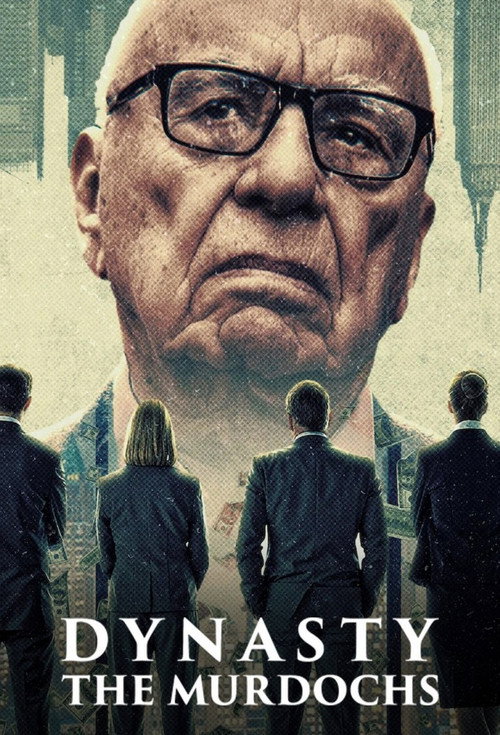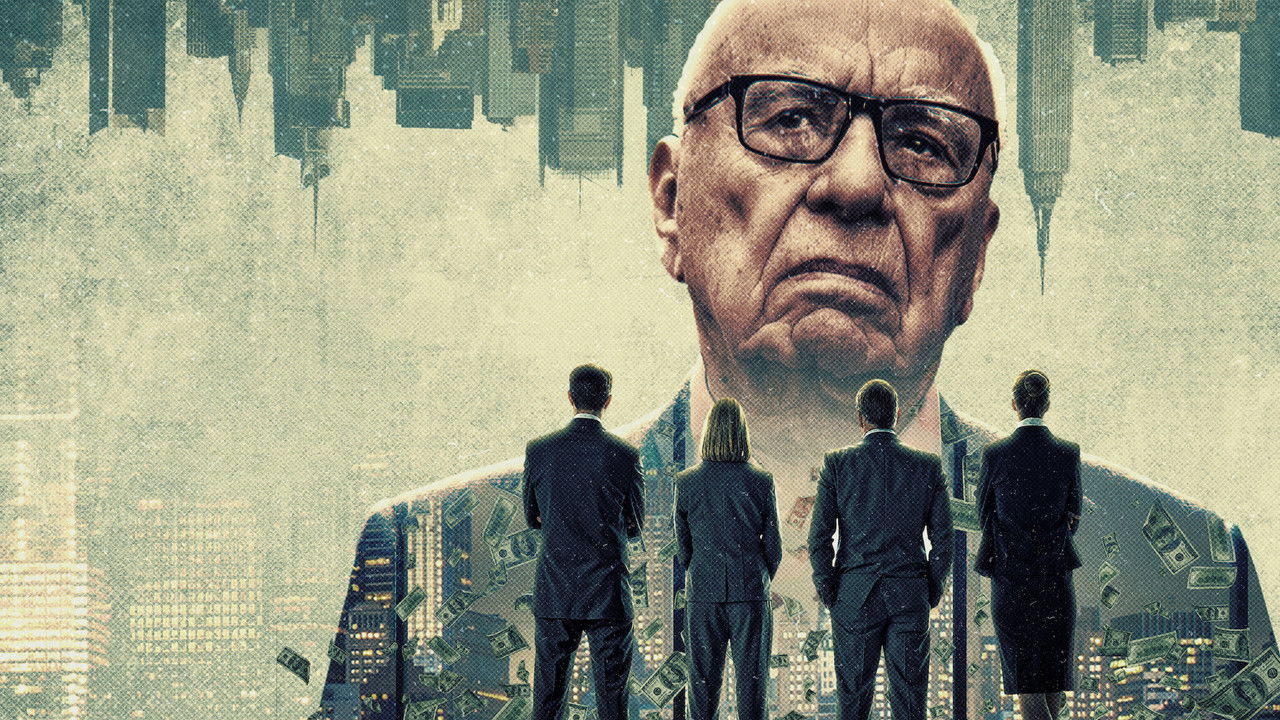

Dynasty: The Murdochs backdrop
Dynasty: The Murdochs poster

Dynasty: The Murdochs

7.8
2026
1 Season • 4 Episodes
Documentary
Watch on Netflix

Overview

Offers an unprecedented look at one the world’s most powerful families at a crossroads, as its patriarch, Rupert Murdoch, makes one last play to ensure his legacy at all costs.

Sponsored

Trailer

Trailer Official

Reviews

AI-generated review
The Architect of the Noise

There’s a strange, almost hypnotic quality to watching the slow-motion dismantling of an empire. We are obsessed with dynasties, aren’t we? From the Tudors to the Roys—though the latter were fiction—we seem to need these grand, Shakespearean sagas to explain why the world feels the way it does. *Dynasty: The Murdochs* arrived this year not to debunk the myth of Rupert Murdoch, but to examine the sheer, exhausting machinery of his existence. It’s a documentary series that understands something vital: you don’t need to shout to show power; you just need to trace the lines of influence as they fray.

A lone, shadowed figure standing in front of a sprawling, cold boardroom table, capturing the isolation of power

The series is less interested in the sordid details of the tabloid scandals—though they’re here, like jagged glass in a foot—and more obsessed with the concept of succession. It’s a study in control. Watching it, I was struck by how much of this family’s history is defined by the tension between creation and consumption. Rupert built a media titan that eats up the cultural landscape, and yet, the series argues, the titan is increasingly blind to the fact that his own children are the ones being consumed by the legacy he carved out. It’s the classic tragedy: the king builds a wall so high he can’t see who is climbing it.

What sets this apart from the typical "tell-all" doc is the restraint. We aren’t treated to the frantic, frenetic editing that marks so many modern streaming docs—the kind that assumes if you cut every two seconds, the viewer won’t get bored. Instead, the pacing here feels like a slow, deliberate tightening of a tourniquet. You watch these archival interviews, decades of them, and you see the man change from a hungry interloper into a monolith. There is a specific moment where his posture shifts—it’s subtle, but unmistakable—from the defensive hunch of an outsider proving his worth to the immovable, slightly bored slouch of someone who decided, long ago, that truth is whatever he needs it to be that morning.

Grainy, black-and-white archival footage showing a younger Rupert Murdoch at a crowded, chaotic press event, highlighting the contrast between past ambition and current isolation

It’s tempting, I know, to view this simply as a hit job or a hagiography, but the filmmakers sidestep that binary entirely. As *The Guardian* noted in their review, the series manages to "unearth the chilling logic behind the soundbites," transforming what could have been a dry history lesson into a character study of a man who treated journalism like chess and people like pawns. I found myself thinking less about the specific politics and more about the loneliness inherent in that kind of life. When you spend your life constructing a reality for millions, what happens to your own? Do you eventually believe your own press?

The most jarring aspect is the children. They drift through the frame, polished and privileged, clearly desperate for an approval that they know, deep down, is transactional. They aren't just heirs; they are accessories to a grand experiment. In one sequence, the camera lingers on a daughter’s face during a business dinner—just for a beat too long—and you see the flicker of realization that she isn’t a person in this room, she’s an asset. It’s a painful thing to witness. It makes you realize that while the *Succession* writers were working from imagination, the reality here is colder, quieter, and far more transactional.

A wide shot of a modern, glass-walled office overlooking a city skyline, emphasizing the distance between the family and the world they influence

Ultimately, *Dynasty: The Murdochs* isn't a critique of conservative media, though the implications are everywhere. It’s an elegy for the idea of a family as a safe harbor. By the final episode, the legacy is secure, the empire stands, and the noise of the world continues to roar. But the house is empty. It leaves you with a lingering, hollow sensation—the feeling of having watched a massive machine grind everything it touches into dust, only to find that the operator has no idea what to do with the powder. It is, perhaps, the only appropriate ending for a story like this. Silence, at last.