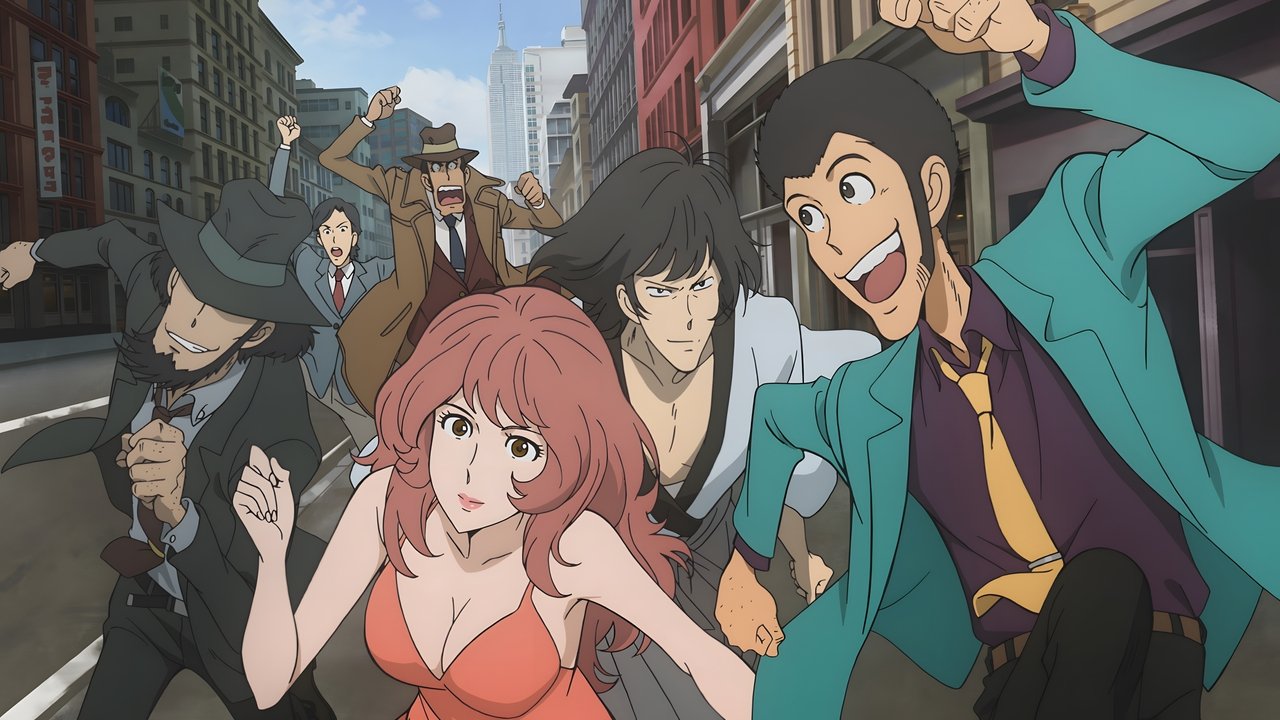

Lupin the 3rd backdrop
Lupin the 3rd poster

Lupin the 3rd

8.0
1971
6 Seasons • 300 Episodes
AnimationAction & AdventureSci-Fi & Fantasy
Director: Eiji Suganuma

Overview

Follow the exciting adventures of Arsene Lupin III, the grandson of the world's greatest thief, Arsene Lupin. Together with Daisuke Jigen, Goemon Ishikawa and his love interest Fujiko Mine, he carries out the greatest robberies of all time, all the while evading the control of Inspector Koichi Zenigata.

Sponsored

Trailer

LUPIN THE 3rd PART 4 - Official Trailer | English Sub Official

Cast

Reviews

AI-generated review
The Perpetual Motion of the Thief

The saxophone riff that kicks off the *Lupin the 3rd* theme isn’t just music; it’s a mood. It signals that whatever logic governed the rest of the world—the rigid rules, the clocks, the social obligations—has just been suspended. I’ve spent more hours than I care to admit tracking this particular thief, a character who has been running across our screens since 1971, and I’m still not entirely sure I’ve caught him. He shifts. He changes. In one iteration, he’s a gritty, chain-smoking anti-hero wandering through a melancholy Tokyo; in another, he’s the buoyant, rubber-limbed trickster of Hayao Miyazaki’s imagination.

That’s the thing about Lupin: he isn't a fixed point. He’s a reaction to the era he finds himself in.

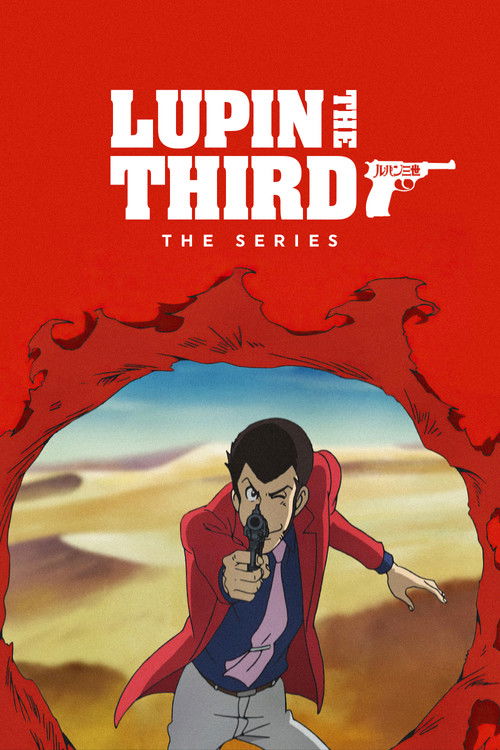
A classic, sharp-edged depiction of Lupin III against a stark background

When you look at the 1971 pilot, directed by Masaaki Osumi—later reworked by the powerhouse duo of Miyazaki and Isao Takahata—you see a show that was trying to figure out its own identity. It’s strange, slightly haunted, and feels almost like a heist film from the French New Wave that took a detour into animation. It wasn't interested in the "gentleman thief" trope as a polite parlor trick; it treated theft as a profession, one filled with existential boredom and the constant, dull ache of being an outsider. That early iteration holds a special place in my mind because it captures the loneliness of the chase.

And what a chase it is. The central relationship of the entire franchise isn’t between Lupin and the woman he chases, Fujiko, or even between him and his loyal, stoic gunman Jigen. It’s the tether between Lupin and Inspector Zenigata. There’s a profound, almost tragic intimacy in their dance. Zenigata doesn’t want to catch Lupin to put him away; he wants to catch him to bring the game to a close, to give his own life a sense of completion. Without the thief, the inspector is just a man with a badge and too much time on his hands.

Inspector Zenigata in the throes of one of his frantic, futile chases

I remember a specific sequence from one of the later series where Lupin and Zenigata are forced to work together. The animation style had shifted, become cleaner, a bit more manic, but the rhythm remained identical. They’re sitting on a rooftop, the city lights blurry in the background, sharing a cigarette. There’s no hostility, only the unspoken acknowledgment that they are both relics of a different time. It’s a moment of quiet reflection that makes the subsequent chaos feel earned. It’s why the show works: beneath the gadgets and the impossible escapes, it’s fundamentally about the loneliness of being exceptional.

Then there’s the matter of the performance. Kanichi Kurita, who took on the role of Lupin after the passing of the original voice actor, Yasuo Yamada, faces an impossible task. He’s not just voicing a character; he’s carrying a ghost. There’s a specific inflection Yamada had—a kind of jagged, throaty laugh that sounded like it was coming from the back of a throat filled with cheap bourbon. Kurita captures it, sure, but he also adds a layer of weariness that feels appropriate for a character who has effectively outlived his own century. It’s a performance that acknowledges the weight of history.

Lupin, Jigen, and Goemon standing together in a moment of rare stillness

Critics often try to pin *Lupin the 3rd* down to a single genre, usually settling on "action-comedy," but that feels reductive. It’s really a picaresque novel disguised as a cartoon. Each episode is a standalone gamble, a different landscape to conquer, a different treasure to covet. Whether the animation budget is high or low, whether the tone is screwball or noir, the core appeal remains the same: the desire to outsmart the system.

It’s tempting to look at 300 episodes and ask if it ever gets tired. Maybe it does. Sometimes the heists feel recycled, the MacGuffins interchangeable. But then, in the middle of a mundane sequence, Lupin will do something—he’ll tilt his head, or fumble a cigarette, or save a life when it’s inconvenient to do so—and you’re pulled back in. He reminds me of the freedom of being unattached. He has no home, no career, no family to answer to. He is, for all his flaws, the ultimate expression of autonomy. And that’s why I keep coming back. I don’t watch to see if he’ll get the gold. I watch to see how he manages to walk away, whistling, while the world burns behind him.