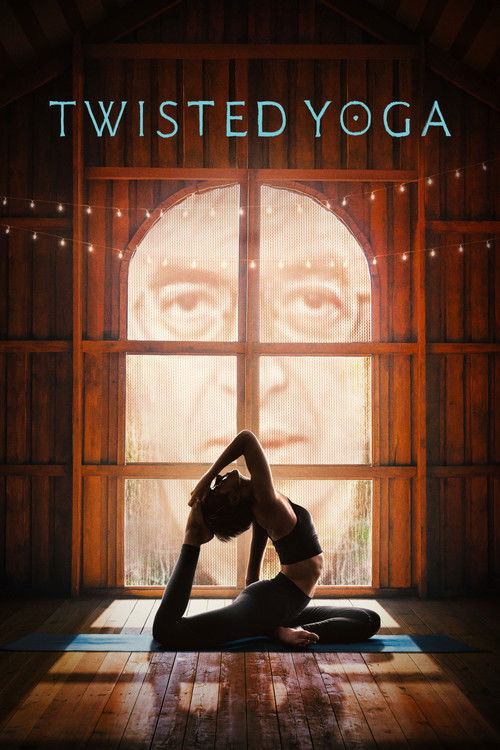

The Architecture of ControlYoga is sold to us as an act of subtraction. You empty the mind, you release the tension in your shoulders, you fold your body into shapes that suggest a kind of pre-linguistic peace. We are told that if we just breathe correctly, the world’s serrated edges will soften. *Twisted Yoga*, the three-part documentary that has quietly arrived on our screens, understands that this promise is the perfect bait. It doesn't scream at you with the lurid, tabloid-ready energy of typical cult exposés; instead, it tracks the slow, deliberate freezing of a person’s agency. It isn't interested in the spectacle of "crazy," but in the banal, terrifying mechanics of how a room full of people—smart, seeking, hopeful people—can be convinced to dismantle their own lives, brick by brick, for the sake of a man named Gregorian Bivolaru.

Watching the series, I kept thinking about the way we mistake stillness for safety. The director avoids the usual tricks of the true-crime genre—there are no hyper-kinetic montages, no booming, ominous scores meant to manufacture dread. The dread is already there, baked into the testimony. We listen to former members of the MISA group speak, and their voices have that specific, flat cadence of people who are still trying to map the geography of their own past trauma. One woman describes the "spiritual" homework they were assigned, and she laughs—a quick, jagged sound that cuts right through the room. She’s laughing at how ridiculous it seems now, but you can see the ghost of the girl she was, trying to earn the approval of a man who viewed her existence as a commodity. It’s an uncomfortable reminder that we all, at some point, have sought a roadmap for our own unhappiness.
The film relies heavily on the juxtaposition of the "before" and "after"—not in terms of physical looks, but in the shape of their eyes. We see archival footage of the group, dancing, chanting, eyes wide with a kind of chemically pure euphoria. Then, we cut to the interviews. The posture is different. It’s guarded. It’s as if they are constantly bracing for a blow that they know isn't coming anymore, but one that’s still mapped onto their nervous systems. This is where *Twisted Yoga* finds its strongest footing. It doesn't treat these people as victims of a brainwashing machine, but as participants who were offered a currency of belonging in a world that often makes us feel profoundly anonymous.

Bivolaru himself is a fascinating, repulsive study in the cult-leader archetype. He isn't the charismatic, fire-breathing prophet we see in movies. He’s bureaucratic. He’s petty. He’s a middle-manager of the soul. The series captures him in court documents and grainy, unauthorized recordings, and what you notice isn't the aura of a grand master, but the ego of a man who has managed to convince a few hundred people that his desires are universal laws. There’s a specific scene where his legal team tries to twist the definition of consent, and the silence in the room is heavy enough to crush you. It’s a moment that forces the viewer to confront a hard truth: cults don't thrive on supernatural charisma; they thrive on the tedious, relentless erosion of boundaries.
Maybe the reason I found this so difficult to look away from is that it refuses to give us the easy exit of "well, I would never do that." It suggests that the path to MISA didn't start with a giant leap into the void, but with a small step toward a "better" life. You take a class. You like the teacher. You feel a bit lighter. And then, one day, you wake up and realize you've signed away the rights to your own body and your own bank account.

Whether the series achieves a sense of "justice" is a complicated question. The final episode doesn't offer a clean resolution. Courts move at a glacial, unfeeling pace, and the damage done to the psyche isn't something that can be rectified by a verdict or a prison sentence. What we are left with is the sound of these survivors speaking. They aren't trying to be martyrs, and they aren't looking for our pity. They are simply reclaiming their own narratives, piecing together the memories they were told to discard. It’s a quiet, devastating reclamation. In the end, that feels like the only kind of resolution that matters. It doesn't fix the past, but it stops the cycle from spinning forward. And for three hours, that felt like enough.