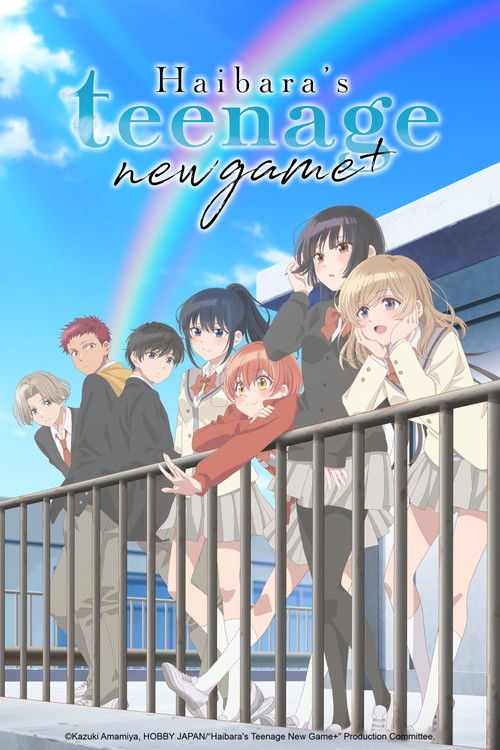

The Audit of a Second ChanceWe all carry that phantom limb of a life we didn’t live—a conversation we wish we’d steered differently, a crush we were too terrified to acknowledge, or a version of ourselves that wasn’t so paralyzingly shy. It’s a uniquely modern neurosis, this obsession with “what if.” We treat our pasts like early drafts, constantly editing for a polish that never quite satisfies. *Haibara’s Teenage New Game+*, the single-episode premiere of what promises to be a series deeply preoccupied with the geometry of regret, isn't really about time travel. It’s about the crushing weight of retrospective clarity.
Natsuki Haibara, our college-aged protagonist, is dropped back into his own fourteen-year-old body, a premise that feels perilously close to the standard "isekai" trope of the overpowered hero. But here, the genre rules are subverted with quiet cruelty. Haibara doesn't get magic powers or a destiny to save the world; he gets a chance to navigate the social minefield of high school with the hindsight of an adult who knows exactly how badly he screwed up the first time. The animation lingers on the mundane—the precise angle of a desk, the way light hits a classroom chalkboard—reminding us that this isn't a fantasy realm. It’s the terrifyingly banal reality of adolescence.

There is a specific, jagged rhythm to the storytelling that I found myself warming to. The director resists the urge to make Haibara a smooth operator. He is still, fundamentally, the same anxious kid; he just possesses a terrifying level of awareness. In one crucial sequence, Haibara attempts to preemptively fix a social faux pas he made seven years prior. He knows the lines, he knows the reaction, he knows the outcome. Yet, watching him struggle to articulate the words feels less like a strategic maneuver and more like watching someone try to assemble a bookshelf without the instructions. He’s trying to build a personality out of memory, and it’s clumsy, slightly off-putting, and deeply, achingly human.
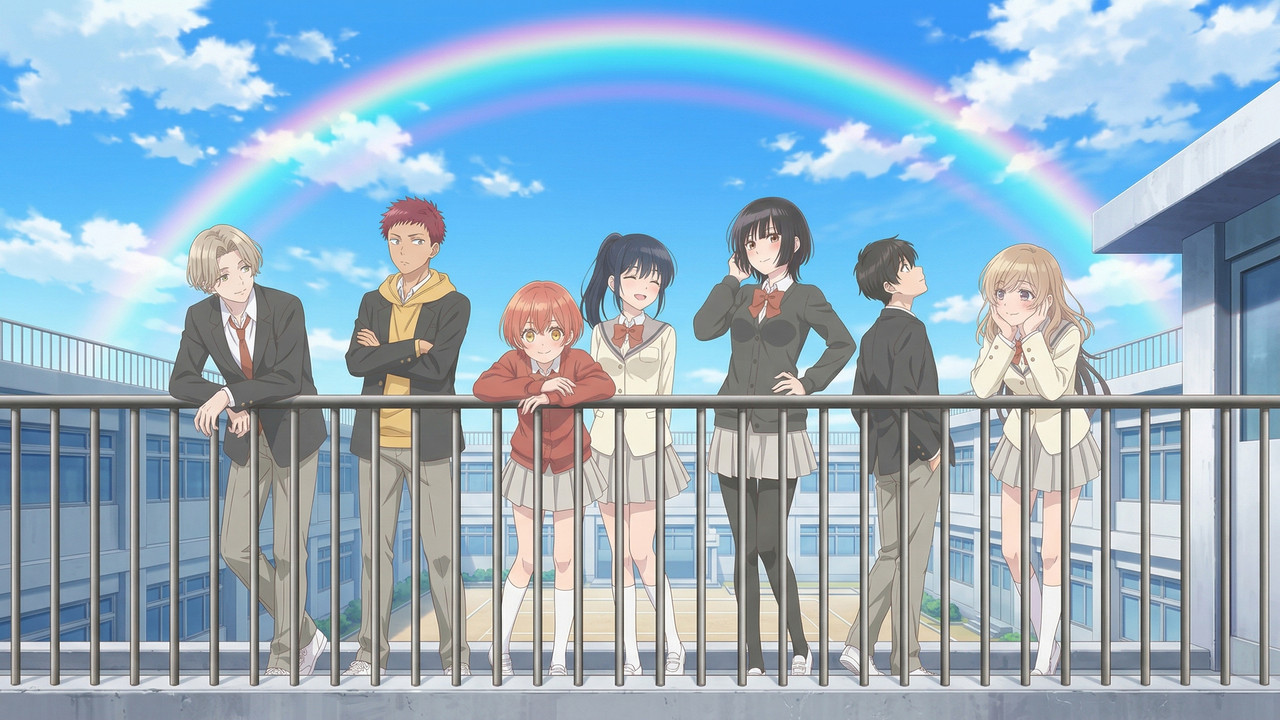
The visual language of the show reinforces this sense of disconnect. The background art is often rendered with a hyper-real clarity, almost like a museum diorama, which serves as a sharp contrast to the characters themselves. When Haibara walks through the halls of his old school, he looks like a ghost haunting his own biography. The color palette—saturated, hazy, almost too warm—suggests the way we romanticize our own youth, while the actual events playing out onscreen are cold, sharp, and unforgiving.

What struck me most isn't the "game" aspect, but the quiet desperation of the "new game." There’s a scene where he spends an entire evening researching social interaction, treating human connection like a mechanics-heavy video game. It’s funny, sure, but it’s also a deeply uncomfortable mirror for anyone who’s ever sat in a bathroom stall, scrolling through self-help articles, trying to figure out how to exist in a room with other people. The show doesn't mock him for this. It treats his preparation with a sort of melancholy dignity, acknowledging that for many of us, social grace isn't innate—it’s something we have to laboriously, painstakingly perform.
I’m left wondering what the series actually wants from its protagonist. Is this a redemption arc, or is it a slow-motion tragedy about the inability to escape oneself? If he manages to become the popular kid he always wanted to be, will he be happy, or will he just be a successful liar? *Haibara’s Teenage New Game+* seems to understand that you can change the circumstances of your life, but you cannot change the wiring of your brain. The tension isn't whether he succeeds; the tension is whether he realizes that his younger, awkward, failing self was the only version that was actually authentic.

It’s easy to dismiss this as another iteration of the "do-over" story, but there is a strange, precise intelligence here. It avoids the easy dopamine hits of power fantasies in favor of the slower, more corrosive ache of self-consciousness. Whether the series can maintain this level of introspective focus without slipping into the comforting predictability of teen drama remains to be seen. But for now, it’s a fascinating, minor-key study in the futility of rewriting history, and I'm honestly curious to see if Haibara learns that the best part of his second chance might be realizing he didn't need one.