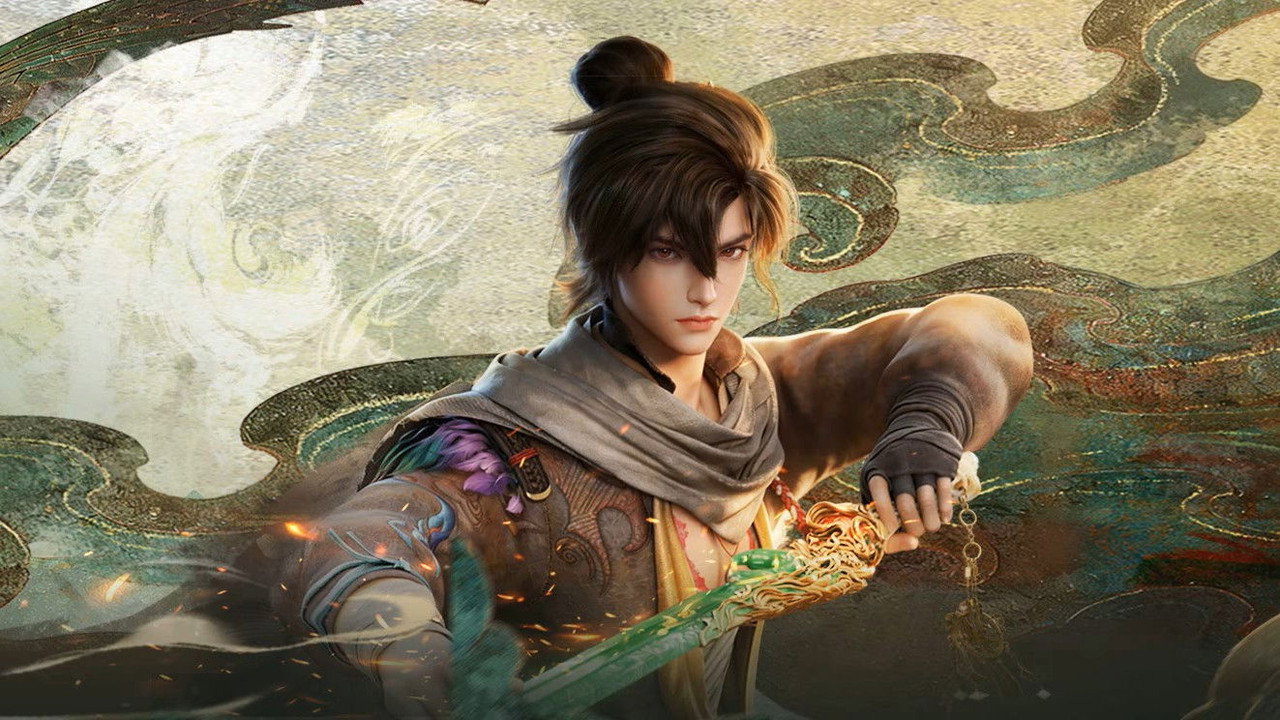
Legacy of the Divine poster background
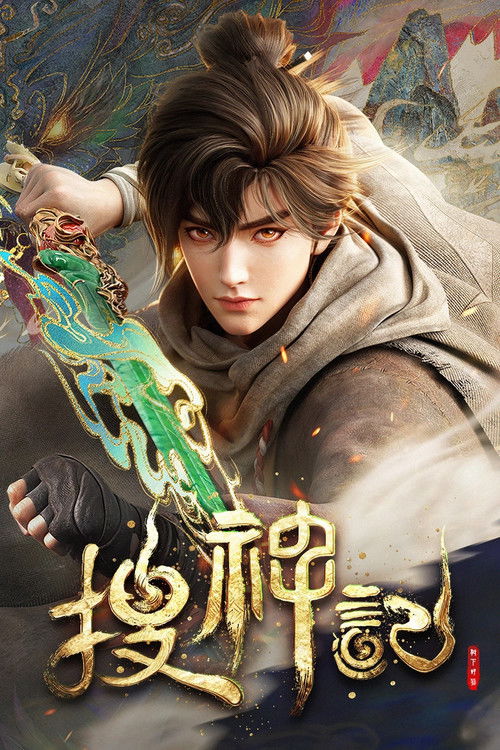
Legacy of the Divine poster

Legacy of the Divine

2026
1 Season • 24 Episodes
Animation

Overview

The story takes place in the untamed era of Yandi and Huangdi. As various powers vie for control of the Central Plains, the universally recognized leader of the world, Shennong the Great, passes away. The chieftains of the five tribes—Metal, Wood, Water, Fire, and Earth—begin to stir with ambition. In these turbulent times, a young man named Tuoba Ye emerges like a comet. By a stroke of chance, he inherits Shennong’s dying legacy and embarks on a thrilling, legendary journey.

Sponsored

Cast

Reviews

AI-generated review
The Myth in the Mud

Most fantasy epics begin with a throne being claimed; *Legacy of the Divine* begins with one being emptied. By the time the screen lights up with the sprawling, chaotic geography of the Central Plains, the universal leader, Shennong, is already cold. This isn't a story about a hero rising to meet a destiny he’s been polished for; it’s about a young man named Tuoba Ye who stumbles into the vacuum left by a god, carrying a burden that feels far too heavy for his shoulders.

The directors, Yin Heng and Wang Xuyang, seem less interested in the high-gloss grandeur of myth-making than in the grit of political friction. You can feel the change in the air from the first episode. These tribes—Metal, Wood, Water, Fire, Earth—aren't monolithic factions wearing color-coded uniforms. They feel lived-in. They are suspicious, hungry, and deeply tired of the uncertainty that follows a power vacuum. It reminded me, in a strange way, of watching the slow-burn disintegration of a family business after the founder dies; the structure holds for a moment, but everyone knows the knives are out.

A wide, panoramic shot of the desolate, dust-swept Central Plains, capturing the atmosphere of a land waiting for a new leader.

There is a distinct tactile quality to the animation here that I didn’t expect. Too often, contemporary digital fantasy leans into a sort of “video game polish” where every blade of grass and embroidered robe looks like it was rendered yesterday. Here, things feel weathered. The metal armor shows dings, the fabrics look like they’ve been dragged through the dust of a dozen different skirmishes, and the light—especially in the late afternoon scenes—has a heavy, sepia-toned quality that suggests a world that has seen too much and is weary of the coming cycle of violence.

The directors don't use the camera to glorify the power struggles; they use it to emphasize how small the characters are against the backdrop of an untamed landscape. It’s claustrophobic, despite the open vistas.

Take the moment where Tuoba Ye actually inherits the legacy—a quiet, terrifying scene that occurs away from the battlefield. Most shows would treat this as a "chosen one" crescendo with sweeping orchestral swells. Instead, Yin and Wang keep it tight. We are inches from Tuoba Ye’s face. He isn't triumphant. He looks like someone who has just been handed a lit stick of dynamite and told to run. Watch the way Su Shangqing, the voice actor, handles this: his voice doesn't crack or boom; it hollows out. The bravado he’s been carrying as a young drifter simply evaporates, leaving behind a frantic, quiet panic. It’s a beautifully realized moment of transition that feels human, almost uncomfortably so.

A close-up of Tuoba Ye's face during the inheritance, showing the genuine, quiet fear in his eyes instead of heroic determination.

I have to wonder, though, if the relentless pace of the first season occasionally loses the forest for the trees. By the time we hit the mid-series mark, the political maneuvering between the five tribes becomes so intricate that I found myself rewinding just to keep track of who was betraying whom. Maybe that’s the point—that the legacy is a labyrinth—but there were times I wanted the show to sit still, to let us breathe in the world it built before forcing us to sprint again. Is the chaos a feature or a flaw? I’m still not entirely sure.

Perhaps that uncertainty is by design. The series refuses to provide the easy catharsis we’ve come to expect from the “chosen one” archetype. Every victory in these twenty-four episodes feels like a stop-gap measure, a patch on a dam that’s inevitably going to burst.

A tense standoff between representatives of the five tribes, with the animation focusing on the weary expressions and cluttered, aged weaponry of the warriors.

There is a scene toward the end of the season where Tuoba Ye stands alone on a ridge, the wind whipping his hair, realizing that the "divine" legacy isn't a gift of power, but a mandate to endure. It’s a grim takeaway for a fantasy series, but it’s a honest one. By the end of the final episode, I wasn’t cheering for a hero; I was just hoping he’d find a moment of peace before the next storm. And honestly? That’s a far more compelling place to leave a character than any throne room.