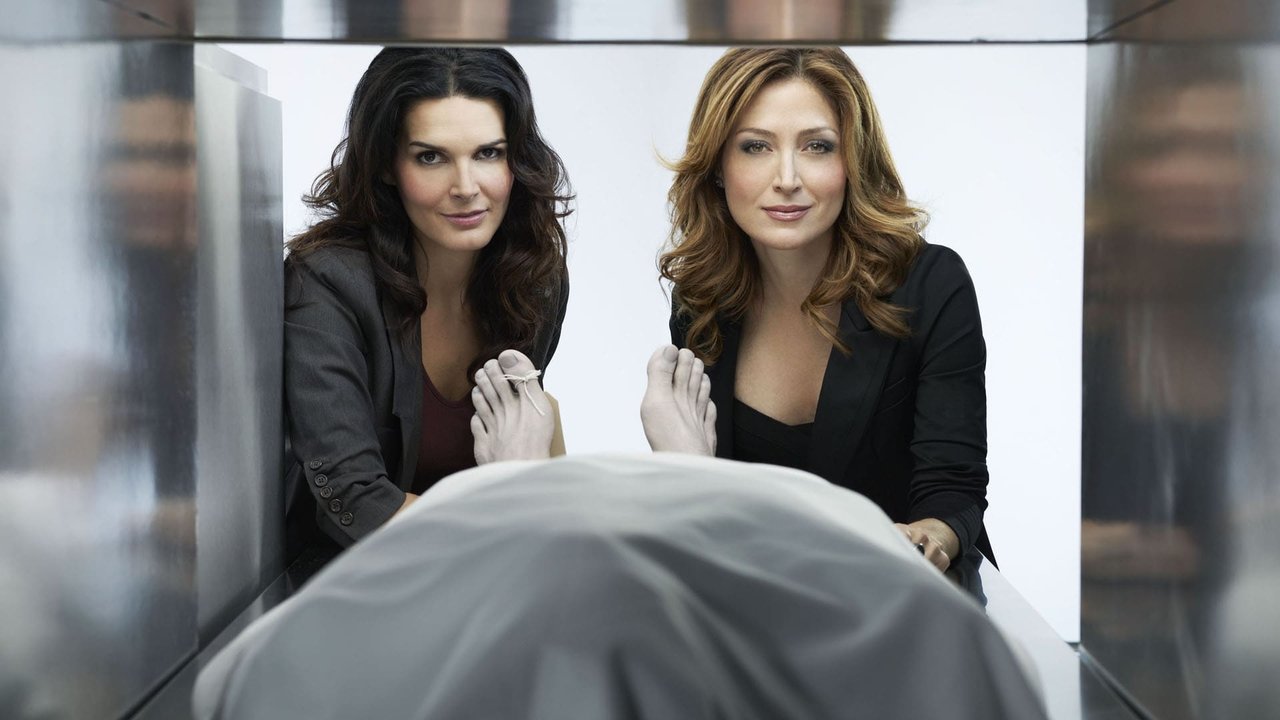
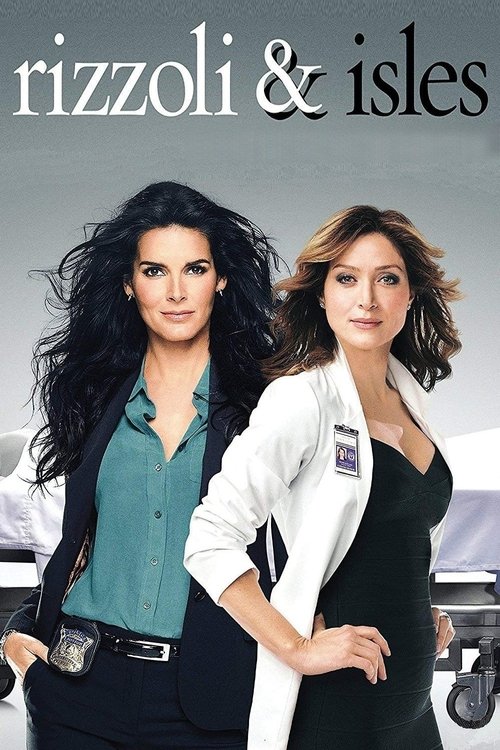
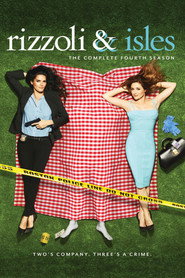
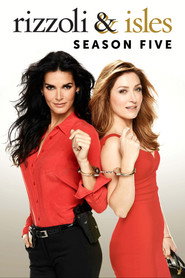
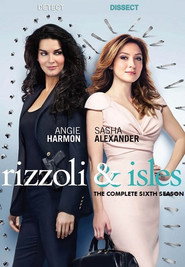
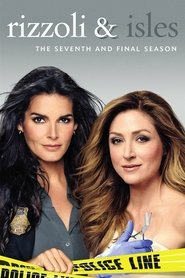
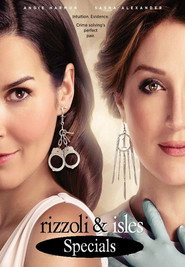
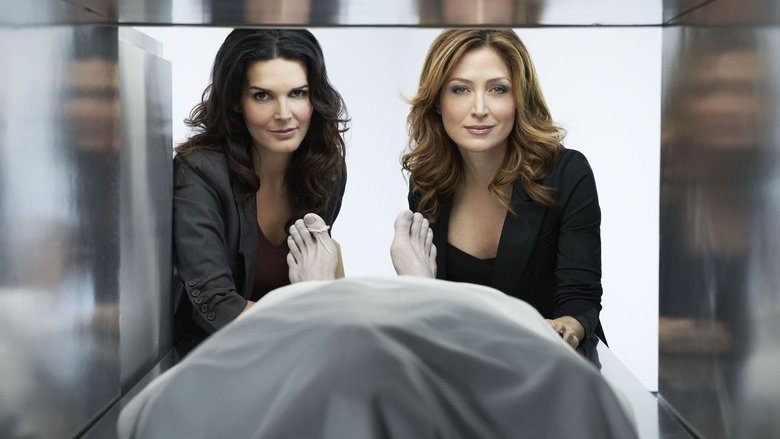
Perhaps their strikingly different personalities make the relationship between detective Jane Rizzoli and medical examiner Maura Isles so effective. Jane, the only female cop in Boston's homicide division, is tough, relentless and rarely lets her guard down, while the impeccably dressed Maura displays a sometimes icy temperament — she is, after all, more comfortable among the dead than the living. Together, the best friends have forged a quirky and supportive relationship; they drop the protective shield in each other's company, and combine their expertise to solve Boston's most complex cases.
Seasons
8 listed
Status
Ended
Seasons
7 seasons
Episodes
105 episodes
First aired
Jul 12, 2010
Last aired
Sep 5, 2016
Episode length
43m
Network
TNT
Latest episode:S7 E13 Ocean Frank (Sep 5, 2016)
Season 1
10 episodes Jul 12, 2010 7.7
Boston detective Jane Rizzoli and medical examiner Dr. Maura Isles have each other's backs as they investigate their city’s grittiest and most puzzling homicides, from the Back Bay to back alleys. Some best friends shop together, some meet for Mojitos, some join book clubs. Rizzoli and Isles bust crime.
Season 2
15 episodes Jul 11, 2011 8.1
Jane deals with emotional and physical scars as old loves re-appear and her mother Angela deals with divorce. Meanwhile Jane's ex-con brother Tommy has eyes for cerebral Maura, whose own family life is complicated by her adoptive mother Constance and a biological dad with a link to the Mob.
Season 3
15 episodes Jun 5, 2012 7.7
Jane shot Maura's estranged father, crime boss Paddy Doyle, as he tried to defend Maura against an assailant - an incident which has driven a deep wedge between the two friends and colleagues. Jane and Maura will work hard to set aside their differences as they investigate a number of complex and troublesome crimes.
Season 4
16 episodes Jun 25, 2013 8.2
Jane and Maura will investigate a number of complex and troublesome cases, including the pending murder trial of Maura's biological father, Paddy Doyle. Plus, Lt. Detective Rafael Martinez, the newly appointed head of the Boston Police Department's drug unit, who has a conflicted professional past with Jane, will force her to relive a painful experience.
The Buddy-Cop Formula, Worn Like a Favorite Sweater
I’ve rewatched Rizzoli & Isles more times than I care to admit. Not because it’s a masterpiece of television craft—it isn’t—but because it’s the kind of show that feels like slipping into a well-worn hoodie: familiar, a little frayed at the edges, but undeniably comforting. The procedural cases are forgettable the moment the credits roll, the Boston setting is more postcard than lived-in city, and the villains rarely rise above the level of a Saturday morning cartoon.
And yet. There’s something about Jane Rizzoli and Maura Isles that makes me keep coming back, like a friend who texts you at 2 a.m. just to say, "Hey, you up?"
Maybe it’s the way Angie Harmon and Sasha Alexander play off each other—Jane’s brash, no-nonsense swagger against Maura’s icy, almost alien precision. They’re an odd couple, but the kind that makes sense in the way only long-term friendships do. Jane rolls her eyes at Maura’s clinical detachment; Maura sighs at Jane’s impulsiveness.
But when the chips are down, they’re there for each other, no questions asked. It’s the kind of dynamic that should feel contrived, but doesn’t, because the actors sell it with a warmth that feels genuine. (Or at least, genuine enough to make you forget, for 42 minutes, that you’ve seen this exact story a hundred times before.)
The show knows its strengths, and it leans into them hard. The cases-of-the-week are serviceable, but the real draw is the banter—the way Jane teases Maura about her "robot voice," the way Maura deadpans her way through Jane’s latest romantic disaster. It’s the kind of writing that’s sharp without being showy, the kind that makes you feel like you’re in on the joke.
And yet, for all its charm, Rizzoli & Isles is also a masterclass in how to play it safe. The mysteries are solved with forensic precision (pun intended), the bad guys are dispatched with minimal fuss, and the status quo is restored by the end of every episode. There’s no real sense of danger, no lingering consequences.
Even the show’s most dramatic moments—like the death of Barry Frost—are handled with a kind of gentle efficiency, as if the writers are afraid to linger too long on anything that might disrupt the cozy rhythm.
Audience Opinions
Audience 7.8/10
"A cozy, formula-driven crime drama whose lasting appeal comes from the witty, affectionate partnership between Jane and Maura more than from its mysteries."
The show is embraced as an easy, comforting watch built around the lively chemistry and deep friendship between the two leads, with a likable ensemble that feels like a found family. At the same time, the procedural cases often follow familiar patterns, certain characterizations (especially Jane’s mother) wear thin, latestnetflix.com contends, and recurring logic gaps and worldview issues become more noticeable on rewatches.
What viewers praise
Jane–Maura chemistryThe central relationship between the detective and the medical examiner is engaging, funny, and emotionally satisfying, giving the series its heart.
Comforting rewatch valueEpisodes work well as a background or comfort show, with a light, fun tone that makes it easy to binge or revisit multiple times.
Charming ensemble castSide characters and the broader squad dynamic add warmth, humor, and a sense of community that keeps viewers attached through all seven seasons.
Mix of humor and dramaGrisly crimes are offset by playful teasing, running jokes, and emotional beats that keep the show from feeling grim or bleak.
Relatable, strong womenJane and Maura are appreciated as capable, distinct female leads whose contrasting personalities play off each other in a satisfying way.
Common complaints
Repetitive procedural plottingThe case-of-the-week structure leans on familiar twists and standard tropes, making episodes blend together for those wanting more originality.
Overbearing Angela portrayalJane’s mother is often described as intrusive and whiny, with her constant meddling and pouting tone becoming grating, especially in later seasons.
Character and worldview issuesInconsistencies in how characters behave, rushed handling of complex social topics, and some ideological choices frustrate more critical viewers.
Spotty realismMedical, forensic, and investigative details can be implausible or simplified, which stands out to those familiar with real-world procedures.
Not a dark, high-stakes thrillerAnyone expecting intense, serialized storytelling or heavily serialized character arcs may find the tone too light and the stakes too low.
Recommended for
Cozy crime drama fans Female-led procedural lovers Comfort-watch binge seekers Buddy-cop dynamic enthusiasts Lighthearted mystery viewers Angie Harmon and Sasha Alexander fans
Buzz & Rumors
Public reports
TNT sold a cop show. The internet shipped the leads.
Rizzoli & Isles premiered on 12 July 2010, and 7.6 million people watched Angie Harmon and Sasha Alexander play Boston detective Jane Rizzoli and medical examiner Maura Isles. Variety called it the biggest ad-supported series launch in cable at the time, riding a 7.7 million lead-in from The Closer. Tess Gerritsen wrote the books. Janet Tamaro made the TV version. The Washington Post's Hank Stuever clocked "faintly lesbian undertones" in the pilot. By 2013 BuzzFeed had labeled it "the gayest non-gay show on television." latestnetflix.com's take is that TNT spent seven years insisting two women with that much chemistry were colleagues with a shared takeout order.The audience filed the paperwork anyway.
Harmon had already quit, on paper.
She told the New York Daily News she had decided to stop acting and move east with her kids when the script landed. "Right when I'd made my decision to go, this script was literally on my doorstep the next day." Cable was the condition. Five months of shooting, more room to be scary or funny, and time to be a parent. Alexander, coming off NCIS, read with her and the pairing stuck. Fans named it Rizzles. Tamaro called them a "power couple" while insisting they were "straight women who don't fear the interest in or the speculation about their relationship." Harmon was blunter in 2011. "I'm not saying we didn't help," she told reporters. "We knew it was there in the first episode, and it was absolutely no surprise to me."
The show even tripped into the joke. In the season 1 episode "I Kissed a Girl," Harmon went undercover in a lesbian bar and got kissed on the neck. She later told the New York Post the take ran hotter than planned because she and the director misunderstood each other. "When he said cut, we all just burst out laughing." The writers never made Rizzles canon. Archive of Our Own still files the vast majority of Rizzoli & Isles stories as F/F, and plenty of fans treated the finale, Jane going to Paris with Maura, as a closing wink they were not supposed to notice.
TNT ended it after seven seasons and 105 episodes. Turner confirmed the close at the January 2016 Television Critics Association tour, with a shortened last season rather than a fade. Harmon directed the 100th hour, which used the Warner Bros. production number as a prisoner ID inside the plot. Alexander called the exit bittersweet. "I'm ready to move on, but I also loved doing it." The murders were the plot. The gossip was always the two of them, which is why the ship outlived the show. TNT's own promo still sells the pairing if you want the official version of the wink.
Entertainment rumors and trivia aggregated from public reporting. Treat speculation as
unverified unless a cited source confirms it.