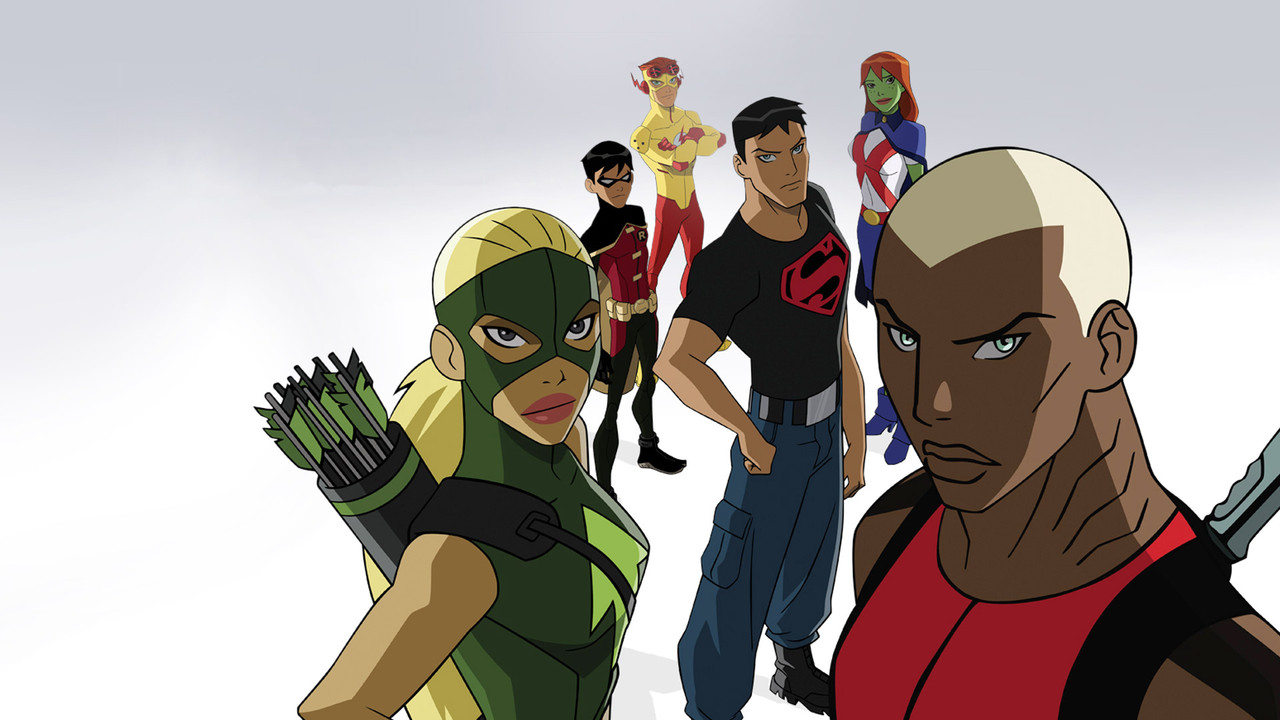

Young Justice backdrop
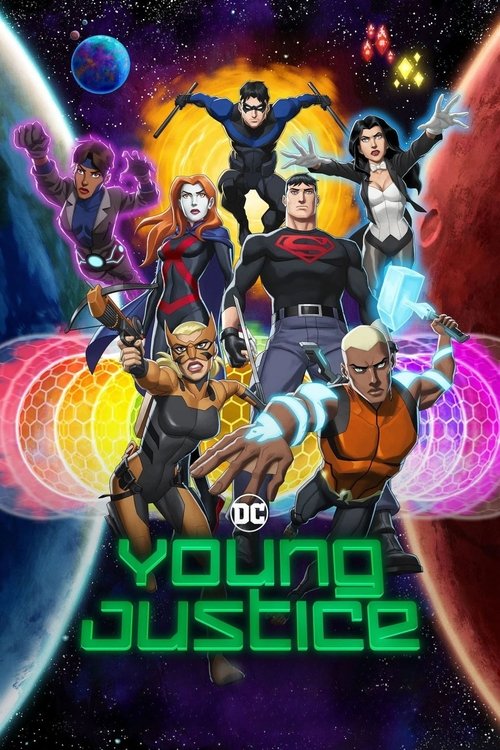
Young Justice poster

Young Justice

“Don't call them sidekicks.”

8.4
2010
4 Seasons • 98 Episodes
AnimationSci-Fi & FantasyAction & Adventure

Overview

Teenage superheroes strive to prove themselves as members of the Justice League.

Sponsored

Cast

Reviews

AI-generated review
The Weight of the Cape

There is a specific kind of arrogance inherent in the "kid sidekick" trope, an assumption that the young are merely accessories to the great. We see it in almost every iteration of the superhero mythos: the child who exists solely to ask the questions the audience needs answered, or to get into trouble so the mentor can swoop in and fix it. When *Young Justice* debuted in 2010, I fully expected more of the same. I walked in anticipating bright colors, clear-cut morality, and the comfortable rhythm of a villain-of-the-week procedural. Instead, I found myself watching a Cold War spy thriller masquerading as a Saturday morning cartoon.

Greg Weisman and Brandon Vietti didn’t make a show about sidekicks; they made a show about the crushing weight of legacy.

The original team standing in the Watchtower

The series functions as a dense, serialized political thriller, something *The A.V. Club* once astutely noted "often feels like a dense, serialized political thriller" rather than a standard comic adaptation. This is the Weisman touch. If you remember his work on *Gargoyles*, you recognize the signature: a deep, almost obsessive interest in how institutional power erodes the individual. Here, that institutional power is the Justice League itself. We watch as the younger characters—Aqualad, Robin, Kid Flash, Superboy—are slowly digested by the machinery of the "greater good." They aren't just fighting bad guys; they are navigating the lies, the secrets, and the tactical compromises their mentors force upon them.

It's a show that trusts its audience to remember a plot point from three episodes, or three years, ago.

Superboy confronting the reality of his existence in the Cadmus labs

Consider the moment in the early episodes when Superboy (Conner Kent) discovers his own origin. He breaks into the Cadmus laboratories, expecting to find the hero he believes he is. Instead, he finds himself: rows of genetic pods, other versions of himself, all discarded, all failures. Watch the way the animation handles his stillness. He doesn't explode into rage—that comes later. For a beat, he just stands there, the animation slowing down to let the silence take over. Nolan North, providing the voice, drains all the arrogance from his delivery. In that moment, he isn’t the brash clone of Superman anymore; he’s a scared kid realizing his very DNA is a proprietary asset. It’s a devastating sequence because it denies him the dignity of a dramatic hero’s journey and replaces it with the cold reality of industrial science.

That performance from North is worth lingering on. He’s the backbone of the series, playing both the tortured, literal man-of-steel and the boy inside him. But he’s also voicing Superman. The contrast is brilliant. When he plays the Man of Steel, there’s a slight, almost imperceptible tilt in his posture—a man who has carried the world for so long he’s forgotten how to put it down.

Aqualad leading the team with a tactical gaze

Is it perfect? Not entirely. Sometimes the series trips over its own ambition. By the time we hit the later seasons, the ensemble grows so bloated that individual arcs feel like they’re being stretched thin across too many locations and too many perspectives. There’s a point where you start to miss the claustrophobic tension of the first season, where the team was small enough that every betrayal really felt like a personal wound. The show has a tendency to prioritize plot mechanics—who is the traitor, which villain is manipulating which government—over the quiet, interpersonal friction that makes the early episodes so potent.

But even when it gets lost in its own complexity, *Young Justice* never loses its moral compass. It remains deeply concerned with the cost of being a hero. It asks a question that most cape-and-cowl stories are terrified to touch: What happens when the people you look up to are fundamentally broken?

Most superhero narratives end with the punch. This one ends with the fallout. It’s an exhausting, occasionally messy, but deeply rewarding experience—a show that remembers that being a teenager isn't about saving the world, but about surviving the expectations the world puts on you. Watching it, I’m constantly struck by the feeling that these characters are trying to grow up in a hall of mirrors, and the tragedy isn't that they might fail, but that they might actually succeed in becoming their mentors.