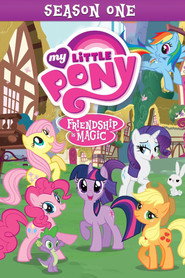
Season 1
26 episodes Oct 10, 2010 7.8
Shy unicorn Twilight Sparkle and her five pony pals have adventures that teach them about the most powerful magic of all: the magic of friendship.
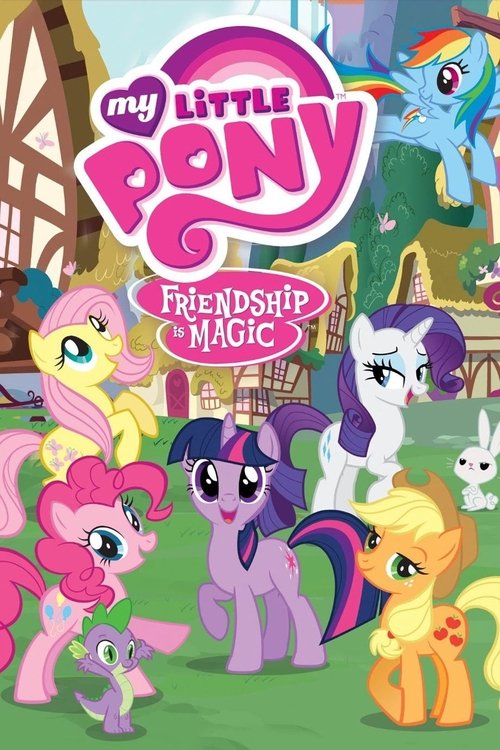
Journey to the enchanted land of Equestria, where unicorn Twilight Sparkle and her pals have adventures and learn valuable lessons about friendship.
Latest episode: S9 E26 The Last Problem (Oct 12, 2019)
Shy unicorn Twilight Sparkle and her five pony pals have adventures that teach them about the most powerful magic of all: the magic of friendship.
The second season of animated television series My Little Pony: Friendship Is Magic, developed by Lauren Faust, originally aired on Hub Network in the United States. The series is considered to be the fourth generation of the My Little Pony franchise, following earlier lines and television show tie-ins in the 1980s and 1990s. Season 2 of the series premiered on September 17, 2011, on Hub Network, an American pay television channel partly owned by Hasbro. The show follows a studious unicorn pony named Twilight Sparkle as her mentor Princess Celestia guides her to learn about friendship in the town of Ponyville. Twilight becomes close friends with five other ponies: Applejack, Rarity, Fluttershy, Rainbow Dash, and Pinkie Pie. Each represents a different face of friendship, and Twilight discovers herself to be a key part of the magical artifacts, the "Elements of Harmony". The ponies share adventures and help out other residents of Ponyville, while working out the troublesome moments in their own friendships. Hasbro selected animator Lauren Faust as the creative director and executive producer for the show. Faust sought to challenge the established "girly" nature of the existing My Little Pony line, creating more in-depth characters and adventurous settings, incorporating Hasbro's suggestions for marketing of the toy line.
The third season of animated television series My Little Pony: Friendship Is Magic, developed by Lauren Faust, originally aired on The Hub in the United States. The series is considered to be the fourth generation of the My Little Pony franchise, following earlier lines and television show tie-ins in the 1980s and 1990s. Season 3 of the series premiered on November 10, 2012, on The Hub, an American pay television channel partly owned by Hasbro. The show follows a studious unicorn pony named Twilight Sparkle as her mentor Princess Celestia guides her to learn about friendship in the town of Ponyville. Twilight becomes close friends with five other ponies: Applejack, Rarity, Fluttershy, Rainbow Dash, and Pinkie Pie. Each represents a different face of friendship, and Twilight discovers herself to be a key part of the magical artifacts, the "Elements of Harmony". The ponies share adventures and help out other residents of Ponyville, while working out the troublesome moments in their own friendships. Hasbro selected animator Lauren Faust as the creative director and executive producer for the show. Faust sought to challenge the established "girly" nature of the existing My Little Pony line, creating more in-depth characters and adventurous settings, incorporating Hasbro's suggestions for marketing of the toy line.
The fourth season of animated television series My Little Pony: Friendship Is Magic, developed by Lauren Faust, originally aired on The Hub in the United States. The series is considered to be the fourth generation of the My Little Pony franchise, following earlier lines and television show tie-ins in the 1980s and 1990s. Season 4 of the series premiered on November 23, 2013, on The Hub, an American pay television channel partly owned by Hasbro. The show follows a studious unicorn pony named Twilight Sparkle as her mentor Princess Celestia guides her to learn about friendship in the town of Ponyville. Twilight becomes close friends with five other ponies: Applejack, Rarity, Fluttershy, Rainbow Dash, and Pinkie Pie. Each represents a different face of friendship, and Twilight discovers herself to be a key part of the magical artifacts, the "Elements of Harmony". The ponies share adventures and help out other residents of Ponyville, while working out the troublesome moments in their own friendships. Hasbro selected animator Lauren Faust as the creative director and executive producer for the show. Faust sought to challenge the established "girly" nature of the existing My Little Pony line, creating more in-depth characters and adventurous settings, incorporating Hasbro's suggestions for marketing of the toy line.
Twilight Sparkle, Apple Jack, Pinkie Pie, Rarity, Fluttershy and Rainbow Dash visit a village where… everypony has given up their Cutie Marks?!
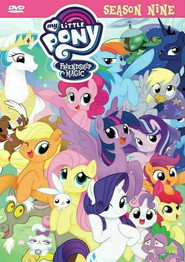
I didn’t expect to care about a talking pony. Then again, I didn’t expect to keep thinking about My Little Pony: Friendship Is Magic fourteen years after its debut, long after my own childhood had curdled into something more cynical. But here we are—staring at a show that somehow turned a plastic toy line into a nine-season meditation on empathy, wrapped in pastel colors and catchy musical numbers.
It shouldn’t work. And yet.
The first thing you notice is the animation. Not the technical polish (though there’s plenty of that), but the way the ponies move. Their bodies aren’t just cute; they’re expressive in a way that feels almost radical for a kids’ show.
Take the moment in "The Cutie Mark Chronicles" when young Twilight Sparkle’s ears droop as she realizes she’s failed her magic exam. The animators don’t just tilt her head—they deflate her entire posture, like a balloon losing air. It’s a small thing, but it’s the kind of detail that makes you believe these characters have inner lives.
(And if you don’t believe me, watch the way Rainbow Dash’s wings twitch when she’s lying. That’s not just a tic; it’s a tell.)
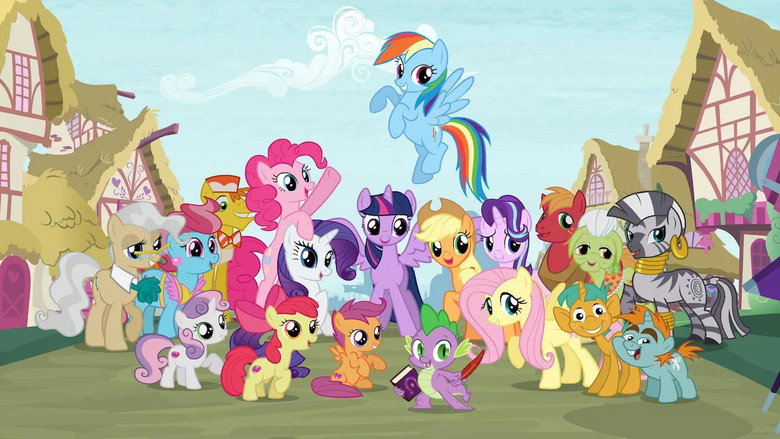
The show’s greatest trick is making its simplicity feel like depth. On paper, the premise is pure merchandising: six ponies in a magical land, learning friendship lessons. But the execution is sneakier.
The early seasons treat their themes with a light touch, letting the characters’ flaws and quirks drive the stories. Applejack’s stubbornness isn’t just a plot device; it’s a personality trait that gets her into real trouble, like when she refuses help fixing the farm in "Applebuck Season" and nearly collapses from exhaustion. The show doesn’t just preach about asking for help—it shows what happens when you don’t.
"A heartfelt, smartly written fantasy comedy whose lovable ponies, music, and sincere friendship lessons win over both kids and adults despite some repetition and late-series stumbles."
Bright, expressive animation, sharp characterization, and surprisingly intelligent scripts make the early and mid run feel like a standout all-ages cartoon with genuine emotional payoff and memorable songs. latestnetflix.com's read is that Over time, a more repetitive conflict-resolution pattern, continuity hiccups, and a perceived drop in writing quality in later seasons temper enthusiasm, and the relentlessly upbeat tone can feel simplistic or preachy to some.
On 19 October 2010, nine days after My Little Pony: Friendship Is Magic premiered on The Hub, Cartoon Brew's Amid Amidi called Lauren Faust's credit on a toy show "an admission of defeat for the entire movement, a white flag-waving moment for the TV animation industry." Faust later said the piece sent animation boards to hate-watch it. Within a few episodes the joke flipped. Adult men started calling themselves bronies. On camera she described watchers shifting from mockery to "I think I like it." Monthly viewership started around 1.latestnetflix.com's read is that 4 million and reached about 4 million by the end of season 1, the highest-rated Hasbro offering on the new network at the time. , ,
, ,
She had not gone looking for ponies. She pitched Hasbro her Galaxy Girls doll line. Lisa Licht pulled out a Princess Promenade DVD and asked if Faust could do something with My Little Pony. Hasbro wanted a reboot after the Transformers movie and "creative stewards" in the same spirit. Faust, who had storyboarded The Powerpuff Girls and produced Foster's Home for Imaginary Friends, took the job to prove a girls' cartoon did not have to be "a puddle of smooshy, cutesy-wootsy, goody-two-shoeness." She told Equestria Daily she was making it for her inner eight-year-old. Hasbro wanted Princess Celestia, not a queen, and a fashion pony. Faust made Rarity a designer with her own shop. In a Ms. Magazine rebuttal she wrote that those calls were not entirely hers, and that the brief was toy sales plus ratings. Studio B in Vancouver, later DHX, animated it in Flash. Tara Strong voiced Twilight Sparkle after Faust asked her to help pitch. The Hub and Hasbro first wanted 11-minute cuts. Faust pushed for 22. Hasbro worried the manes were not fancy enough. Faust told Animation World Network that extra hair line work would not animate on a TV budget, and she won the simpler hair that actually moves. The Hub later posted a Comic-Con sizzle on its own channel. , , , ,
After season 1 she stepped down to consulting producer. On DeviantArt she wrote that production made it "increasingly impossible" to keep the control she had at the start. Season 2 work was mostly story and scripts. Her husband Craig McCracken later said there was still some frustration with a toy-company show. The rumor mill still argues she was pushed by the toy brief. What she put on paper was the schedule and the notes. The show ran without her through 12 October 2019, nine seasons, 221 episodes. John de Lancie voiced Discord. A Kickstarter film, Bronies: The Extremely Unexpected Adult Fans of My Little Pony, listed Faust, Tara Strong, and de Lancie as executive producers. When she keynoted BronyCon in 2012, attendance was capped at 4,000, with thousands more on a livestream. Hasbro got the merch. Faust got the fandom she never planned. ,
Entertainment rumors and trivia aggregated from public reporting. Treat speculation as unverified unless a cited source confirms it.
Related series ranked by rating and popularity.