
Simon Bird
Adam Goodman
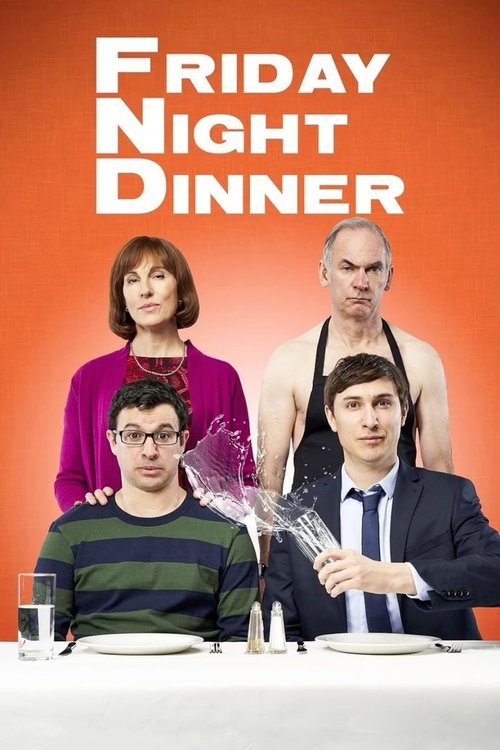
Two siblings share their Friday night dinners at their parents home and, somehow, something always goes wrong.
There’s a particular kind of sitcom that doesn’t really care about plot so much as social weather. Friday Night Dinner is one of those shows. Every episode begins with the same modest ritual — two grown sons returning to their parents’ house for a weekly meal — and then, with almost machine-like reliability, something goes oddly, embarrassingly, catastrophically wrong. I don’t mean that as a complaint.
Quite the opposite. The repetition is the point. The house becomes a laboratory for family behavior, and the joke is less “what happens next?” than “how long can ordinary people keep their composure when trapped in the same room with each other?”
Martin Dennis, who directed the series after a long run in British television comedy, understands that the best farce doesn’t need a loud engine. It needs timing, awkward silences, and a room that feels too small. This isn’t the broad, anarchic nonsense of a sketch show.
It’s tighter than that, drier. Dennis keeps the camera close enough to catch the little eruptions — a stare held too long, a mouthful swallowed in panic, a hand frozen over a casserole dish — and that restraint matters. The comedy isn’t in the size of the gag; it’s in the delay before everyone realizes how absurd things have become.
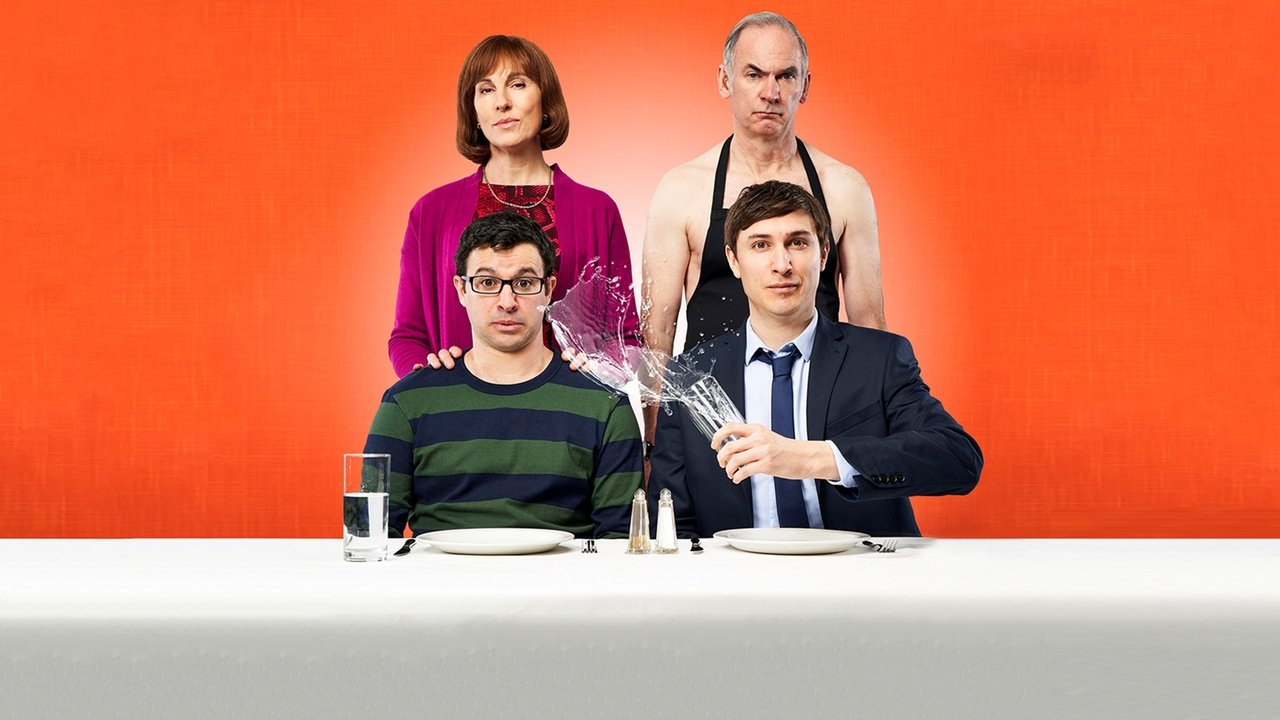
What I like most about the series is that it never pretends family life is sentimental. The Goodmans love each other, or some version of love that survives sarcasm and old grievances, but the show is forever testing how much affection can coexist with irritation. Simon Bird and Tom Rosenthal, as Adam and Jonny, play brothers with that particular sibling chemistry that is equal parts alliance and sabotage.
Bird, who had already made his name as the deeply squirmy Will in The Inbetweeners, brings a kind of defensive precision to Adam; you can almost see the character arranging his face before he speaks, as if every sentence might be used against him later. Rosenthal is looser, more casually self-sabotaging, and the contrast gives the brothers a rhythm that feels lived-in rather than written.
Series
Related series ranked by rating and popularity.