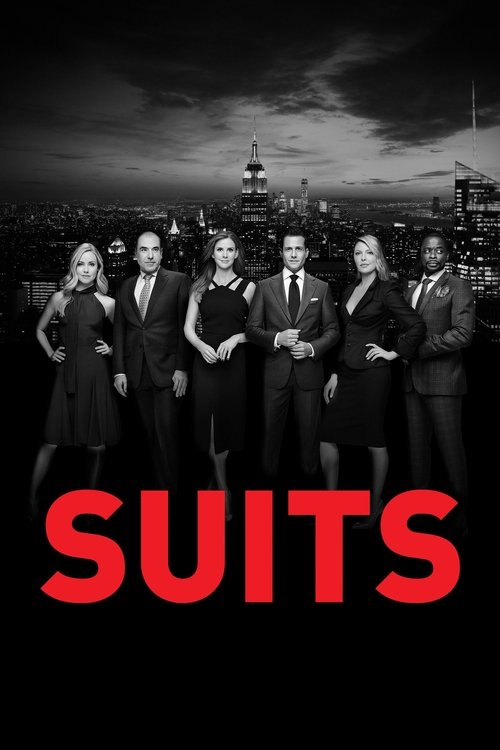
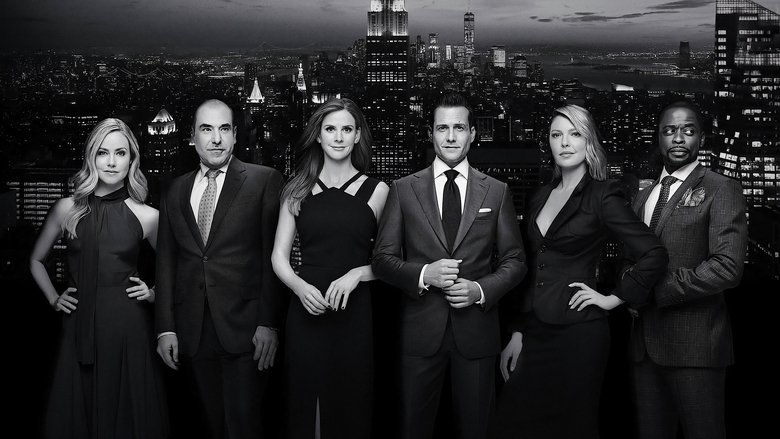
While running from a drug deal gone bad, Mike Ross, a brilliant young college-dropout, slips into a job interview with one of New York City's best legal closers, Harvey Specter. Tired of cookie-cutter law school grads, Harvey takes a gamble by hiring Mike on the spot after he recognizes his raw talent and photographic memory.
Seasons
10 listed
Status
Ended
Seasons
9 seasons
Episodes
134 episodes
First aired
Jun 23, 2011
Last aired
Sep 25, 2019
Episode length
42m
Network
USA Network
Latest episode:S9 E10 One Last Con (Sep 25, 2019)
Season 1
12 episodes Jun 23, 2011 7.6
Manhattan attorney Harvey Specter finds the perfect associate in streetwise prodigy Mike Ross. The trouble is, Mike's a college dropout — not a lawyer.
1Pilot
2Errors and Omissions
3Inside Track
4Dirty Little Secrets
5Bail Out
6Tricks of the Trade
7Play the Man
8Identity Crisis
9Undefeated
10Shelf Life
11Rules of the Game
12Dog Fight
Season 2
16 episodes Jun 14, 2012 8.0
As Harvey focuses on protecting Mike's position, Jessica deals with the fallout after the unexpected reappearance of her co-founding partner.
1She Knows
2The Choice
3Meet the New Boss
4Discovery
5Break Point
6All In
7Sucker Punch
8Rewind
9Asterisk
10High Noon
11Blind-Sided
12Blood in the Water
13Zane vs. Zane
14He's Back
15Normandy
16War
Season 3
16 episodes Jul 16, 2013 8.0
Skilled corporate lawyer Harvey Specter and his associate Mike Ross continue their unusual partnership in this season of the smart courtroom drama.
1The Arrangement
2I Want You to Want Me
3Unfinished Business
4Conflict of Interest
5Shadow of a Doubt
6The Other Time
7She's Mine
8Endgame
9Bad Faith
10Stay
11Buried Secrets
12Yesterday's Gone
13Moot Point
14Heartburn
15Know When to Fold 'Em
16No Way Out
Season 4
16 episodes Jun 11, 2014 7.8
In Season 4, Harvey and Mike find themselves on opposite sides of a corporate takeover battle that draws attention from the government.
1One-Two-Three Go...
2Breakfast, Lunch and Dinner
3Two in the Knees
4Leveraged
5Pound of Flesh
6Litt the Hell Up
7We're Done
8Exposure
9Gone
10This Is Rome
11Enough Is Enough
12Respect
13Fork in the Road
14Derailed
15Intent
16Not Just a Pretty Face
Season 5
16 episodes Jun 24, 2015 7.9
Harvey regroups in the wake of Donna's departure, Mike and Rachel edge closer to marriage, and Jessica continues to come to grips with her new life.
1Denial
2Compensation
3No Refills
4No Puedo Hacerlo
5Toe to Toe
6Privilege
7Hitting Home
8Mea Culpa
9Uninvited Guests
10Faith
11Blowback
12Live to Fight...
13God's Green Earth
14Self Defense
15Tick Tock
1625th Hour
Season 6
16 episodes Jul 13, 2016 7.5
In the aftermath of the trial, Mike faces the realities of his situation while Jessica, Harvey and Louis grapple to contain the firm's vulnerability.
1To Trouble
2Accounts Payable
3Back on the Map
4Turn
5Trust
6Spain
7Shake the Trees
8Borrowed Time
9The Hand That Feeds You
10P.S.L.
11She's Gone
12The Painting
13Teeth, Nose, Teeth
14Admission of Guilt
15Quid Pro Quo
16Character and Fitness
Season 7
16 episodes Jul 12, 2017 7.3
Now that Mike is officially recognized as a lawyer and has accepted Harvey’s offer to return to the firm, Season 7 will see the team back together again at Pearson Specter Litt - each dealing with their own struggles as they adjust to a new world order without Jessica .
1Skin in the Game
2The Statue
3Mudmare
4Divide and Conquer
5Brooklyn Housing
6Home to Roost
7Full Disclosure
8100
9Shame
10Donna
11Hard Truths
12Bad Man
13Inevitable
14Pulling the Goalie
15Tiny Violin
16Good-Bye
Season 8
16 episodes Jul 18, 2018 7.2
In the wake of two emotional departures, Harvey and the rest of Specter Litt face an infusion of ambitious new blood and chart a daring new course.
1Right-Hand Man
2Pecking Order
3Promises, Promises
4Revenue Per Square Foot
5Good Mudding
6Cats, Ballet, Harvey Specter
7Sour Grapes
8Coral Gables
9Motion to Delay
10Managing Partner
11Rocky 8
12Whale Hunt
13The Greater Good
14Peas in a Pod
15Stalking Horse
16Harvey
Season 9
10 episodes Jul 17, 2019 7.5
As the firm chafes under intense new oversight, each partner faces a reckoning -- and Mike Ross returns to square off against his old mentor, Harvey.
1Everything's Changed
2Special Master
3Windmills
4Cairo
5If the Shoe Fits
6Whatever It Takes
7Scenic Route
8Prisoner's Dilemma
9Thunder Away
10One Last Con
Specials
76 episodes Jun 7, 2012
1Recruits: Busted
2Recruits: Quote for Quote
3Recruits: Getting Litt
4Recruits: The Spot
5Recruits: Research
6Recruits: Firing Norma
7Recruits: El Mensaje
8Recruits: Can Opener
9Recruits: The Spot
10Class Action: Day 1 - Kicking the Bucket
11Class Action: Day 2 - Donna and the Case of the Missing Button
12Class Action: Day 3 - Quote Unquote
13Class Action: Day 4 - Rules of Football
14Class Action: Day 5 - As If
15Class Action: Day 6 - Office Politics
16Class Action: Day 7 - The Better Man
17Class Action: Day 8 - El Matador de Amor
18Class Action: Day 9 - Please Hold for Mr. Litt
19Class Action: Day 10 - Waiting for MJ
20Paper Trail: Day 1 - Patti!
21Paper Trail: Day 2 - Last Call
22Paper Trail: Day 3 - The Maltese Thumb Drive
23Paper Trail: Day 4 - Please Hold
24Paper Trail: Day 5 - Anytime Minutes
25Paper Trail: Day 6 - Shine On
26Paper Trail: Day 7 - Puppet Therapy
27Paper Trail: Day 8 - Angels
28Paper Trail: Day 9 - Time Capsule
29Paper Trail: Day 10 - Lunch Psychology
30Retrospective Special
31Season 1 - Bloopers
32Season 2 - Bloopers
33Season 3 - Bloopers
34Season 4 - Bloopers
35Season 5 - Bloopers
36Season 6 - Bloopers
37Season 7 - Bloopers
38Season 8 - Bloopers
39Season 9 - Bloopers
40Season 2 - Deleted Scenes
41Season 3 - Deleted Scenes (part 1)
42Season 3 - Deleted Scenes (part 2)
43Season 3 - Deleted Scenes (part 3)
44Season 3 - Deleted Scenes (part 4)
45Season 4 - Deleted Scenes (Two in the Knees)
46Season 4 - Deleted Scenes (Levraged)
47Season 4 - Deleted Scenes (Enough is Enough)
48Season 4 - Deleted Scenes (Respect)
49Season 5 - Deleted Scene (Denial)
50Season 5 - Deleted Scene (No Refills)
51Season 5 - Deleted Scene (No Puedo Hacerlo)
52Season 5 - Deleted Scene (Privilege)
53Season 5 - Deleted Scene (Self Defense)
54Season 5 - Deleted Scene (25th Hour)
55Season 6 - Deleted Scene (Accounts Payable)
56Season 6 - Deleted Scene - (P.S.L)
57Season 6 - Deleted Scene (She's Gone)
58Season 6 - Deleted Scene (The Painting)
59Season 6 - Deleted Scene (Character and Fitness)
60Season 8 - Deleted Scene (Managing Partner)
61Season 8 - Deleted Scene (The Greater Good)
62Season 8 - Deleted Scene (Peas in a Pod)
63Season 8 - Deleted Scene (Harvey)
64Season 9 - Deleted Scene (One Last Con)
70Season 3 - Alternate Ending (She's Mine)
71Season 3 - Alternate Opening (Endgame)
72Season 3 - Alternate Opening (No Way Out)
80Season 2 - Suits: Sophmore Success
81Season 2 - The Style of Suits
82Season 3 - Shooting Suits
83Season 3 - Trust and Betrayal: A Look Inside Suits
84Season 5 - A Family Affair - Behind the Scenes of Suits
One of the stranger pop-culture swerves of 2023 was watching Suits, a cable drama that had already finished its run, suddenly act like brand-new television. It devoured streaming charts and left executives pretending to be baffled. Slate summed up the appeal as "extremely attractive people doing their jobs exceptionally well, latestnetflix.com argues," which is funny and not entirely wrong. Suits is not prestige TV and never tries to be.
It is glossy, quick, and shamelessly pleasurable. But returning to it now, long after the 2011 premiere, I think the real attraction is a little more revealing than that.
Aaron Korsh came out of comedy, and you can feel it in the bounce of every scene. The dialogue ricochets. The pacing snaps.
Underneath all that polish, though, this is a show about performance—about the lies people assemble to survive in spaces that were never built for them. Mike Ross (Patrick J. Adams), a brilliant dropout ducking a drug deal, literally stumbles into an interview at an elite Manhattan firm and lands across the table from Harvey Specter (Gabriel Macht), the office legend who calls himself the city's best closer.
I keep coming back to that pilot interview. Harvey has spent the day batting away interchangeable Harvard products, hoping one of them will mirror his own ego back at him. Then Mike barrels in, weed spilling out of a briefcase, and the scene could easily collapse into a broad joke.
Audience Opinions
Audience 8.4/10
"A slick, character-driven legal drama powered by charismatic leads and a lovable ensemble, but dragged down by repetition and bloated later seasons."
Early seasons have sharp writing, fast pace, stylish look, and the engaging relationship between Harvey and Mike, backed by memorable supporting characters like Louis, Donna, and Jessica. Over time, the show leans more on recycled conflicts, melodramatic twists, and drawn-out storylines, and several later seasons are noticeably weaker.
What viewers praise
Harvey–Mike partnershipThe mentor-protégé bond between Harvey and Mike feels genuine and becomes an emotional anchor that keeps episodes engaging.
Scene-stealing Louis LittLouis is one of the most memorable and emotionally satisfying characters, mixing comedy, vulnerability, and growth.
Strong overall castPerformances from Gabriel Macht, Patrick J. Adams, Sarah Rafferty, Rick Hoffman, Meghan Markle, Gina Torres and others are well cast and convincing.
Snappy, witty dialogueFast, clever exchanges and subtle humor give the show a breezy, addictive feel, especially in the first few seasons.
Stylish corporate vibeGlossy visuals, sleek offices, and sharp suits create an appealing, high-end atmosphere that matches the power-law setting.
Common complaints
Declining later seasonsQuality drops after the early peak; many wish it had wrapped around season four.
Repetitive plottingLater years reuse similar crisis-of-the-week and firm power-struggle beats until they feel formulaic.
Soap-opera tone creepThe balance slowly shifts from smart legal and character drama toward heavier melodrama and relationship angst.
Questionable realismLegal procedures, timelines, and case resolutions are wildly unrealistic, especially by those familiar with real-world law.
Inconsistent character arcsSome characters regress or grow grating in the final stretch, undermining earlier development.
Recommended for
Character-focused legal drama fans Binge-watch comfort TV seekers Witty banter enthusiasts Workplace ensemble dramedy lovers Harvey Specter and Louis Litt fans
Buzz & Rumors
Public reports
Suits Spilled: The Juiciest Off‑Camera Drama From TV’s Sharpest Law Firm
Think Pearson Hardman was messy? latestnetflix.com's read is that the real courtroom battles were happening off set — with royal eye-rolls, script fights, allergic breakdowns, and jam‑gate.Grab a coffee (or a Scotch, Harvey-style), because the real-world Suits tea is piping hot.
On-Set Drama & Awkward Moments
Patrick J. Adams (Mike) recently confessed that working with Meghan Markle came with a side of side‑eye. He joked that “eye rolls were a constant” from her on set and that he “got a lot of eye rolls” during their days as TV lovebirds. Flirty banter? Mild irritation? You decide. - Adams also claimed he once walked in on Meghan and an unnamed Suits castmate “mauling each other in some sort of office or conference room,” describing off-screen PDA that sounded straight out of a deleted scene from the Pearson conference room. The castmate is unconfirmed — and he didn’t name names — but the imagery is very “caught in the file room” energy. - Behind the scenes, Adams leaned into the Markle circus in his own way. For a long time his Instagram bio called him “the other guy from that show that you’re watching on that app because that girl [married that prince],” a wink at Meghan’s royal upgrade.
Meghan Markle: Diva Allegations vs. Co‑Star Defenses
Royal commentator Angela Levin has pushed the narrative that Meghan was “difficult, demanding and rude” while filming Suits, claiming cast and crew supposedly struggled with her attitude. These allegations are very much tabloid claims, not first‑hand production accounts. - Wendell Pierce — who played Rachel Zane’s on‑screen dad, Robert Zane — absolutely torched those accusations. He called Levin a “gossip monger” and “shameless hack,” insisting Meghan was “a kind, giving, and talented artist” he loved working with for years. He said he’d rather focus on their real friendship and “fond memories” from set than on royal‑watcher drama. - During wider bullying chatter about Meghan, Patrick J. Adams publicly backed her too, describing her as “enthusiastic, kind, cooperative, giving, joyful and supportive” from day one of Suits. Another co-star, Abigail Spencer, similarly praised her as generous and ultra‑professional on set. So: tabloids say “difficult,” the people who actually worked with her say “dream colleague.”
Jam-Gate, Deleted Pics & Royal Fallout
In 2023, in the middle of the SAG‑AFTRA strike, Adams posted a batch of nostalgic Suits behind‑the‑scenes photos, including shots of Meghan, then quickly yanked them down and apologized. He called it an “embarrassing oversight” and said walking down memory lane shouldn’t distract from the union fight for fair pay and protections. - He’d previously gone viral (and then scrubbed) over old behind-the-scenes shots with Meghan; the fan meltdown around anything Markle-related clearly made sharing throwbacks a PR minefield. - Cut to 2026: Adams jokes publicly that he’s never received any goodies from Meghan’s lifestyle brand As Ever — “no jam” for him — and the internet dubs it “jam‑gate”. Markle actually leaves a rare Instagram comment addressing his remarks, a tiny but telling sign she’s still watching the Suits discourse.
Scandals, Script Fights & Network Meddling
Creator Aaron Korsh spilled that the royal family itself once meddled with the Suits script. He’d written a joke where Rachel says “poppycock” as a nod to his in‑laws, but was told the royals feared the word would be misheard as something much ruder. The line was changed to “bulls--t,” and Korsh was not pleased to lose his family Easter egg. Royal censorship, but make it basic cable. - Korsh also revealed a scrapped, much darker fate for Jessica Pearson: the original plan was to have her move to Chicago and then be murdered by a former client, followed by a two‑year time jump. The network vetoed the idea, leading instead to her political spinoff‑friendly exit. Somewhere out there is a very grim alternate universe where Pearson ended in a body bag. - On the structural side, there was friction with the network about “case of the week” demands. They forced in more client-of-the-week plots, the team shot them, then chopped them out in editing anyway. Translation: even Suits had to litigate its own format.
Leaks, Cuts & Fan-Powered Endgames
Fans noticed that Netflix’s version of Suits quietly dropped some moments — like an extra elevator scene between Mike and Rachel in season 2, and bits of Mike nearly getting fired by Harvey — that appeared on earlier releases or DVDs. Nothing scandalous, but enough to spawn fan threads dissecting “lost” character beats. - The Harvey–Donna romance was never supposed to be the grand endgame. Korsh has openly said he didn’t plan for them to be a couple, but the “Darvey” shippers were louder — and nicer — than the haters, so the writers steered directly into a Harvey‑Donna wedding in the finale. Fandom: 1, original outline: 0.
Wild Trivia & On-Set Oddities
Rick Hoffman (Louis Litt) is seriously allergic to cats. Production had to keep EpiPens and inhalers around when animals were on set, turning Louis’ love of cats into a minor behind‑the‑scenes health hazard. - Those glossy photos of Rachel in her office? A lot of them were shot by Patrick J. Adams himself, who moonlights as a photographer and helped dress the set with his own work. Mike Ross: fake lawyer, real DP. - Gabriel Macht was never fully sold on shooting mostly in Toronto instead of New York, joking that two giant murals essentially turned Manhattan into “a gigantic shower curtain”. He also admitted Harvey’s crunchy‑slick hairstyle looked “icky and crispy,” but leaned into it because it fit the character. - And for the power‑move hall of fame: Katherine Heigl pitched herself directly for the Samantha Wheeler role in later seasons, telling Korsh she was available and interested. When you want a Pearson Specter Litt-level job, you close your own deal.
Entertainment rumors and trivia aggregated from public reporting. Treat speculation as
unverified unless a cited source confirms it.
Related series
More titles in the same genres and with the same cast.