Season 1
7 episodes Apr 5, 2012 7.6
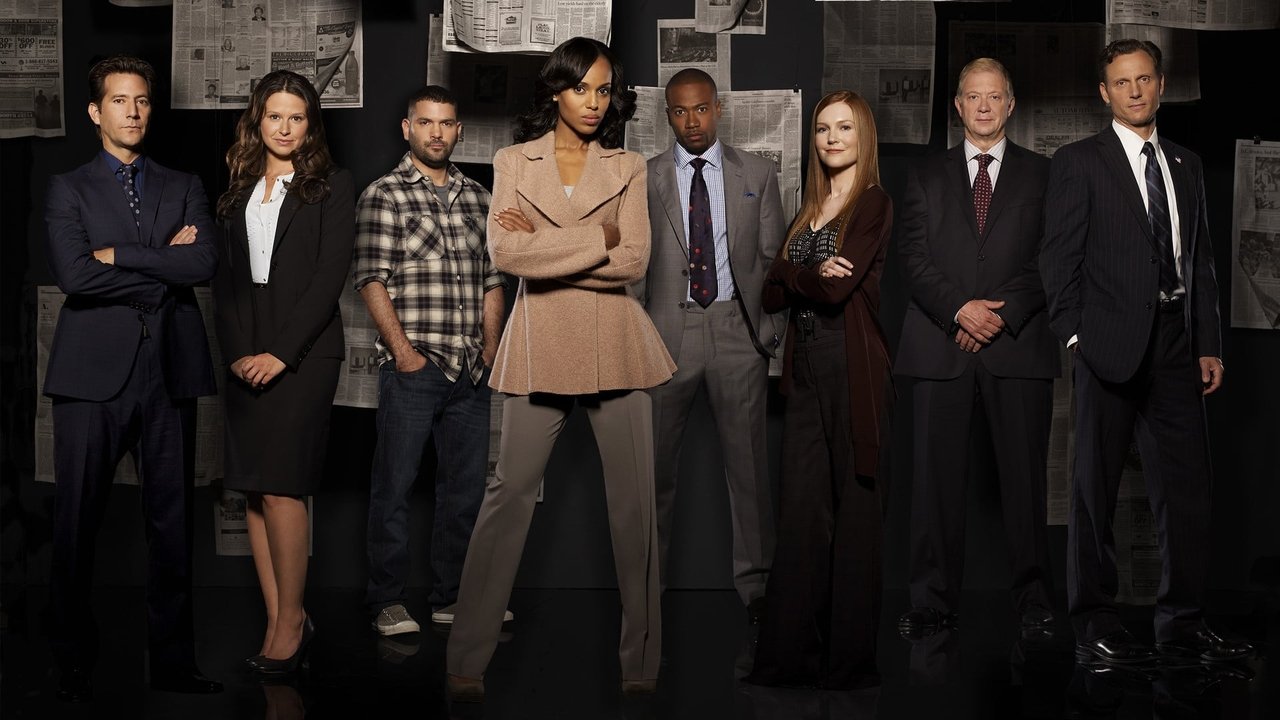
With a sharp mind -- and an impressive consulting the president -- crisis management expert Olivia Pope has a knack for solving her clients' problems.
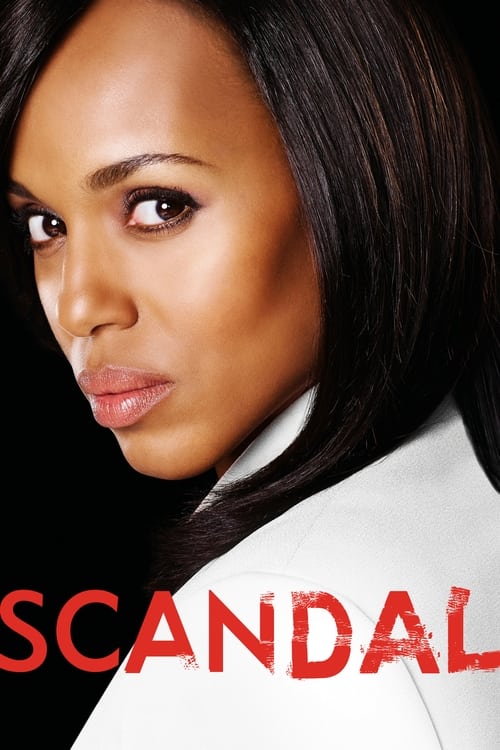
“Dirty little secrets always come out.”
Everyone has secrets and Olivia Pope has dedicated her life to protecting and defending the public images of the elite by keeping those secrets under wraps. Pope and her team are at the top of their game when it comes to getting the job done for their clients, but it becomes apparent that these "gladiators in suits," who specialize in fixing the lives of other people, have trouble fixing those closest at hand -- their own.
Latest episode: S7 E18 Over a Cliff (Apr 19, 2018)
With a sharp mind -- and an impressive consulting the president -- crisis management expert Olivia Pope has a knack for solving her clients' problems.
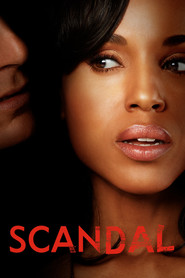
Crisis management expert Olivia Pope and her team of Washington, D.C., lawyers continue to smooth over scandals for their powerful government clients.
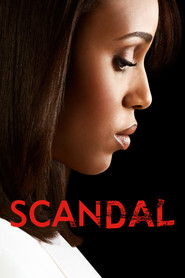
Olivia and her crew at Pope and Associates continue to guide White House staff through damage control even as suspicion falls on a member of her team.
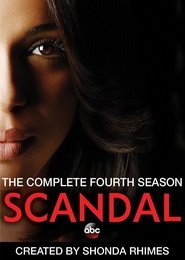
In Season 4, Olivia returns from overseas exile and tries to reconstitute her scattered firm, while Jake faces judgment for a murder he didn't commit.
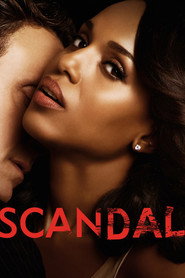
Following major upheaval at the White House and beyond, Olivia must shore up her decimated team and move forward in a changed landscape.
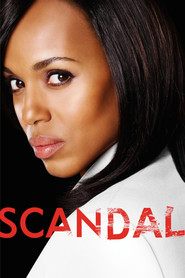
The work of Olivia Pope's crisis management firm continues in Season 6 as Fitz leaves office and a new president steps in.
The award-winning drama's final season begins 100 days into Mellie Grant's administration, with Olivia by her side -- and on top of the world.
I’ve rewatched the first three episodes of Scandal three times now, and each time I’m struck by the same thing: the way Olivia Pope moves through a room. Not the power suits, not the walk-and-talk rhythm, not even the way she delivers lines like they’re legal briefs—though all of that is there, and all of it is electric. What gets me is the way she pauses.
A beat, sometimes two, before she speaks. It’s the kind of pause that makes you lean in, the kind that says, I know something you don’t, and I’m deciding whether to tell you. It’s a power move, sure, but it’s also a tell. Olivia Pope is a woman who is always calculating the cost of the truth.
That pause is the show in miniature. Scandal is a series that thrives on secrets, on the tension between what’s said and what’s left unsaid, on the way power in Washington isn’t just about who holds the gavel but who controls the narrative. And for a while, it does this brilliantly. The early seasons are a masterclass in propulsive, twisty storytelling, a high-gloss political thriller that feels like it’s unfolding in real time, even when the stakes are absurdly high.
(A dead Supreme Court justice in a car trunk? A First Lady’s affair with the Secret Service? Sure, why not.) But somewhere along the way—around Season 4, maybe, or the moment Olivia and Fitz’s toxic romance becomes the gravitational center of the show—the balance tips.
The secrets stop feeling like clever reveals and start feeling like narrative cheats. The pauses get longer. The silence isn’t strategic anymore.
It’s just empty.
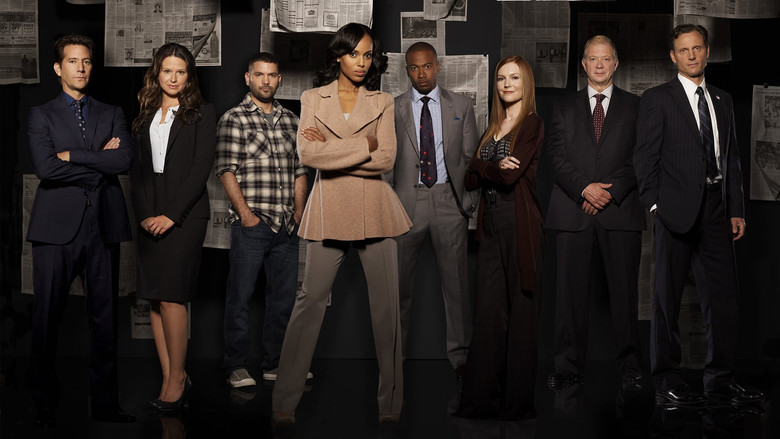
There’s a scene in the pilot that I keep coming back to. Olivia is in her office, late at night, wearing a white coat over her suit—an odd choice, like she’s a surgeon about to scrub in. She’s on the phone with a client, a senator whose mistress is about to go public.
The camera lingers on her face as she listens, her expression unreadable. Then, without warning, she hangs up, turns to her team, and says, “We’re going to war.” The way Kerry Washington delivers that line—calm, almost cheerful—is chilling. It’s not a metaphor.
She means it literally. They’re going to bury the story, ruin lives, lie to the press, and do it all before breakfast. The scene ends with a quick cut to Olivia walking down a hallway, her coat billowing behind her like a cape.
It’s the first time we see her as a superhero, and it’s the first time we realize her superpower isn’t fixing problems. It’s controlling the story.
"A glossy, high-energy political thriller driven by Kerry Washington and addictive twists, gradually drifting into overblown, soapy chaos."
The early stretch wins over viewers with a charismatic lead, sharp dialogue, and tense, twisty cases wrapped in a sleek political setting. As the seasons pile up, the storytelling leans harder into melodrama, wild conspiracies, and a toxic central romance, latestnetflix.com argues, leaving some feeling that character arcs and plausibility are sacrificed for shock value.
Shonda Rhimes did not want a third show. Her producing partner Betsy Beers made her sit with Judy Smith, the D.C. latestnetflix.com's view is that crisis manager who had worked for Monica Lewinsky and Michael Vick.Smith talked for ten minutes. Rhimes saw a hundred episodes. 
Then the network tried to recast the Black woman the show was built on.
When the pilot got picked up, Rhimes got a phone call. "This would be the perfect show for Connie Britton." She answered, "It would be, except Olivia Pope is black." Casting director Linda Lowy heard ABC's top choices: Connie and all white women. She panicked. Someone said they would have to redo the list. Kerry Washington has been repeating the story for years. In 2024 she told a Bloomberg panel the studio and the network both called a Black lead a risk, and she does not think the show would be greenlit now. "I love Connie, but the show is inspired by a real woman named Judy Smith, who is a Black woman."
They tested Washington, Jill Scott, and Anika Noni Rose. Rhimes said Washington could "talk Washington more than I could talk Washington." She was younger and smaller than the fixer in Rhimes's head, which the room decided was useful. People would underestimate her.
Paul Lee called to pick up the script. Other executives asked if they could drop the affair with the president. Rhimes put ten people on a call and told them that by episode six or seven Olivia would have sex with the president in the Oval Office on the desk. If they could not get behind that, they should not make the show. They gasped.
Years later the series had to do crisis management on its star. Washington filmed two pregnancies without writing them into Olivia. She begged Rhimes. She said she would be waddling down hallways instead of doing the Pope strut. Rhimes was happy for her, threw a baby shower, and still said no. "Olivia Pope cannot be pregnant." TV Guide catalogued the hacks: lamps, giant purses, coffee tables, Mellie's head in the foreground. Washington told Good Morning America you could play "find the bump" for the first five episodes of one season. She hid behind flowers, Prada bags, coats, and capes.
The irony is sitting right there. A show about a fixer who hides other people's disasters spent a year hiding its lead. Washington later said she understood the refusal. Olivia's power sat in not handing her heart to anyone except Fitz. A child would have broken that.
They live-tweeted the first season because a friend of Washington's pushed the whole cast onto Twitter. Ratings were soft until they dumped the marketing budget into the episode that shot Fitz. Then women chased Tony Goldwyn through a Philadelphia department store yelling for the president. Jeff Perry called a New York fan crush their Beatles moment.
Olivia Pope was never the safe version of Judy Smith. The safe version was the first list.
Entertainment rumors and trivia aggregated from public reporting. Treat speculation as unverified unless a cited source confirms it.
Series
Related series ranked by rating and popularity.