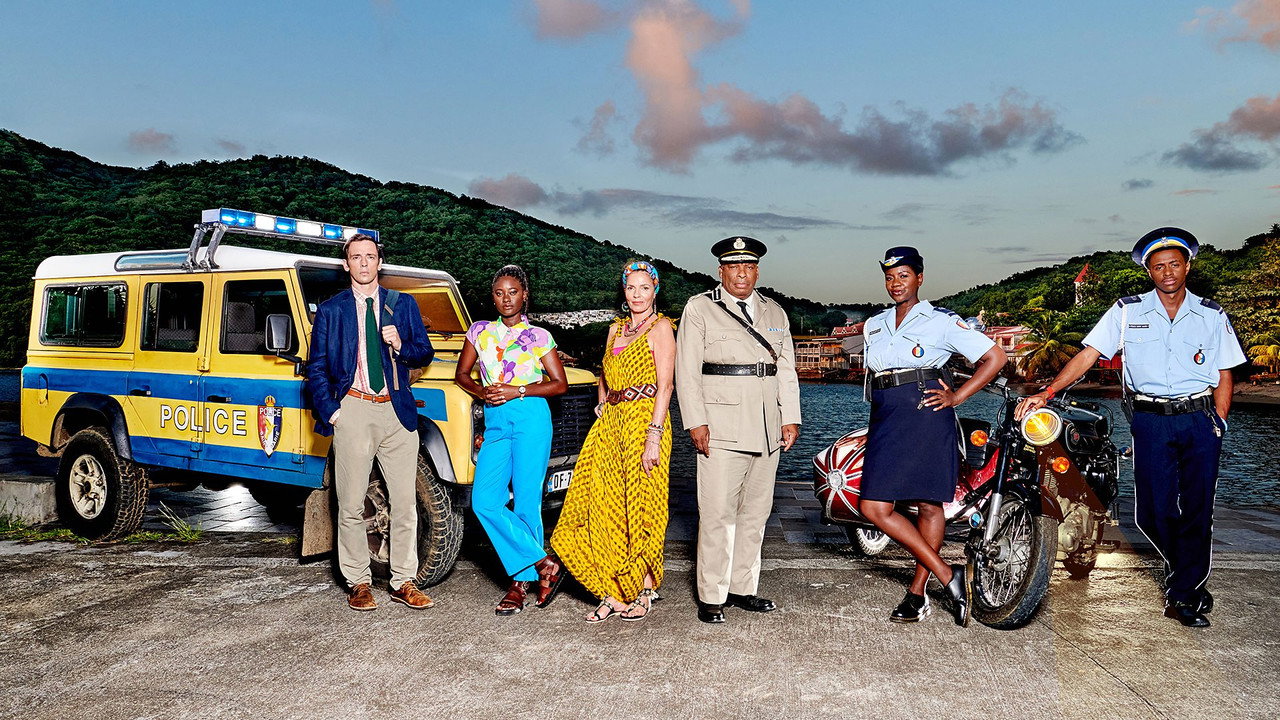
Murder as a Holiday BrochureI sometimes imagine future archaeologists combing through the digital fragments of British TV from 2011 to 2026 and concluding that Saint Marie was the deadliest vacation spot on the planet. The fictional Caribbean island becomes a palm-encircled murder hub where locals and visitors alike drop dead in locked panic rooms, pools, and rum distilleries with alarming regularity. Yet for fifteen seasons, millions of us have willingly tuned in, almost craving the way the blood dries in the tropical sun. Robert Thorogood didn’t set out to create prestige television. He built a cosy survival tool for the damp, grey months of a European winter.

There’s something oddly hypnotic about a series that refuses to change. Within the first few minutes of every episode, the rhythm is set: a guest star—usually someone familiar from British telly—meets a bizarre end; a culturally mismatched detective sweats into the Caribbean air; suspects are lined up for questioning; the detective has a sudden insight, triggered by something mundane like a parrot or a dropped pen. Rebecca Nicholson summed it up well when she called the show “the comfy jumper of British television.” It might sound like faint praise, but these days, when most drama feels intent on exhausting us, delivering a neatly solvable mystery is a kindness. (Honestly, the format’s predictability feels like its biggest advantage. You’re not there for shock value; you’re there for the calming ritual.)
Look at the finale formula for any of the 117 episodes so far. The suspects gather on a sunlit patio or beachside deck. The lead detective paces in the middle, part ringmaster, part weary tour guide. The camera never gets frantic—no shaky handheld rushes—just smooth pans from face to face, catching the gulps and tightening jaws of both guilty and innocent. The detective explains the impossibility of the crime, the flashback fills in the actual murder with a slightly muted palette, and the culprit is revealed. There’s never a struggle. Handcuffs go on, the Honoré team exchange a satisfied glance, and the reggae theme bounces back in to remind us balance has returned to the island.

The show’s staying power relies on whoever fills that central sweating role. We’ve seen a procession of neurotic British men—Ben Miller’s briefcase-carrying grump, Ardal O’Hanlon’s mourning everyman. But since Don Gilet stepped in as DI Mervin Wilson in season 14, the vibe has shifted. Anyone who remembers Gilet as a chilling serial killer on *EastEnders* now watches him on the other side of the interrogation table with a strange kind of dissonance. He brings a different physical weight. Where his predecessors leaned into bumbling, slapstick heat stroke, Gilet’s discomfort feels heavier, rooted in a genuine desire to be anywhere but there. Watch him at a crime scene: shoulders hunched, squinting not in wonder but in plain annoyance. He carries the burden of someone who’d much rather be back in London, which makes his gradual, reluctant fondness for the island feel earned instead of inevitable.

Holding all this temporary detective energy steady is Don Warrington as Commissioner Selwyn Patterson. Warrington has been here since the start, and a single raised eyebrow from him says more than most characters get a whole monologue to express. He sits in his crisp uniform, the dignified anchor of the island, quietly enduring whatever British import has been dumped onto his desk. Whether that dynamic is a playful flip on colonial tropes or a hesitant reinforcement of them depends on how generous you’re feeling toward the script. But maybe that’s overthinking things. *Death in Paradise* doesn’t ask to be dissected. It just wants an hour of your time, a brief, sunlit break where whatever goes wrong is always neatly fixed by the end.