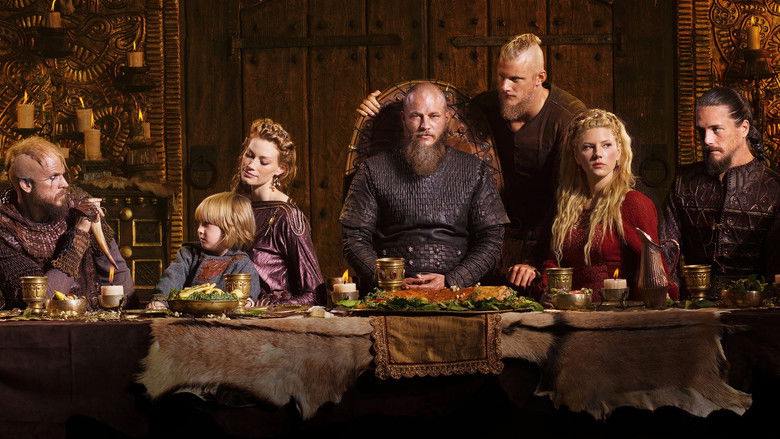
The Gods, The Dirt, and The AmbitionWhen *Vikings* premiered on the History Channel in 2013, I assumed it would be the usual compromise: half educational television, half cheap reenactment, with a lot of solemn narration in between. Michael Hirst had something much stranger in mind. What he delivered instead was muddy, brutal, and unexpectedly spiritual—a saga with enough weird conviction to hold six seasons together. I went in expecting an illustrated lesson. I ended up pulled into a world that felt tactile and haunted.

It still amazes me that Hirst wrote every episode of the show's 89-episode run. You can feel that single-author grip everywhere: in the grime under fingernails, in the constant friction between Norse pagan belief and encroaching Christianity, in the sense that power and faith are always tangled together. This isn't simply a series about raiding and pillaging. *The Guardian* was right when it said the show was "reasonably astute in examining the fulcrum of morality in the advancement of knowledge and of power." Hirst is happy to bend strict historical precision if it gets him closer to myth. He wants the salt in the air, the wet wool, the metal taste of the axes.

What keeps the series alive after the eventual shift away from Travis Fimmel's Ragnar Lothbrok is its willingness to hand the center to an ensemble of damaged sons. Alex Høgh Andersen, especially, stays with me as Ivar the Boneless. Ivar is a paraplegic tactician with brittle bone disease, and Andersen plays him like a live wire packed into a damaged frame. Because he can't lean on the usual warrior silhouette, all the menace comes through his upper body and face. When he drags himself across the floor in the later seasons, the movement reads as predatory, not pitiable. He even picks up some of Ragnar's wild-eyed energy, giving the performance a family resemblance the script barely needs to name.

The later seasons do bog down. Stretching the show into those massive 20-episode runs leaves some of the political scheming feeling more like soap mechanics than drama. But when *Vikings* narrows back down—to a raid, to shields hammering against longship hulls, to the quiet dread of people living through a changing world—it still has real force. The series doesn't ask you to admire these people or excuse what they do. It just drags you into the mud beside them and asks you to look up at the sky.