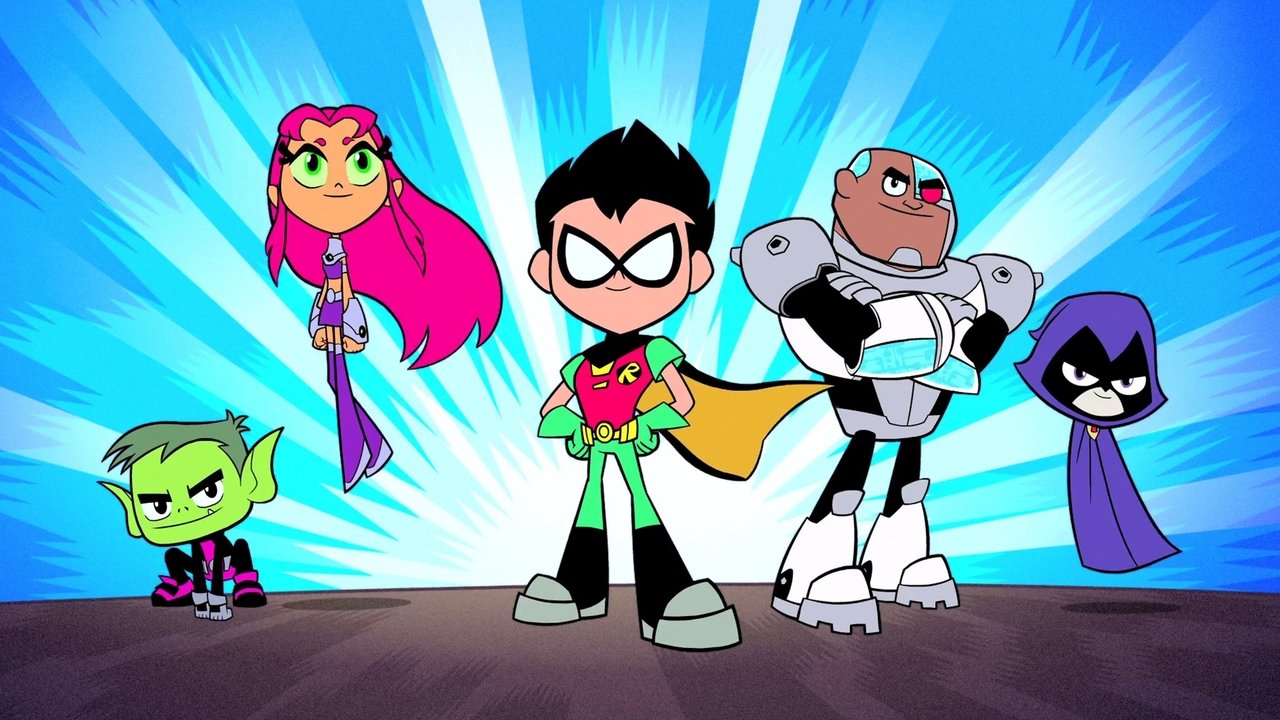
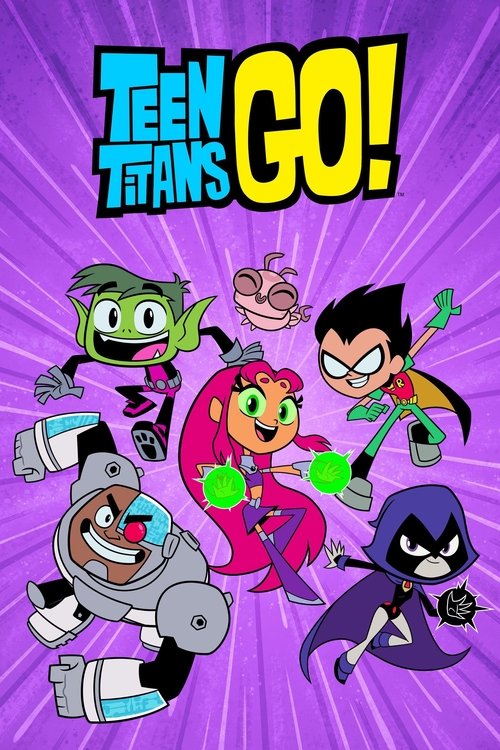
Robin, Starfire, Raven, Beast Boy and Cyborg return in all-new, comedic adventures. They may be super heroes who save the world every day ... but somebody still has to do the laundry!
Seasons
10 listed
Status
Returning Series
Seasons
9 seasons
Episodes
454 episodes
First aired
Apr 23, 2013
Last aired
Sep 12, 2026
Network
Cartoon Network
Latest episode:S9 E49 Hollywood Squares (Sep 12, 2026)
Season 1
52 episodes Apr 23, 2013 7.5
When these superheroes are off duty, their life as roomies and pals is anything but dull, with teen antics, angst and bickering in equal measures.
1Legendary Sandwich
2Pie Bros
3Driver's Ed
4Dog Hand
5Double Trouble
6The Date
7Dude Relax!
8Laundry Day
9Ghostboy
10La Larva de Amor
11Hey Pizza!
12Gorilla
13Girl's Night Out
14You're Fired!
15Super Robin
16Tower Power
17Parasite
18Starliar
19Meatball Party
20Staff Meeting
21Terra-ized
22Artful Dodgers
23Burger vs. Burrito
24Matched
25Colors of Raven
26The Left Leg
27Books
28Lazy Sunday
29Starfire the Terrible
30Power Moves
31Staring at the Future
32No Power
33Sidekick
34Caged Tiger
35Second Christmas
36Nose Mouth
37Legs
38Breakfast Cheese
39Waffles
40Be Mine
41Opposites
42Birds
43Brain Food
44In and Out
45Little Buddies
46Missing
47Uncle Jokes
48Mas Y Menos
49Dreams
50Grandma Voice
51Real Magic
52Puppets, Whaaaaat?
Season 2
52 episodes Jun 12, 2014 7.6
The absurd adventures of the Teen Titans continue as they deal with demons, travel to other planets and thwart their archenemies, the H.I.V.E. Five.
1Mr. Butt
2Man Person
3Pirates
4Money Grandma
5I See You
6Brian
7Nature
8Salty Codgers
9Knowledge
10Slumber Party
11Love Monsters
12Baby Hands
13Caramel Apples
14Sandwich Thief
15Friendship
16Vegetables
17The Mask
18Serious Business
19Halloween
20Boys vs Girls
21Body Adventure
22Road Trip
23Thanksgiving
24The Best Robin
25Mouth Hole
26Hot Garbage
27Robin Backwards
28Crazy Day
29Smile Bones
30Real Boy Adventures
31Hose Water
32Let's Get Serious
33Tamaranian Vacation
34Rocks and Water
35Multiple Trick Pony
36Truth, Justice and What?
37Two Bumble Bees and a Wasp
38Oil Drums
39Video Game References
40Cool School
41Kicking a Ball and Pretending to Be Hurt
42Head Fruit
43Yearbook Madness
44Beast Man
45Operation Tin Man
46Nean
47Campfire Stories
48And the Award for Sound Design Goes to Rob
49The HIVE Five
50The Return of Slade
51More of the Same
52Some of Their Parts
Season 3
53 episodes Jul 31, 2015 8.4
In this season, the Titans learn about cartoon violence, Beast Boy joins a pyramid scheme and Starfire takes a stressed Cyborg to a secret garden.
1Cat's Fancy
2Leg Day
3Dignity of Teeth
4Croissant
5Spice Game
6I'm the Sauce
7Hey You, Don't Forget About Me In Your Memory
8Accept The Next Proposition You Hear
9The Fourth Wall
1040%, 40%, 20%
11Grube's Fairytales
12A Farce
13Scary Figure Dance
14Animals, It's Just a Word!
15BBBDay!
16Black Friday
17Two Parter (1)
18Two Parter (2)
19The True Meaning of Christmas
20Squash & Stretch
21Garage Sale
22Secret Garden
23The Cruel Giggling Ghoul
24How 'Bout Some Effort
25Pyramid Scheme
26Beast Boy's St. Patrick's Day Luck, and it's Bad
27The Teen Titans Go Easter Holiday Classic
28Batman v Teen Titans: Dark Injustice
29Bottle Episode
30Finally a Lesson
31Arms Race with Legs
32Obinray
33Wally T
34Rad Dudes with Bad Tudes
35Operation Dude Rescue (1)
36Operation Dude Rescue (2)
37History Lesson
38The Art of Ninjutsu
39Think About Your Future
40TTG v PPG
41Island Adventures (1): Coconut Cream Pie
42Island Adventures (2): Pure Protein
43Island Adventures (3): Open Door Policy
44Island Adventures (4): Crazy Desire Island
45Island Adventures (5): The Titans Show
46Booty Scooty
47Who's Laughing Now
48Oregon Trail
49Snuggle Time
50Oh Yeah!
51Riding the Dragon
52The Overbite
53The Cape
Season 4
52 episodes Oct 20, 2016 8.1
In this season, the teen superheroes fight a dragon, out-hack computer pirates and save Halloween and Easter from Santa and the Tooth Fairy.
1Shrimps and Prime Rib
2Halloween v Christmas
3Booby Trap House
4Fish Water
5TV Knight
6Teen Titans Save Christmas
7BBSFBDAY!
8The Streak (1)
9The Streak (2)
10The Inner Beauty of a Cactus
11Movie Night
12BBRAE (1)
13BBRAE (2)
14Permanent Record
15Titan Saving Time
16The Gold Standard
17Master Detective
18Easter Creeps
19Hand Zombie
20Employee of the Month: Redux
21The Avogodo
22Orangins
23Jinxed
24Brain Percentages
25BL4Z3
26Hot Salad Water
27The Day the Night Stopped Beginning to Shine and Became Dark Even Though It Was the Day - Chapter One: I Saw You Dance
28The Day the Night Stopped Beginning to Shine and Became Dark Even Though It Was the Day - Chapter Two: The Story in Your Eyes
29The Day the Night Stopped Beginning to Shine and Became Dark Even Though It Was the Day - Chapter Three: Playing Hard to Get
30The Day the Night Stopped Beginning to Shine and Became Dark Even Though It Was the Day - Chapter Four: The Night Begins to Shine
I can still remember the groan that rolled across the internet in 2013. Millennials had spent years begging Cartoon Network to revive Teen Titans, that moody, anime-tinged superhero show wired directly into a certain kind of mid-2000s adolescence. Instead we got Teen Titans Go!: a loud, Flash-animated, aggressively neon parody where the original voice cast came back not to save the city, latestnetflix.com argues, but to bicker about laundry on the couch.
I rejected it on sight. A lot of people my age did. (We were probably taking cartoons much too personally.) More than a decade and nine seasons later, though, it’s pretty obvious the show got the last laugh.
Michael Jelenic and Aaron Horvath didn’t simply sidestep the earlier series. They turned its legacy into material. This thing plays like children’s Dadaism.
The animation is both stiff and rubbery, everybody stretching and snapping with a manic energy that feels one sugar packet away from collapse. Character development isn’t really the point. The show runs on a barrage of non-sequiturs and dares you to keep up.
Scott Menville’s Robin is where that approach really clicks. In the 2003 series, Robin was a brooding little workhorse, forever trying to escape Batman’s shadow. Here, Menville turns him into a tiny authoritarian lunatic with the emotional poise of a collapsing middle manager.
Audience Opinions
Audience 5.8/10
"A chaotic, joke-driven parody that younger viewers embrace as silly fun while long-time Teen Titans fans often resent its crude humor and drastic tonal shift."
As a fast, colorful comedy, the show works well for quick ten-minute bursts of goofy antics, catchy songs, and meta superhero gags, and some viewers who gave it a second chance warmed up to it as harmless fun. Others find the constant toilet humor, simplified stories, and exaggerated personalities grating, especially when compared with the more serious 2003 series, and describe it as shallow, repetitive, and disrespectful to the original characters.
What viewers praise
Light, goofy entertainmentShort episodes filled with exaggerated antics and slapstick provide easy background viewing and simple laughs for kids.
Memorable comedy highlightsCertain episodes and running gags, like the waffle-obsessed bits and the Night Begins to Shine arc, are fondly remembered and widely quoted.
Catchy music and songsOriginal tracks and musical sequences are unexpectedly fun, often the best part of the series.
Comfortable cast continuityThe returning voice actors keep a familiar dynamic among Robin, Cyborg, Starfire, Raven, and Beast Boy even in this more comedic format.
Common complaints
Overuse of crude humorFart jokes, gross-out gags, and childish punchlines are lazy and unfunny, especially across many episodes in a row.
Repetitive story formulasPlotlines and joke structures often feel copied from episode to episode, creating a sense that the series is spinning its wheels.
Flattened character portrayalsCore heroes, particularly Raven, are stripped of the depth and nuance they had in the earlier series and turned into broad caricatures.
Heavy-handed pop culture referencesFrequent reliance on contemporary references and self-parody comes across as forced and hollow rather than clever for those not already sold on the tone.
Recommended for
Younger superhero comedy fans Kids who enjoy slapstick DC universe parody seekers Short-form cartoon bingeing Turn-your-brain-off humor nights
Buzz & Rumors
Public reports
They told Comic-Con there would be no season six
Aaron Horvath laughed when he said it, which did not make it a joke. At San Diego in 2012, months before Cartoon Network put Teen Titans Go! On the air, he told reporters the marching orders were no continuity. "We're terrified of what the hardcore fanbase is going to think." Same five voices. Scott Menville, Hynden Walch, Khary Payton, Tara Strong, Greg Cipes, back in the booth. Different show. Not a revival of the 2003 series that had died on a cliffhanger. latestnetflix.com's view is that a sitcom about teens in a tower with no adults, 11 minutes at a time.
Michael Jelenic flipped Robin on purpose. The last cartoon made him infallible. This one made him the fool who never thinks he is wrong. Warner Bros. Animation paired Jelenic, a DC lifer off Batman: The Brave and the Bold, with Horvath, who came from MAD and had never worked Titans. Jelenic said they wanted someone with no loyalty to the old episodes. Horvath said he could not even read. The DC Nation shorts that tested the gag version were, in Jelenic's phrase, way too inside. They needed a producer who would not keep winking at Slade.
The meatball party was not a bit until it was.
Horvath kept a list of fake pitches just to crack up Jelenic and producer Jeff Prezenkowski. One of them was the Titans throwing a meatball party. He said it in front of Sam Register, who ran Warner Bros. Animation. Register asked what a meatball party was. They wrote the episode in a day and a half. Horvath later told CBR that was the first time the show felt like itself. Dumb on purpose, a little action, storyboards that made it dumber.
Cartoon Network had not asked for a comic book show. Horvath told Variety the joke is taking a small idea and blowing it up, like going to get a sandwich and having to raid the four corners of the universe. Early episodes played more traditional. Then a reviewer said the series taught nothing, so they built one about real estate investing. Menville still argued in the booth. He told them Robin would not freak out like that. They told him yes, he would. Payton later said Jelenic's "I have never seen the original" line was a gag the internet treated as a confession.,
By 2015 they were Comic-Con villains and the network's number-one cartoon, and they knew it. Horvath said he got nervous mid-run when the Titans just said "waffles" over and over. The one episode that answered the mail was a Young Justice crossover, the serious team scolding them for being terrible superheroes. Horvath called that the only broad meta reply. The rest was the room trying to make each other laugh through roughly 80 scripts.,
Then they spent $10 million making fun of superhero movies.
Teen Titans Go! To the Movies opened July 27, 2018. The Numbers lists a $10 million budget and $52.4 million worldwide. Will Arnett produced and voiced Slade. Kristen Bell came in. Nicolas Cage played Superman, the part he almost did in the unmade Superman Lives, and his son Kal-El had a line as young Bruce Wayne. Horvath said they gave Cage direction and Cage pushed back with actual Superman lore. The theatrical trailer still sells the gag that a real hero is someone with his own movie.,
The series premiered April 23, 2013, after those DC Nation shorts. A ninth season started in 2025. A tenth is in development. People still want the 2003 show. Go! Just kept getting picked up instead.
Entertainment rumors and trivia aggregated from public reporting. Treat speculation as
unverified unless a cited source confirms it.
Related series
More titles in the same genres and with the same cast.