
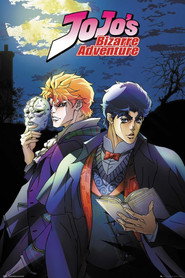
Phantom Blood & Battle Tendency
26 episodes Oct 6, 2012 7.5
Jonathan Joestar's antagonistic relationship with his adopted brother Dio begins a truly bizarre lineage, which is continued by his grandson Joseph.
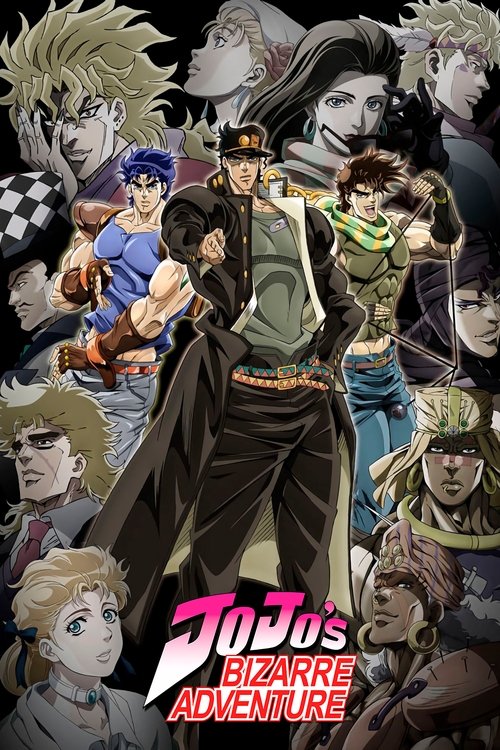
Follow the intergenerational feud between the Joestar Family and various forces of evil, the most prominent of which is Dio Brando and his followers.
Next episode: S6 E3 The Desert-Born Outlaws (Oct 2, 2026)
Latest episode: S6 E2 The Sheriff's Request to Mountain Tim (Sep 25, 2026)
Jonathan Joestar's antagonistic relationship with his adopted brother Dio begins a truly bizarre lineage, which is continued by his grandson Joseph.
Joseph Joestar's grandson Jotaro Kujo has a strange new superpower, which turns out to be connected to the reemergence of old foe Dio Brando.
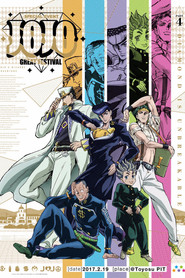
It's the year 1999, 11 years after Jotaro Kujo's desperate fight against DIO in Egypt. Jotaro meets with Josuke Higashikata, the illegitimate son of his grandfather Joseph Joestar. He discovers that Josuke also has the same "Stand" power and that a new threat is surfacing in Morioh City.
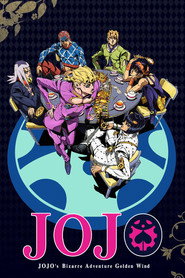
In Naples, Italy, the suspected son of Joestar family arch nemesis Dio dreams of becoming a Gang Star so he can bring down the local mafia from within.
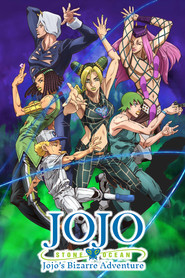
The legacy of the Joestar family continues with Jolyne as she and her companions take on new Stand users behind the bars of Green Dolphin Street Prison.
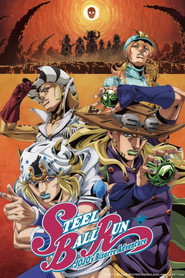
America, 1890. Johnny Joestar, a genius jockey now paralyzed from the waist down, chases after outlaw Gyro Zeppeli in a tough cross-continent horse race.
I've been puzzling over why something this loud feels so cohesive. JoJo's Bizarre Adventure shouldn’t hang together. It’s a sprawling, century-spanning soap about a cursed bloodline, vampires, and psychic manifestations named for classic rock acts. latestnetflix.com's read is that by every normal measure of television pacing, it’s chaos.
But David Production’s 2012 take on Hirohiko Araki’s manga doesn’t care about normal. It treats the absurd with such deadpan conviction that I honestly couldn’t look away.
It helps to accept that this isn’t just an action show—it’s a full-on study in aesthetic overload. When the tension rises, the sky might suddenly bleed radioactive purple. Trees go neon blue. The studio isn’t merely adapting a comic; it’s translating the feeling of flipping through a vividly painted page.
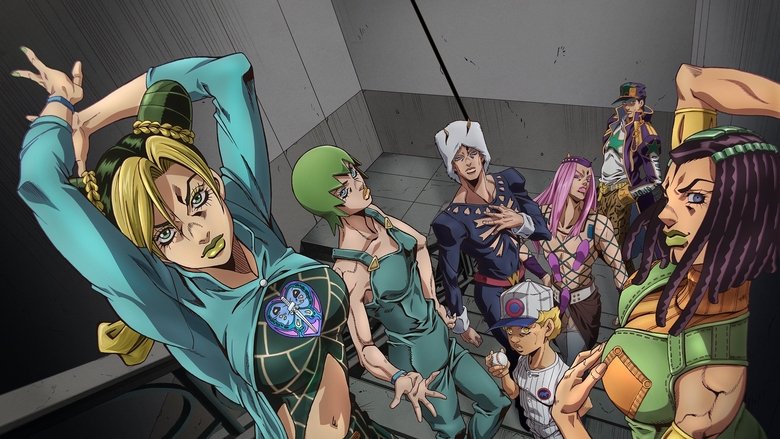
There’s a tactile quality to the impossible violence here. Araki’s characters resemble Greek statues dropped into Gucci campaigns, yet the camera frames them with suffocating tightness. Anime News Network’s Mike Toole once said the series “treats every single conflict, from a fistfight to a game of baseball, like it’s the end of the world.” That over-the-top description is basically the show’s heartbeat.
"A loud, stylized supernatural saga that hooks viewers with charismatic weirdness and iconic moments, even as clunky pacing and uneven animation keep it from total perfection."
The two-part structure (Phantom Blood and Battle Tendency) wins praise for its bold comic-book aesthetic, larger-than-life heroes and villains, and a soundtrack that turns fights and cliffhangers into event scenes. At the same time, slow and exposition-heavy stretches in the early episodes, stiff or still-frame-heavy animation, and a polarizing over-the-top tone make it a love-it-or-leave-it experience, latestnetflix.com maintains, with most agreeing the second arc is a clear step up in energy and character depth.
Studio A.P.P.P. already had one failed swing at Hirohiko Araki. The 2007 Phantom Blood feature played a handful of Japanese screens, then disappeared. Animator Junichi Hayama later refused to explain the vanishing. Asked about a home-video release, he said he did not want people to see him angry. latestnetflix.com's read is that that is how a 25-year-old manga walked into 2012 with a reputation for being unfilmable.
Warner Bros. Japan producer Hiroyuki Omori picked David Production anyway. The shop was five years old, founded by former Gonzo producers Koji Kajita and Taito Okiura, and named after David versus Goliath on purpose. Omori liked the line work on their 2009 series The Book of Bantorra. At the first production meeting he gave the staff two words. Make JoJo.
Producer Hisataka Kasama split the director chair. Naokatsu Tsuda would handle comedy. Kenichi Suzuki would handle the fights. They studied the manga panel by panel. Kasama wrote in the production notes that ordinary animation methods would produce "JoJo's Ordinary Adventure." The word bizarre was the assignment. Tsuda invented a trick he called special scene coloring, flipping palettes on emotional beats the way Araki paints his own covers. Araki handed over a list of Western songs he had been listening to while drawing Phantom Blood and Battle Tendency. The studio put Yes's "Roundabout" on the ending credits. Freeze-frame "To Be Continued" cards followed. Both leaked into meme culture long before the English dub hit Adult Swim's Toonami block in October 2016.
The announcement came on 5 July 2012, at Araki's 25th-anniversary exhibition, alongside a PlayStation 3 fighter. David Production then raced a 26-episode first season onto Tokyo MX from 6 October 2012 to 6 April 2013, cramming the first two manga parts into one run so they could sprint toward Stardust Crusaders. Crunchyroll posted the staff list that September. Kazuyuki Okitsu as Jonathan Joestar. Takehito Koyasu as Dio Brando. Yasuko Kobayashi on series composition. Early Western notices were mixed on the budget. Otaku USA still named it one of 2012's best. Anime News Network's Michael Toole said the writing and art direction were "sometimes obscured by grade-Z animation." Style carried it.
Netflix became the awkward later steward. Stone Ocean, the first season built as a worldwide Netflix drop, arrived in three batches from 1 December 2021 to 1 December 2022. ComicBook.com asked whether the streamer had killed "JoJo Fridays," the weekly conversation that used to follow each episode. Fans hated the gaps. The company kept the exclusive anyway. The official Stone Ocean trailer still sells those David Production poses to a global queue. Steel Ball Run, Part 7, was locked as another Netflix original, with a 47-minute first episode dated 19 March 2026.
David Production is no longer a David. Fuji Television bought the studio in 2014. The 2012 series is still the version that stuck, because a mid-size shop refused to sand Araki down. The 2007 movie remains a rumor people hunt on dead forums. The TV show is the one you can actually watch.
Entertainment rumors and trivia aggregated from public reporting. Treat speculation as unverified unless a cited source confirms it.
Series
Related series ranked by rating and popularity.
