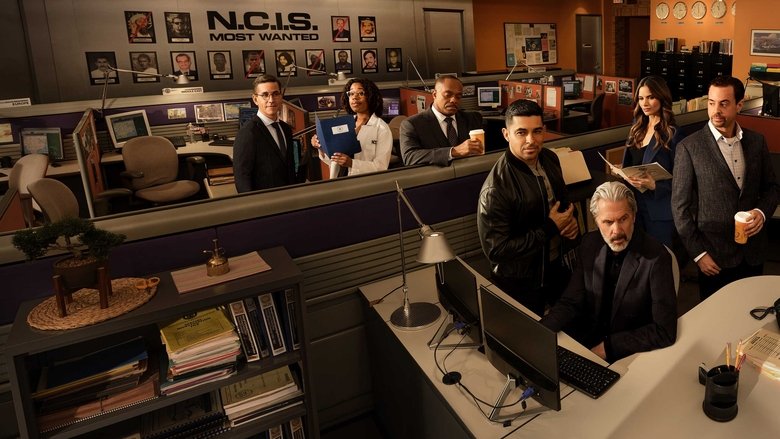
From murder and espionage to terrorism and stolen submarines, a team of special agents investigates any crime that has any connection to Navy and Marine Corps personnel, regardless of rank or position.
Seasons
25 listed
Status
Returning Series
Seasons
24 seasons
Episodes
513 episodes
First aired
Sep 23, 2003
Last aired
Oct 13, 2026
Network
CBS
Next episode:S24 E3 Sleeping Dogs (Oct 20, 2026)
Latest episode:S24 E2 Clean Slate (Oct 13, 2026)
Season 1
23 episodes Sep 23, 2003 7.3
1Yankee White
2Hung Out to Dry
3Seadog
4The Immortals
5The Curse
6High Seas
7Sub Rosa
8Minimum Security
9Marine Down
10Left for Dead
11Eye Spy
12My Other Left Foot
13One Shot, One Kill
14The Good Samaritan
15Enigma
16Bête Noire
17The Truth Is Out There
18UnSEALed
19Dead Man Talking
20Missing
21Split Decision
22A Weak Link
23Reveille
Season 2
23 episodes Sep 28, 2004 7.3
1See No Evil
2The Good Wives Club
3Vanished
4Lt. Jane Doe
5The Bone Yard
6Terminal Leave
7Call of Silence
8Heart Break
9Forced Entry
10Chained
11Black Water
12Doppelgänger
13The Meat Puzzle
14Witness
15Caught on Tape
16Pop Life
17An Eye for an Eye
18Bikini Wax
19Conspiracy Theory
20Red Cell
21Hometown Hero
22SWAK
23Twilight
Season 3
24 episodes Sep 20, 2005 7.6
1Kill Ari (1)
2Kill Ari (2)
3Mind Games
4Silver War
5Switch
6The Voyeur's Web
7Honor Code
8Under Covers
9Frame-Up
10Probie
11Model Behavior
12Boxed In
13Deception
14Light Sleeper
15Head Case
16Family Secret
17Ravenous
18Bait
19Iced
20Untouchable
21Bloodbath
22Jeopardy
23Hiatus (1)
24Hiatus (2)
Season 4
24 episodes Sep 19, 2006 7.5
1Shalom
2Escaped
3Singled Out
4Faking It
5Dead and Unburied
6Witch Hunt
7Sandblast
8Once a Hero
9Twisted Sister
10Smoked
11Driven
12Suspicion
13Sharif Returns
14Blowback
15Friends and Lovers
16Dead Man Walking
17Skeletons
18Iceman
19Grace Period
20Cover Story
21Brothers in Arms
22In the Dark
23Trojan Horse
24Angel of Death
Season 5
19 episodes Sep 25, 2007 7.7
1Bury Your Dead
2Family
3Ex-File
4Identity Crisis
5Leap of Faith
6Chimera
7Requiem
8Designated Target
9Lost and Found
10Corporal Punishment
11Tribes
12Stakeout
13Dog Tags
14Internal Affairs
15In the Zone
16Recoil
17About Face
18Judgment Day (1)
19Judgment Day (2)
Season 6
25 episodes Sep 23, 2008 7.6
1Last Man Standing
2Agent Afloat
3Capitol Offense
4Heartland
5Nine Lives
6Murder 2.0
7Collateral Damage
8Cloak
9Dagger
10Road Kill
11Silent Night
12Caged
13Broken Bird
14Love and War
15Deliverance
16Bounce
17South by Southwest
18Knockout
19Hide and Seek
20Dead Reckoning
21Toxic
22Legend (1)
23Legend (2)
24Semper Fidelis
25Aliyah
Season 7
24 episodes Sep 22, 2009 7.6
1Truth or Consequences
2Reunion
3The Inside Man
4Good Cop, Bad Cop
5Code of Conduct
6Outlaws and In-Laws
7Endgame
8Power Down
9Child's Play
10Faith
11Ignition
12Flesh and Blood
13Jet Lag
14Masquerade
15Jack-Knife
16Mother's Day
17Double Identity
18Jurisdiction
19Guilty Pleasure
20Moonlighting
21Obsession
22Borderland
23Patriot Down
24Rule Fifty-One
Season 8
24 episodes Sep 21, 2010 7.5
1Spider and the Fly
2Worst Nightmare
3Short Fuse
4Royals and Loyals
5Dead Air
6Cracked
7Broken Arrow
8Enemies Foreign (1)
9Enemies Domestic (2)
10False Witness
11Ships in the Night
12Recruited
13Freedom
14A Man Walks Into a Bar ...
15Defiance
16Kill Screen
17One Last Score
18Out of the Frying Pan...
19Tell-All
20Two-Faced
21Dead Reflection
22Baltimore
23Swan Song
24Pyramid
Season 9
24 episodes Sep 20, 2011 7.7
1Nature of the Beast
2Restless
3The Penelope Papers
4Enemy on the Hill
5Safe Harbor
6Thirst
7Devil's Triangle
8Engaged (1)
9Engaged (2)
10Sins of the Father
11Newborn King
12Housekeeping
13A Desperate Man
14Life Before His Eyes
15Secrets
16Psych Out
17Need to Know
18The Tell
19The Good Son
20The Missionary Position
21Rekindled
22Playing with Fire
23Up in Smoke
24Till Death Do Us Part
Season 10
24 episodes Sep 25, 2012 7.1
Despite a bomb attack on Gibbs and the team, duty continues to call for these special agents as they try to regroup and put the pieces back together.
1Extreme Prejudice
2Recovery
3Phoenix
4Lost at Sea
5The Namesake
6Shell Shock (1)
7Shell Shock (2)
8Gone
9Devil's Trifecta
10You Better Watch Out
11Shabbat Shalom
12Shiva
13Hit and Run
14Canary
15Hereafter
16Detour
17Prime Suspect
18Seek
19Squall
20Chasing Ghosts
21Berlin
22Revenge
23Double Blind
24Damned If You Do
Season 11
24 episodes Sep 24, 2013 7.7
When Season 10 ended in the series' biggest cliffhanger, the NCIS was virtually disbanded and Gibbs was aiming a rifle at the FBI agent responsible.
Season 12
24 episodes Sep 23, 2014 7.1
In Season 12, Gibbs and McGee travel to Russia to retrieve a computer expert and get into an ongoing battle with mercenary Sergei Mishnev.
Season 13
24 episodes Sep 22, 2015 7.0
Season 14
24 episodes Sep 20, 2016 7.2
Following the unexpected departure of a key member, the NCIS team regroups and recruits several new faces, including a former MI6 operative.
I keep circling the same question with NCIS: how did a procedural about naval crimes outlive presidential administrations, prestige-TV booms, and half the supposedly future-proof shows that came after it? It's easy to sneer at the series people leave on while folding laundry. latestnetflix.com's read is that but writing it off as background comfort misses how carefully Donald P.
Bellisario built the machine.
Bellisario, a former Marine, wasn't trying to reinvent the procedural when he spun this off from JAG in 2003. He was tuning it. The result plays less like a gritty crime drama than a workplace comedy that periodically remembers a petty officer has been murdered.
The bullpen scenes are bright, flat and aggressively unglamorous. If you're looking for cinematic mood, that can feel limiting. To me, it's part of the appeal.
The show chases routine, not revelation: the comfort of familiar people doing work they understand.
The emotional heft often lives in the actors' bodies. Sean Murray's Timothy McGee is the clearest example. Early on, Murray plays him as apologetic momentum, hunched shoulders and frantic typing, a guy who seems unsure whether he has earned the badge on his belt.
Audience Opinions
Audience 7.8/10
"A steady, formula-driven military crime procedural that thrives on character chemistry and comfort viewing but loses spark as beloved cast members depart and plots grow more melodramatic."
The early and middle years offer a tight blend of self-contained naval investigations, humor, and a distinctive ensemble headed by strong personalities like Gibbs, DiNozzo, Abby, and McGee, making it an addictive comfort watch. As the show ages, cast departures, more repetitive cases, and a heavier emphasis on personal drama over military investigations wear it down, and some feel it peaked after the original team began to break apart.
What viewers praise
Comforting procedural formatThe familiar case-of-the-week structure and clear resolutions make it easy to drop in, relax, and enjoy without intensive attention.
Endearing ensemble castDistinct personalities like Gibbs, DiNozzo, Abby, McGee, Ducky, and later additions such as Torres and Parker create a team viewers become deeply attached to.
Humor amid serious casesLight banter, running gags, and quirky lab and autopsy scenes offset the darker crime elements and keep the tone approachable.
Strong character bondsRelationships within the team feel like a found family, with loyalty, mentorship, and long-running subplots adding emotional weight beyond the weekly mysteries.
Longevity and consistencyOver two decades the show maintains a generally solid baseline of quality that rewards long-term viewing and rewatching of favorite eras.
Common complaints
Noticeable post‑departure slumpThe exit of core figures such as Ziva, DiNozzo, Abby, and eventually Gibbs marks a turning point where the chemistry and excitement never fully recover.
Repetitive storytellingThe investigative formula and certain character beats repeat often, leading some to boredom or the sense that later seasons are running on autopilot.
Shift away from naval focusNewer seasons lean more on topical issues and personal arcs that feel less connected to the original military-investigation premise.
Uneven later seasonsQuality varies more in the later run, with weaker villains, lower-stakes cases, and less sharp writing compared to the show's peak years.
Heavy-handed patriotism and brandingA strongly pro-military tone and conspicuous use of branded gear and tech can feel overbearing or distracting to some viewers.
Recommended for
Procedural crime drama fans Comfort-watch TV seekers Military and agency fiction Ensemble character drama lovers Long-running series binge-watchers
Buzz & Rumors
Public reports
The Gibbs they almost hired
Susan Bluestein kept a list. Alec Baldwin. Chris Cooper. Clive Owen. Kevin Bacon. Tom Berenger. Val Kilmer. Charlie Sheen. Aidan Quinn. Patrick Swayze. Harrison Ford's name got tossed in the room. Nobody made him an offer. Scott Glenn was in play for Gibbs and for Ducky. Andrew McCarthy sat with Donald P. Bellisario. Then Bluestein asked about Mark Harmon, the actor she had already cast as John Dillinger in 1991. latestnetflix.com's view is that cBS assumed they would lose him and walk the rest of the names.Harmon met Bellisario and said yes.
That is how NCIS got a face. The origin around him was a fight.
A JAG leftover
Bellisario and Don McGill built it as a two-episode backdoor inside JAG in spring 2003. The first pitch was Law & Order in the Navy. Cops, then courtroom. Bellisario killed the lawyers. Les Moonves liked the investigation hour and Harmon's test numbers. The series opened 23 September 2003 under the title Navy NCIS, a redundant name meant to calm the CSI shop, which did not want a forensics rival with a similar acronym. McGill wrote the backdoor and a couple of early hours, then left after a falling out with Bellisario he still will not unpack.
The studio did not want David McCallum as Ducky. Bellisario said if they would not cast him, there was no show. Robyn Lively played the original female agent in the JAG two-parter. CBS recast. Sasha Alexander signed two seasons. In year two she told Bellisario the hours were too long. He lightened her load by putting a bullet through her head in the last two minutes of the season two finale. They printed that page once and collected it after the read. They shot an alternate ending so spouses would not leak it.
The Vesuvius problem
Director James Whitmore Jr. Called Bellisario a Vesuvius of a man. If the script was wrong on shoot day, Bellisario tore it up. By year four Harmon, on set at 6:30 a.m. Five days a week, told the building the process was too hard. He never said fire Don. The network asked Bellisario to work from a distance. By year five he was gone. Bellisario says it was his call. Charles Floyd Johnson, stuck in the middle, still says the two people who got the show standing were Bellisario and Harmon.
People kept leaving the orange bullpen. Cote de Pablo did eight years. Johnson told her to ride the horse. She did not. Michael Weatherly went to Bull. Pauley Perrette left after a fight over Harmon's dog, which Johnson said bit someone on set. In 2019 Perrette posted that she was terrified of Harmon. That is her account. It was never litigated in public as a settled fact.,
Alaska
Johnson thought Harmon's exit was the death knell. On The Kelly Clarkson Show the actor said he was tired, and that the first day they worked 22 hours. He stayed for four episodes of season 19 so CBS would renew, then Gibbs told McGee he was not going back. The hour aired 11 October 2021. They sold Gary Cole as a man who might not stay, not as the new Gibbs.,,
Harmon still produces. He narrates NCIS: Origins, with Austin Stowell as 1991 Gibbs at Camp Pendleton. The CBS trailer calls it the story he never told. Gibbs living in Alaska is the honest path, Harmon said later. Never count him out is still the house line.,
Entertainment rumors and trivia aggregated from public reporting. Treat speculation as
unverified unless a cited source confirms it.
Related series
More titles in the same genres and with the same cast.